
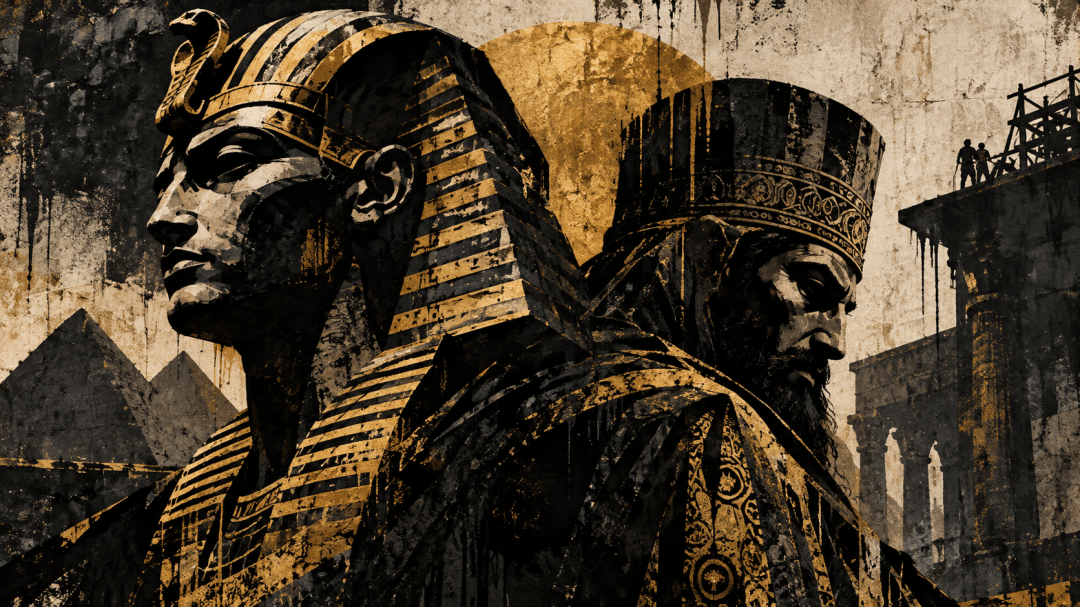
Two men are given the same kind of assignment: build something tall.
The first is told by his master to fire bricks of clay and raise a tower so high that its owner can climb up and look at the God of Moses. The second is told by his wife and his friends to put up a gallows fifty cubits high, so that a man who refused to bow to him can be hanged from it in the morning.
Both men are named Haman. One appears in the Quran, standing at Pharaoh’s side in Egypt. The other appears in the Book of Esther, standing at the Persian king’s side in Susa, many centuries later. Neither project is completed as intended. The gallows ends up holding its own builder, and the tower, in the Quran’s telling, ends in the same collapse as the man who ordered it.
Critics have long said this is a blunder: the Quran, they claim, lifted a Persian courtier out of the Book of Esther and dropped him into the wrong century and the wrong country. This article argues that the pairing is no accident at all. “Haman” is not being used as a biography. It is being used as a type: the name of the royal minister who turns a ruler’s pride into a state project against God’s people, and who is undone by his own scheme. Esther gave that type its name. The Quran, deliberately, puts the name where the type belongs.
Every Mention of Haman in the Quran
The name Hāmān (هَٰمَٰن) appears six times in the Quran, and every one of them is in a scene with Pharaoh and Moses. Here they are, with enough surrounding verses to see what is happening.
1. The Oppressed Are Raised, and the Powerful See What They Feared (28:5–8)
The first two mentions come in the opening of the story of Moses, in the middle of a promise to the weak.
[28:5] We willed to compensate those who were oppressed on earth, and to turn them into leaders, and make them the inheritors.
[28:6] And to establish them on earth, and to give Pharaoh, Hãmãn, and their troops a taste of their own medicine.
[28:7] We inspired Moses’ mother: “Nurse him, and when you fear for his life, throw him into the river without fear or grief. We will return him to you, and will make him one of the messengers.”
[28:8] Pharaoh’s family picked him up, only to have him lead the opposition and to be a source of grief for them. That is because Pharaoh, Hãmãn, and their troops were transgressors.
وَنُرِيدُ أَن نَّمُنَّ عَلَى ٱلَّذِينَ ٱسْتُضْعِفُوا۟ فِى ٱلْأَرْضِ وَنَجْعَلَهُمْ أَئِمَّةً وَنَجْعَلَهُمُ ٱلْوَٰرِثِينَ
وَنُمَكِّنَ لَهُمْ فِى ٱلْأَرْضِ وَنُرِىَ فِرْعَوْنَ وَهَٰمَٰنَ وَجُنُودَهُمَا مِنْهُم مَّا كَانُوا۟ يَحْذَرُونَ
وَأَوْحَيْنَآ إِلَىٰٓ أُمِّ مُوسَىٰٓ أَنْ أَرْضِعِيهِ فَإِذَا خِفْتِ عَلَيْهِ فَأَلْقِيهِ فِى ٱلْيَمِّ وَلَا تَخَافِى وَلَا تَحْزَنِىٓ إِنَّا رَآدُّوهُ إِلَيْكِ وَجَاعِلُوهُ مِنَ ٱلْمُرْسَلِينَ
فَٱلْتَقَطَهُۥٓ ءَالُ فِرْعَوْنَ لِيَكُونَ لَهُمْ عَدُوًّا وَحَزَنًا إِنَّ فِرْعَوْنَ وَهَٰمَٰنَ وَجُنُودَهُمَا كَانُوا۟ خَٰطِـِٔينَ
Two details are worth noticing. First, the verse says “what they were wary of” (mā kānū yaḥdharūn): the thing Pharaoh and Haman feared is exactly the thing their policy produces. Second, the Arabic for “their troops” is junūdahumā, which uses a dual pronoun. The troops belong to the two of them. Pharaoh and Haman are grammatically bound together as a pair.
2. The Tower (28:38 and 40:36–37)
The next two mentions are the only places Haman is addressed directly.
[28:38] Pharaoh said, “O you elders, I have not known of any god for you other than me. Therefore, fire the adobe, O Hãmãn, in order to build a tower, that I may take a look at the god of Moses. I am sure that he is a liar.”
وَقَالَ فِرْعَوْنُ يَٰٓأَيُّهَا ٱلْمَلَأُ مَا عَلِمْتُ لَكُم مِّنْ إِلَٰهٍ غَيْرِى فَأَوْقِدْ لِى يَٰهَٰمَٰنُ عَلَى ٱلطِّينِ فَٱجْعَل لِّى صَرْحًا لَّعَلِّىٓ أَطَّلِعُ إِلَىٰٓ إِلَٰهِ مُوسَىٰ وَإِنِّى لَأَظُنُّهُۥ مِنَ ٱلْكَٰذِبِينَ
[40:36] Pharaoh said, “O Hãmãn, build for me a high tower, that I may reach out and discover.
[40:37] “I want to reach the heaven, and take a look at the god of Moses. I believe he is a liar.” Thus were the evil works of Pharaoh adorned in his eyes, and thus was he kept from following (the right) path. Pharaoh’s scheming was truly evil.
وَقَالَ فِرْعَوْنُ يَٰهَٰمَٰنُ ٱبْنِ لِى صَرْحًا لَّعَلِّىٓ أَبْلُغُ ٱلْأَسْبَٰبَ
أَسْبَٰبَ ٱلسَّمَٰوَٰتِ فَأَطَّلِعَ إِلَىٰٓ إِلَٰهِ مُوسَىٰ وَإِنِّى لَأَظُنُّهُۥ كَٰذِبًا وَكَذَٰلِكَ زُيِّنَ لِفِرْعَوْنَ سُوٓءُ عَمَلِهِۦ وَصُدَّ عَنِ ٱلسَّبِيلِ وَمَا كَيْدُ فِرْعَوْنَ إِلَّا فِى تَبَابٍ
Notice that Haman never answers. He is not given a line of dialogue anywhere in the Quran. He is given an order, and the Quran moves on. Everything about him is function: he is the one who carries out.
3. The Cursed Company (29:39 and 40:23–24)
The last two mentions list Haman among those who rejected Moses.
[29:39] Also Qãroon, Pharaoh, and Hãmãn; Moses went to them with clear signs. But they continued to commit tyranny on earth. Consequently, they could not evade (the retribution).
وَقَٰرُونَ وَفِرْعَوْنَ وَهَٰمَٰنَ وَلَقَدْ جَآءَهُم مُّوسَىٰ بِٱلْبَيِّنَٰتِ فَٱسْتَكْبَرُوا۟ فِى ٱلْأَرْضِ وَمَا كَانُوا۟ سَٰبِقِينَ
[40:23] We sent Moses with our signs and a profound authority.
[40:24] To Pharaoh, Hãmãn, and Qãroon. But they said, “A magician; a liar.”
وَلَقَدْ أَرْسَلْنَا مُوسَىٰ بِـَٔايَٰتِنَا وَسُلْطَٰنٍ مُّبِينٍ
إِلَىٰ فِرْعَوْنَ وَهَٰمَٰنَ وَقَٰرُونَ فَقَالُوا۟ سَٰحِرٌ كَذَّابٌ
The Six at a Glance
| Reference | Arabic | Meaning | Setting |
|---|---|---|---|
| 28:6 | وَهَٰمَٰنَ | “and Haman” | Named with Pharaoh and “their troops”; the promise that they will see what they feared |
| 28:8 | وَهَٰمَٰنَ | “and Haman” | Named with Pharaoh and “their troops” as transgressors |
| 28:38 | يَٰهَٰمَٰنُ | “O Haman!” | Pharaoh orders him to fire clay and build a tower |
| 29:39 | وَهَٰمَٰنَ | “and Haman” | Listed with Qarun and Pharaoh among those who rejected Moses |
| 40:24 | وَهَٰمَٰنَ | “and Haman” | Listed with Pharaoh and Qarun; they call Moses “a magician; a liar” |
| 40:36 | يَٰهَٰمَٰنُ | “O Haman!” | Pharaoh orders him to build a high tower |
Put together, the Quran’s Haman has a very specific profile. He is always at Pharaoh’s side. He is the second name, never the first. He is the one given orders to build. He shares Pharaoh’s guilt and Pharaoh’s fate. And his name appears at the two moments the Quran cares about most: when the oppressed are promised a reversal (28:6), and when the tyrant decides to challenge heaven by construction (28:38, 40:36).
The Objection
Since the nineteenth century, some Western scholars have argued that this is an error. The reasoning goes like this: the only Haman in the Bible is the villain of the Book of Esther, a courtier of the Persian king Ahasuerus (Xerxes), who lived around a thousand years after the time of Moses. The Quran puts a “Haman” in Egypt. Therefore, the Quran has confused two stories.
This is a fair objection, and it deserves a fair answer. To answer it, we first have to understand the Haman it points to, because he turns out to be a stranger figure than most people realize.
Haman in the Book of Esther
A Quick Primer
The Book of Esther is set in the Persian capital of Susa. King Ahasuerus promotes a man named Haman above all the other nobles:
“After these things King Ahasuerus promoted Haman the Agagite, the son of Hammedatha, and advanced him and set his chair above all the princes who were with him.” (Esther 3:1, RSV)
When Mordecai, a Jew, refuses to bow to him, Haman is enraged, and decides that punishing one man is too small a revenge. He goes to the king with an accusation against an entire people:
“There is a certain people scattered abroad and dispersed among the peoples in all the provinces of your kingdom; their laws are different from those of every other people, and they do not keep the king’s laws, so that it is not for the king’s profit to tolerate them.” (Esther 3:8, RSV)
The result is a royal decree:
“Letters were sent by couriers to all the king’s provinces, with instruction to destroy, to slay, and to annihilate all Jews, young and old, women and children, in one day.” (Esther 3:13, RSV)
Haman’s household suggests the means for dealing with Mordecai personally:
“Let a gallows fifty cubits high be made, and in the morning tell the king to have Mordecai hanged upon it.” (Esther 5:14, RSV)
Then the story turns. Queen Esther, who is secretly Jewish, exposes Haman’s plot to the king, and the king’s anger falls on his own minister:
“So they hanged Haman on the gallows which he had prepared for Mordecai; then the anger of the king abated.” (Esther 7:10, RSV)
(The Hebrew verb tālâ can mean “hang” or “impale,” which is why some translations say “impaled.” The word for the structure is ʿēṣ, “tree” or “wood.”) The book describes the whole turn of events with a single memorable phrase: “the reverse occurred” (Esther 9:1, RSV), in Hebrew wĕnahăpôk hû (וְנַהֲפוֹךְ הוּא). It is the hinge of the entire story, and it is the reason Purim is celebrated.
Haman Is Already an Archetype in Esther
The Book of Esther does not present Haman as simply a Persian official. It presents him as the latest member of a family of enemies.
His title is the first signal. Haman is called “the Agagite” (Esther 3:1). Agag was the king of the Amalekites (1 Samuel 15:8), and the Amalekites were the first people to attack Israel after the exodus from Egypt. The Bible records that attack, and a permanent grudge to go with it:
“Write this as a memorial in a book and recite it in the ears of Joshua, that I will utterly blot out the remembrance of Amalek from under heaven.” (Exodus 17:14, RSV)
“The LORD will have war with Amalek from generation to generation.” (Exodus 17:16, RSV)
“You shall blot out the remembrance of Amalek from under heaven; you shall not forget.” (Deuteronomy 25:19, RSV)
The second verse is the one that matters most here. Amalek is defined as an enemy that recurs. Whoever carries the name is playing a role the Torah has already scripted.
The author of Esther then sets the stage to match. Mordecai’s genealogy names Kish, a Benjaminite (Esther 2:5), which is the name of King Saul’s father and the tribe Saul came from. Saul was the king who spared Agag instead of destroying him (1 Samuel 15). The book is signaling that the old failure in the wilderness story has produced a descendant who now threatens to finish what Amalek began.
So before the Quran says a word, Haman in Esther is already:
- a type, not just a person, an Agagite acting out Amalek’s role;
- tied directly to the Exodus story, since Amalek was the enemy at Rephidim;
- a figure whose label was understood as symbolic, since the Greek versions of Esther relabel him a “Macedonian” and Josephus calls him an Amalekite. The tag changes with the audience, and that only makes sense if the tag is carrying a meaning.
In other words, even inside the Bible, Haman is not a free-floating Persian. He is already an archetype, and the archetype is wired directly into the Exodus story.
A Book with a Complicated Past
The Book of Esther is unusual in several ways, and each one is relevant to how we think about Haman.
- God is never named in the Hebrew text. There is no prayer, no temple, no explicit miracle. Everything happens through coincidence, timing, and court politics.
- It was debated. The Talmud preserves a discussion about whether Esther was written with divine inspiration and whether it belonged among the sacred books at all (b. Megillah 7a).
- It is missing from the Dead Sea Scrolls. Fragments of every other book of the Hebrew Bible have turned up at Qumran. No copy of Esther has been found. An absence is not proof of rejection, but it fits with the sense that Esther’s status was not settled everywhere at once.
- Some early Christian lists omit it. Lists of canonical books by Melito of Sardis and by Athanasius, among others, leave Esther out or set it apart.
- The text exists in more than one form. Alongside the Hebrew (the Masoretic Text), there are two different Greek versions: the Septuagint and a shorter one called the Alpha Text. The Greek versions add roughly a hundred verses (the “Additions to Esther”) that explicitly name God and add prayers, and they change details of the story, including who Haman is.
- Haman’s identity is not fixed. In the Hebrew he is an “Agagite.” In the Greek additions he is called a “Macedonian” and elsewhere a “Bougaean.” Josephus, in the first century, calls him an Amalekite. So even the ancient readers of Esther were not sure how best to label him, and the label shifted with the audience.
- Purim shows up in the record early. The second book of Maccabees refers to “Mordecai’s day” (2 Maccabees 15:36), so the festival was known by the late second century BCE.
This tells us something important: the Haman of Esther was a figure whose details shifted across texts and traditions. He was already becoming a type before the Quran was revealed.
A Man History Never Met
No Persian inscription, no Greek historian, and no administrative tablet mentions Haman, Mordecai, Esther, or Vashti. The Greek historian Herodotus describes Xerxes’ queen as Amestris, not Esther. The book’s picture of 127 provinces from India to Ethiopia, and of a royal edict that cannot be revoked, fits the style of a storyteller more than a chancery. Many scholars consider Esther a historical novella: a story shaped by real Persian customs but written to carry a message, not to report events.
You do not have to agree with that reading to see the point. Even for people who believe Esther is a history, Haman is attested nowhere outside Esther. He is, as far as the evidence goes, a figure who exists only on the page of this one book.
Where Did the Name Come From?
Nobody knows. Scholars have proposed Persian and Elamite origins (an Elamite divine name, Humban, is a frequently mentioned candidate), but no etymology is secure. To a Hebrew ear, the name sounds like hāmôn (“tumult” or “multitude”). And it sounds like something else, which brings us to a clue from the rabbis.
The Talmud asks a playful question: where in the Torah is Haman? Its answer is in the Garden of Eden, in the question God asks Adam:
“Have you eaten of the tree of which I commanded you not to eat?” (Genesis 3:11, RSV)
הֲמִן־הָעֵץ אֲשֶׁר צִוִּיתִיךָ לְבִלְתִּי אֲכָל־מִמֶּנּוּ אָכָלְתָּ
The Hebrew for “of the tree” is hămin ha-ʿēṣ. “Haman” and hămin sound alike, and ʿēṣ, “tree,” is the same word used for Haman’s gallows (b. Ḥullin 139b). The Talmud runs the same game on the other names: Esther is hinted at in “I will hide (aster) my face,” and Mordecai in “flowing myrrh” (mor dĕrôr).
This is a pun, and it demonstrates how the rabbis themselves treated these names: as hooks on which meaning hangs. The names in Esther were already being read as symbols.
An Egyptian Haman?
A well-known argument, popularized by Maurice Bucaille and repeated widely, points out that a name “Haman” appears on a stele in a Vienna museum and is listed in a reference work on Egyptian names (Ranke) as “head of the stone-quarry workers.” Since a pharaoh might well ask the head of the stone workers to build a tower, the argument concludes that the Quran’s Haman is a real Egyptian official.
This claim is worth knowing about and honestly cannot be dismissed out of hand, but it has real problems. The Egyptian name in question is one of several names built from the falcon-god Hemen (ḥmn); it is not the bare name “Haman.” The first sound is an Egyptian ḥ, which is not the same letter as the Arabic h in Hāmān, though the difference blurs in later Coptic. And the claim that the stele dates to the time of Moses is asserted by those who make the argument, not demonstrated independently.
More importantly, this article does not depend on the question. Suppose some Egyptian official with a similar name did serve a pharaoh. That would not undo any of what follows, because the Quran’s Haman is not described like an Egyptian official at all. He is described like a type: the vizier, the executor, the builder of the scheme. The argument here is about why that name attached to that role in scripture, and that question has an answer whether or not a stele in Vienna contributes to it.
Not a Mix-Up
If the Quran simply confused Esther’s Persian courtier with Egypt, we would expect to see signs of the confusion. We do not.
1. The Quran imports nothing Persian. There is no Ahasuerus, no Susa, no Esther, no Mordecai, no Vashti, no lots, and no Purim. A writer who had muddled the two stories would have been likely to drag some of the furniture along. The Quran takes the name and nothing else.
2. Haman is always in the same place. All six mentions are in the Moses and Pharaoh story. He never appears in any other setting, and he never does anything an Esther-Haman would do: no decree, no gallows, no feast.
3. The Quran shows precise awareness of Egypt elsewhere. In the Joseph story (Sura 12), the ruler of Egypt is called al-malik, “the king.” In the Moses story, the ruler is called Fir’awn, Pharaoh. The Quran treats these as different rulers, which is exactly the kind of distinction a careless writer would miss.
4. The role matches, even though the setting does not. What the Quran keeps from the name “Haman” is the function: the second man, the executor, the one who turns the ruler’s pride into construction and policy. That is precisely the function of Esther’s Haman.
Mixing up two stories produces random errors. What we find here is selective, consistent, and purposeful. That is the pattern of an archetype.
How the Rabbis Read Haman
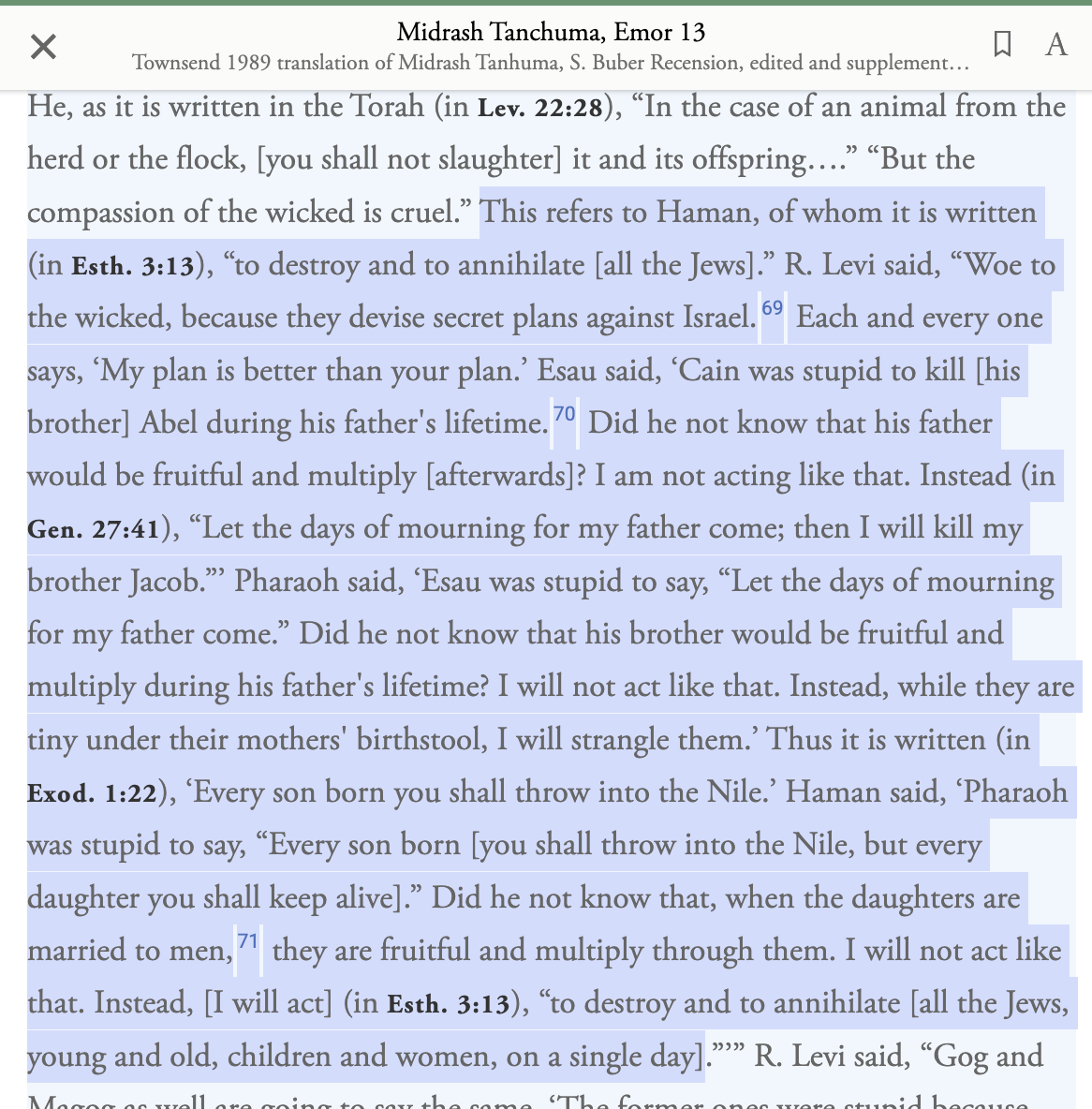
Jewish tradition, long before and alongside the Quran, treated Haman as the later and more extreme counterpart to Pharaoh. The clearest example is in Midrash Tanchuma on the Torah portion Emor (Buber recension, Emor 13), which strings together a chain of persecutors, each of whom thinks the one before was a fool.
The passage builds toward a dramatic point. The midrash has Esau explain why Cain was stupid (he killed Abel while their father was still alive and could have more children). Pharaoh then says Esau was stupid (for waiting for his father to die before killing Jacob). And then Haman speaks: Pharaoh, he says, “was stupid” for ordering that only the boys be thrown into the Nile and the girls be spared, since the girls grow up and marry and the nation multiplies through them. Haman’s solution is to correct the flaw. The midrash has him say that he will not act like that, and then quotes his decree from Esther 3:13: destroy them all, young and old, children and women, on a single day.
In the rabbis’ own imagination, Haman is not simply like Pharaoh. He is Pharaoh’s successor and improver. Pharaoh’s plan was half-measure; Haman’s will be total. Haman’s entire logic is a correction of Pharaoh.
A note on dates: Midrash Tanchuma was compiled in the centuries around the rise of Islam, so I am not claiming it as a source for the Quran. I am offering it as evidence that the connection between Pharaoh and Haman was natural to readers of these texts. Josephus in the first century already called Haman an Amalekite, tying him to the Exodus story. The Talmudic wordplay in Ḥullin 139b is earlier than the Quran and, as above, treats Haman as a name with symbolic resonance. The idea that Haman was Pharaoh’s counterpart was in the air.
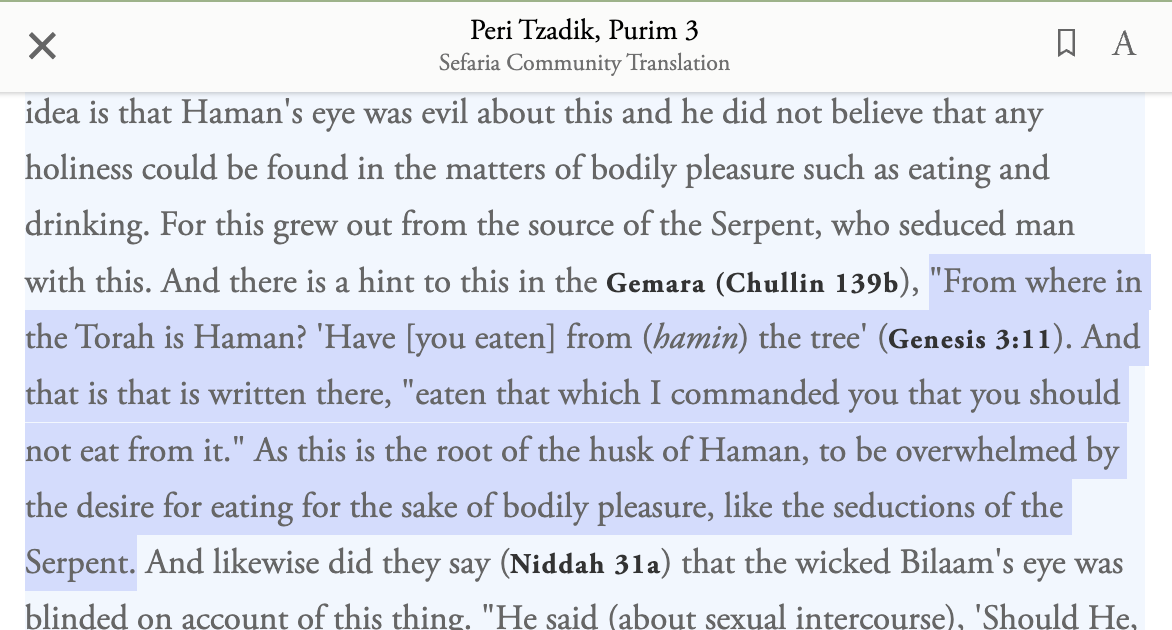
Even in more recent Hasidic commentary, such as the Peri Tzadik on Purim, Haman continues to be read as a symbol (there, of appetite and bodily excess, tracing the idea back to the Garden). The tradition never stopped treating him as more than a man.
Pharaoh and Haman, Side by Side
Here is how the two pairs compare. On the left is the Quran’s scene; on the right, Esther’s.
| The Quran: Pharaoh and Haman | Esther: Ahasuerus and Haman | |
|---|---|---|
| The setting | A foreign court with a people in its power | A foreign court with a people in its power |
| The ruler’s attitude | Pharaoh claims to be the only god his people have (28:38) | Ahasuerus gives Haman his own signet ring and says the people are his to deal with (Esther 3:10–11) |
| Haman’s place | Second named; shares Pharaoh’s guilt | Placed above all the other princes (Esther 3:1) |
| Haman’s role | Executor: carries out the ruler’s order | Executor: drafts and sends the royal decree (Esther 3:12–13) |
| His scheme | Build a tower of fired brick to reach heaven and challenge the God of Moses | Build a gallows fifty cubits high to destroy the man who defied him |
| Who is the target? | Moses, and the God he speaks for; the Israelites are oppressed throughout | Mordecai, and through him all the Jews |
| How it ends | The oppressors see “what they feared” e.g. a taste of their own medicine (28:6) | “The reverse occurred” (Esther 9:1) |
| The fate of the name | Cursed, along with Pharaoh’s circle | Blotted out, in the Jewish custom of Purim |
The parallel is not that the plots are identical. It is that the two Hamans occupy the same slot in the same kind of story: a proud sovereign, a loyal minister who makes the sovereign’s pride operational, a people marked for destruction, and a reversal that lands on the minister first.
From the Boys to Everyone
There is one more important difference that the rabbis noticed and that the Quran’s own wording invites. Pharaoh’s decree, in the Bible, was aimed at boys:
“Then Pharaoh commanded all his people, ‘Every son that is born to the Hebrews you shall cast into the Nile, but you shall let every daughter live.'” (Exodus 1:22, RSV)
Haman’s decree, in Esther, is aimed at everyone: young and old, women and children, in one day (Esther 3:13). Even the language of the scattered, dispersed, and different people (Esther 3:8) echoes the way Pharaoh describes Israel in Exodus: a people “too many and too mighty for us” (Exodus 1:9, RSV), who might “join our enemies” and “escape from the land” (Exodus 1:10, RSV).
Same fear, same logic, same turn from a people’s presence to a people’s elimination. What Pharaoh does by degrees, Haman tries to do at a stroke. This is why the midrash can call Haman the one who learned from Pharaoh’s mistake. And it explains something about the Quran’s choice to list the two names as a pair. When the Quran says “Pharaoh, Haman, and their troops” (28:6, 28:8), it is naming not two men but one project, with its leader and its escalation built into the pairing.
The Tower and the Gallows
Now return to the opening image. In the Quran, Pharaoh commands Hāmān to fire clay and construct a ṣarḥ, a lofty structure, so that he might somehow reach the pathways of heaven and look toward the God of Moses:
[28:38] Pharaoh said, “O you elders, I have not known of any god for you other than me. Therefore, fire the adobe, O Hãmãn, in order to build a tower, that I may take a look at the god of Moses. I am sure that he is a liar.”
وَقَالَ فِرْعَوْنُ يَٰٓأَيُّهَا ٱلْمَلَأُ مَا عَلِمْتُ لَكُم مِّنْ إِلَٰهٍ غَيْرِى فَأَوْقِدْ لِى يَٰهَٰمَٰنُ عَلَى ٱلطِّينِ فَٱجْعَل لِّى صَرْحًا لَّعَلِّىٓ أَطَّلِعُ إِلَىٰٓ إِلَٰهِ مُوسَىٰ وَإِنِّى لَأَظُنُّهُۥ مِنَ ٱلْكَٰذِبِينَ
That combination—fired clay, monumental construction, and a structure directed toward heaven—immediately recalls another scriptural tower:
“And they said to one another, ‘Come, let us make bricks, and burn them thoroughly.’ And they had brick for stone, and bitumen for mortar. Then they said, ‘Come, let us build ourselves a city, and a tower with its top in the heavens.'” (Genesis 11:3–4, RSV)
The point is not that Egypt never used fired brick. It did. The stronger observation is literary. The Quranic scene combines Pharaoh’s defiance, Babel’s fired-brick ascent toward heaven, and Haman as the official who makes the ruler’s arrogance concrete. It is therefore not a simple retelling of any one earlier story, but something closer to a recombination of familiar scriptural motifs.
Once Esther is brought into view, another parallel emerges. In Esther, Haman also becomes associated with the construction of an enormous elevated structure. When he is enraged at Mordecai, his wife Zeresh and his friends advise:
“Let a gallows fifty cubits high be made…” (Esther 5:14, RSV)
The Hebrew term can refer more broadly to a wooden pole or structure, but the literary function is clear: Haman erects something extraordinarily high for the humiliation and death of the righteous man who refuses to submit to him. The Quran gives Haman a different high structure. Pharaoh commands him to build upward toward heaven in order to challenge the claim of Moses.
And there is something deeper in the contrast. The tower reaches up, toward God, to see if He is real. The gallows is built down, on the ground, to destroy a man. One is an act of pride against heaven; the other is an act of hatred against a neighbor. Together they sketch the whole career of the type: contempt for God and contempt for His people, two faces of one corruption.
The Quran sets this command beside a second one. The same imperative, ibni, “build!”, appears only once more in the singular, and it is spoken by another member of Pharaoh’s household. Pharaoh orders a man to build a tower toward heaven so that he can look at the God of Moses (40:36).
[40:36] Pharaoh said, “O Hãmãn, build for me a high tower, that I may reach out and discover.
[40:37] “I want to reach the heaven, and take a look at the god of Moses. I believe he is a liar.” Thus were the evil works of Pharaoh adorned in his eyes, and thus was he kept from following (the right) path. Pharaoh’s scheming was truly evil.
وَقَالَ فِرْعَوْنُ يَٰهَٰمَٰنُ ٱبْنِ لِى صَرْحًا لَّعَلِّىٓ أَبْلُغُ ٱلْأَسْبَٰبَ
أَسْبَٰبَ ٱلسَّمَٰوَٰتِ فَأَطَّلِعَ إِلَىٰٓ إِلَٰهِ مُوسَىٰ وَإِنِّى لَأَظُنُّهُۥ كَٰذِبًا وَكَذَٰلِكَ زُيِّنَ لِفِرْعَوْنَ سُوٓءُ عَمَلِهِۦ وَصُدَّ عَنِ ٱلسَّبِيلِ وَمَا كَيْدُ فِرْعَوْنَ إِلَّا فِى تَبَابٍ
Later, another person from Pharaoh’s own household uses the same words. Pharaoh’s wife says:
[66:11] And GOD cites as an example of those who believed the wife of Pharaoh. She said, “My Lord, build a home for me at You in Paradise, and save me from Pharaoh and his works; save me from the transgressing people.”
وَضَرَبَ ٱللَّهُ مَثَلًا لِّلَّذِينَ ءَامَنُوا۟ ٱمْرَأَتَ فِرْعَوْنَ إِذْ قَالَتْ رَبِّ ٱبْنِ لِى عِندَكَ بَيْتًا فِى ٱلْجَنَّةِ وَنَجِّنِى مِن فِرْعَوْنَ وَعَمَلِهِۦ وَنَجِّنِى مِنَ ٱلْقَوْمِ ٱلظَّٰلِمِينَ
The first builds upward to inspect God from a distance; the second asks to be housed near Him (ʿindaka). One wants a structure to get above God, and the other wants a home to be beside Him. It is a small example of what the Quran does repeatedly, teaching by contrast, and it places Haman’s tower on the losing side of the pair.
Esther’s Haman has a wife too, and the Bible gives her the same verb pointed the other way. When Haman is furious at Mordecai, it is his wife Zeresh and his friends who say, “Let a gallows fifty cubits high be made” (Esther 5:14, RSV). Where Pharaoh’s wife asks God to build her a home beside Him, Zeresh helps build the instrument of a man’s death. She is not a simple villain; when Haman’s fortunes begin to turn, she warns him that he “will surely fall” before Mordecai (Esther 6:13, RSV). But it is the warning of a fatalist, not a believer, and the Jewish tradition remembers her accordingly: “cursed is Zeresh” is part of the Purim reading itself.
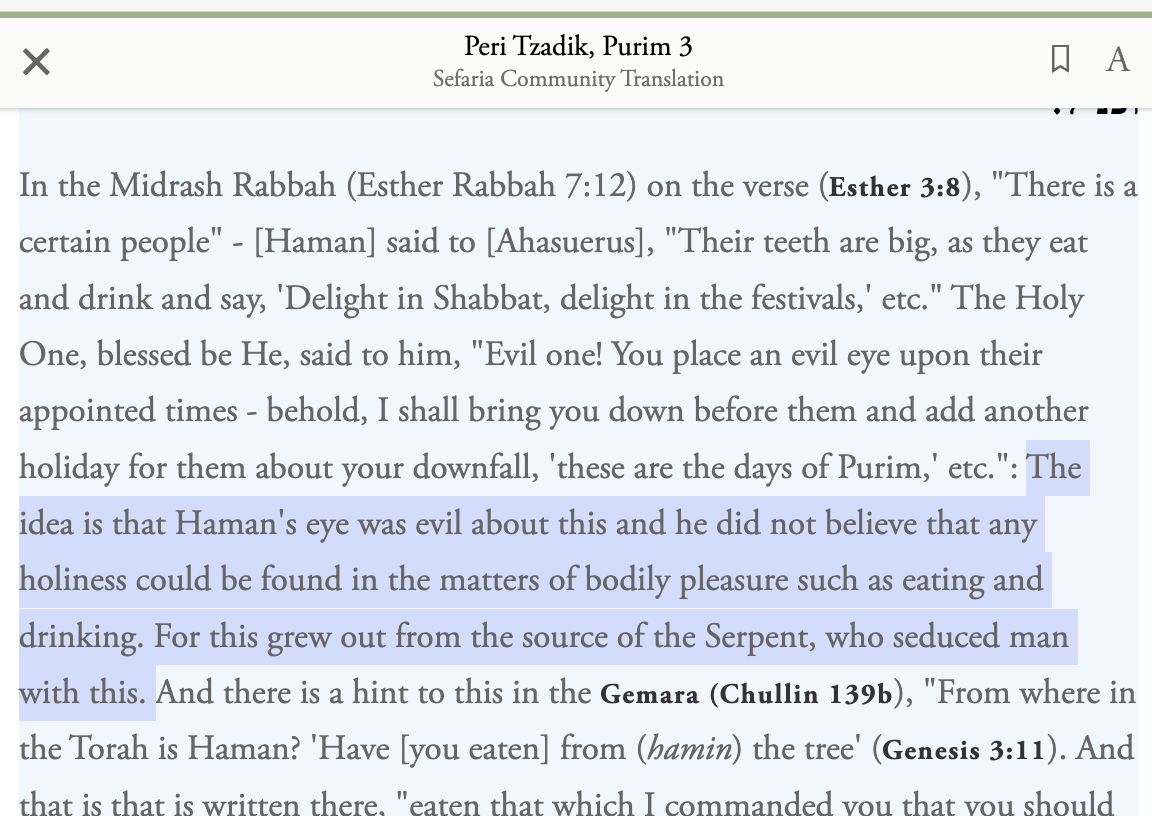
There is another subtle parallel here. In later Jewish interpretation, Haman’s corruption is described as an “evil eye”: he looks at Israel’s Sabbaths, festivals, eating and drinking, and sees something contemptible rather than holy. Quran 40:37 gives Pharaoh a similar failure of perception. He wants to look toward the God of Moses, yet in the very next breath the Quran says that “the evil of his deeds was made attractive in his eyes.” Haman looks at what is holy and sees evil; Pharaoh looks at his own evil and sees good. In both cases, the problem is not blindness but corrupted sight—reality seen upside down.
A Hypothesis Worth Testing: Esther as a Retelling of the Exodus
One further possibility needs to be flagged clearly as a hypothesis and not a conclusion.
Some readers have noticed that Esther is structured in a way that echoes the Exodus. A foreign king with absolute power. A court official who drives a plan to destroy an entire people. A decree that threatens annihilation. A Jew who has unexpected access to the ruler. A reversal. The destruction of the persecutors. A festival to remember the deliverance. Esther, on this reading, is a diaspora Exodus: the same story for a world in which miracles are no longer visible, where deliverance comes through coincidence, court politics, and courage rather than plagues and the parting of the sea.
There is a textual anchor for this: Haman’s accusation, “a certain people scattered abroad and dispersed” (Esther 3:8), echoes Pharaoh’s fear in Exodus 1:9–10, as shown above. But a fair account must also say that Esther echoes the Joseph story just as strongly: a Jew rises to be second only to the king, receives the royal ring, is robed and paraded through the city (compare Genesis 41:42–43 with Esther 6:11 and 8:2). So the Exodus reading is one layer in a book that is deliberately layered.
If the hypothesis is right, it makes the Quran’s choice look less like a mistake and more like a recognition. The book of Esther would already have shaped Haman as a Pharaoh-like persecutor, the same way a later retelling can carry the outline of an earlier story. Then the line of tradition would run:
Exodus (Pharaoh and his agents) → Esther’s Haman, built on the Pharaoh pattern → the Quran, placing Haman beside Pharaoh again.
That would be a more interesting story than “the Quran got confused.” It would mean the Quran restores the archetype to its original home. I would not claim this as established, but as a literary reading it is coherent, and it is consistent with everything above.
Names as Archetypes in Scripture
The argument depends on a premise that should not be controversial: scripture regularly uses a name to mean more than one person. The Bible does this constantly. A few examples:
- Sodom. The prophet addresses Jerusalem’s leaders: “Hear the word of the LORD, you rulers of Sodom!” (Isaiah 1:10, RSV). He is not speaking to people from the ancient city. He is calling the leaders of Jerusalem by the name of the city that stands for corruption. In the New Testament, Jerusalem is called, “allegorically, Sodom and Egypt” (Revelation 11:8, RSV).
- Babylon. In Revelation, “Babylon the great” is a symbol for an oppressive empire in the author’s own day. The same use appears in 1 Peter 5:13, where “Babylon” is widely understood as a coded name for Rome.
- Elijah. The prophet Malachi promises that God will send “Elijah the prophet” before the great day of the LORD (Malachi 4:5). In the Gospel of Matthew, Jesus says that John the Baptist “is Elijah who is to come” (Matthew 11:14, RSV). In this telling, John is not the historical Elijah returned; he fulfills the role.
- David. Ezekiel prophesies that God will set up over his people “one shepherd, my servant David” (Ezekiel 34:23, RSV). The historical David was long dead. The name stands for the ideal king to come.
- Jezebel. In Revelation 2:20, a woman in the church at Thyatira is called “Jezebel.” Nobody supposes she is the Phoenician queen of the ninth century BCE. The name names a pattern.
- Amalek. In Jewish tradition, “Amalek” itself became a type for the enemy who attacks the weak without cause, a role that individual enemies in later centuries were said to play, Haman among them.
The Talmud itself, as we saw, plays games with the names of Haman, Esther, and Mordecai. And the Quran’s naming practice is similar. In an earlier article on the Samarian, I looked at how the Quran names the calf’s instigator by the kingdom his act would later produce, rather than by a name tied to his own day. “Pharaoh” is a title that stands for a pattern of tyranny. “Qarun” stands for wealth gone proud. Names, in this mode of scripture, are verdicts as much as labels.
Seen in this light, “Haman” in the Quran is entirely in keeping with how the Bible itself uses names. It is the name that Jewish scripture had already made into a byword for the minister who serves a tyrant’s war on a people. Placing that name beside Pharaoh is a way of saying: this is the same kind of man, and this is the same kind of story.
The Name That Is Blotted Out
There is a last echo, and it is one that has lasted to this day.
Jewish law and custom around the reading of the Book of Esther build in a ritual of cursing Haman. The Shulchan Arukh, the standard code of Jewish law, says that when the Megillah (the scroll of Esther) is read, the reader must say:
One must say: “Cursed is Haman, blessed is Mordecai, cursed is Zeresh, blessed is Esther.” (Shulchan Arukh, Orach Chayim 690)
צריך שיאמר ארור המן ברוך מרדכי ארורה זרש ברוכה אסתר
It also records the custom of children drawing Haman’s image or writing his name on wood or stone and striking it, so that his name will be wiped out, in fulfillment of the command about Amalek and the proverb that “the name of the wicked will rot” (Proverbs 10:7, RSV):
From this the custom developed of striking Haman when the Megillah is read in the synagogue. (Shulchan Arukh, Orach Chayim 690)
ומזה נשתרבב המנהג שמכים המן כשקורים את המגילה בב”ה
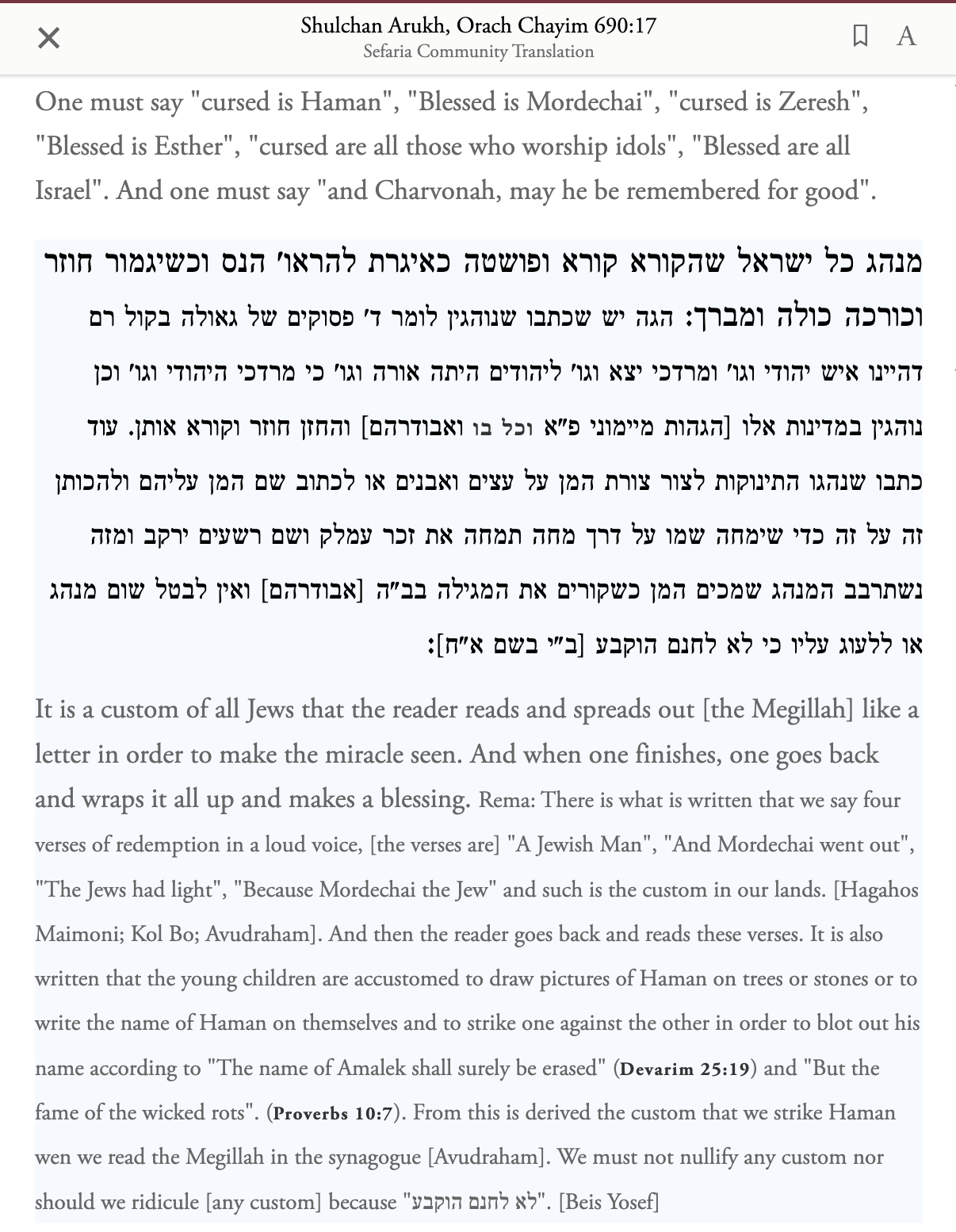
This is the living form of the very command in Deuteronomy to “blot out the remembrance of Amalek.” Haman’s name is cursed aloud, year after year, in synagogues around the world. And that is the fate the Quran itself assigns to Pharaoh’s circle: those who “continued to commit tyranny on earth” and “could not evade” what was coming (29:39). The Quran’s sura on this story speaks of a curse that follows Pharaoh and his hosts in this life (28:42), and Haman stands inside those hosts, named with Pharaoh as a unit in 28:6 and 28:8. So when the Quran places Haman in the scene of Moses and Pharaoh, it is placing him among the very figures whom scripture condemns, and whose names the faithful, in Jewish practice, still curse.
It is entirely fitting, then, that Haman should appear in the story of Moses beside Pharaoh. The tradition that curses one name in the synagogue each spring is the same tradition that the Quran presumes when it sets the two men side by side in judgment.
Conclusion
Return to the two builders.
One is told to fire clay into brick and raise a tower, so a king can look at the God of Moses. The other builds a gallows for a man who would not bow, and finds himself hanged from it. In both stories, the minister is the instrument of a ruler’s pride, in both a people hangs in the balance, and in both the whole structure turns on the one who built it.
The objection says the Quran made an error by putting a Persian courtier in Egypt. But the evidence points the other way. The Haman of Esther is already a figure with no outside history, a man whose identity shifts from text to text, whose ancestry links him to the Exodus wilderness, whose name the rabbis treated as a riddle, and whom later tradition read as Pharaoh’s heir and improver. The Quran imports nothing of his Persian setting. It keeps only his role. And it is consistent about it, in six verses, in three different suras, always beside Pharaoh and always as the builder of the ruler’s will.
That is not what confusion looks like. It is what an archetype looks like: a name that means a kind of man, placed where that kind of man belongs.
The cursing of Haman in synagogues, and the curse on Pharaoh’s circle in the Quran, are two ends of the same thread. Wherever a proud ruler sets out to climb past his creator or to erase a people, scripture sends the same man to stand beside him. And wherever that happens, the story ends the same way: the tower falls, the gallows turns, and the name is blotted out.
Related Articles:


