
Adapted from a video presentation. Each section links to its place in the original talk. (Watch on YouTube)
Introduction
Can it be shown that the Quran knows Hebrew? This article walks through about thirty examples in which the Quran’s Arabic seems to reflect Hebrew, Aramaic, or Syriac. Because these are all Semitic languages, many examples overlap, since the languages share roots and vocabulary. Some examples, though, are unique to one language.
The goal is a modest but significant conclusion: the speaker of the Quran must have known at least one of these languages. That matters because the Prophet Muhammad was an Arab who spoke only Arabic, and not to have known how to speak a foreign language. If the Quran shows command of Hebrew, Aramaic, or Syriac, it points to a source beyond the Prophet, namely God, who knows all languages.
A few notes on method:
- Many of the observations below have been noticed independently by non-Muslim and secular scholars of the Quran (Nicolai Sinai, Gabriel Reynolds, Angelika Neuwirth, Holger Zellentin, Uri Rubin, Reuven Firestone, Neal Robinson, and others). They are cited not as authorities on faith, but to show that the linguistic patterns are visible to critical readers.
- Where the Quran’s vocabulary is unusual (a rare word, a word used only once, or a word used only in a Jewish or Christian context), the unusual choice is part of the evidence.
- Bible quotations are from the RSV, with the Hebrew (or Aramaic, or Greek) where it matters. Verse numbering in the Hebrew text sometimes differs by one from English versions; notes are given where this applies.
Contents
- Raʿina
- Bariʾ
- Samiʿna wa ʿasayna
- Sina and nawm
- Tamam
- Millah
- Aḥad
- Lā khalāqa lahum
- Ḥanan
- Zakariyya
- Ḥiṭṭah
- Asfar
- Yamm
- Asbaṭ
- Qudus
- Ḥaqq
- Al-Mu’tafikat
- Ṭur
- Ṭufan
- Al-Ḥayy al-Qayyum
- Ḥanif
- Sakinah
- Tabut
- Maqalid
- Psalm 84 and Bakkah
- Rijz
- Nuqaddisu laka
- Inheriting eternal life
1. Raʿina (رَاعِنَا)
The passage. In Surah 4:46 the Quran criticizes some of the Jews for twisting their tongues when they say rāʿinā, and says it would have been better for them to say unẓurnā instead.
Quran 4:46
مِنَ الَّذِينَ هَادُوا يُحَرِّفُونَ الْكَلِمَ عَن مَّوَاضِعِهِ وَيَقُولُونَ سَمِعْنَا وَعَصَيْنَا وَاسْمَعْ غَيْرَ مُسْمَعٍ وَرَاعِنَا لَيًّا بِأَلْسِنَتِهِمْ وَطَعْنًا فِي الدِّينِ ۚ وَلَوْ أَنَّهُمْ قَالُوا سَمِعْنَا وَأَطَعْنَا وَاسْمَعْ وَانظُرْنَا لَكَانَ خَيْرًا لَّهُمْ وَأَقْوَمَ وَلَٰكِن لَّعَنَهُمُ اللَّهُ بِكُفْرِهِمْ فَلَا يُؤْمِنُونَ إِلَّا قَلِيلًا
Among those who are Jewish, some distort the words from their places, and say, “We hear, and we disobey,” and “Hear, may you not be heard,” and “Raa’ina,” twisting with their tongues and slandering the religion. If they had said, “We hear and we obey,” and “Listen,” and “Unthurna,” it would have been better for them and more upright. But GOD has cursed them for their disbelief; they do not believe, except a few.
The puzzle. In Arabic, rāʿinā means “consider us” or “give us your attention,” and unẓurnā means “wait for us” or “look upon us.” They are near synonyms. So why does the Quran object to one and recommend the other?
The answer. The Quran does not merely say they said rāʿinā. It says they said it twisting their tongues and slandering the religion. The key is that Hebrew raʿ (רַע) means “evil” or “calamity.” The Jews were saying a perfectly good Arabic word, but with a twist of the tongue, turned it into a Hebrew insult aimed at the Prophet. They assumed he wouldn’t catch it, since he didn’t know Hebrew.
The believers made the same mistake. In 2:104, the believers themselves are told to stop using the word:
Quran 2:104
يَا أَيُّهَا الَّذِينَ آمَنُوا لَا تَقُولُوا رَاعِنَا وَقُولُوا انظُرْنَا وَاسْمَعُوا ۗ وَلِلْكَافِرِينَ عَذَابٌ أَلِيمٌ
O you who believe, do not say “Raa’ina“; say “Unthurna,” and listen. The disbelievers will incur a painful retribution.
This shows that even the believers did not realize what was wrong with the word. To them, it was fine because they did not know its Hebrew meaning. The Quran knew.
A telling detail. The very next verse mentions that the disbelievers do not wish any good to come to you from your Lord, and good is the opposite of the evil that raʿ means:
Quran 2:105
مَّا يَوَدُّ الَّذِينَ كَفَرُوا مِنْ أَهْلِ الْكِتَابِ وَلَا الْمُشْرِكِينَ أَن يُنَزَّلَ عَلَيْكُم مِّنْ خَيْرٍ مِّن رَّبِّكُمْ ۚ وَاللَّهُ يَخْتَصُّ بِرَحْمَتِهِ مَن يَشَاءُ ۚ وَاللَّهُ ذُو الْفَضْلِ الْعَظِيمِ
Neither those who disbelieve among the people of the scripture, nor the idolaters, wish that any good be sent down to you from your Lord. But GOD selects whomever He wills for His mercy. GOD possesses infinite grace.
Takeaway. The Quran exposes a Hebrew wordplay that neither the believers nor (it was assumed) the Prophet could have recognized.
2. Bariʾ (بَارِئ)
The passage. After the Israelites worship the golden calf, Moses tells them to repent to their bāriʾ:
Quran 2:54
وَإِذْ قَالَ مُوسَىٰ لِقَوْمِهِ يَا قَوْمِ إِنَّكُمْ ظَلَمْتُمْ أَنفُسَكُم بِاتِّخَاذِكُمُ الْعِجْلَ فَتُوبُوا إِلَىٰ بَارِئِكُمْ فَاقْتُلُوا أَنفُسَكُمْ ذَٰلِكُمْ خَيْرٌ لَّكُمْ عِندَ بَارِئِكُمْ فَتَابَ عَلَيْكُمْ ۚ إِنَّهُ هُوَ التَّوَّابُ الرَّحِيمُ
Recall that Moses said to his people, “O my people, you have wronged yourselves by worshiping the calf. You shall repent to your Creator, and kill your egos. This is better for you with your Creator.” He then redeemed you. He is the Redeemer, Most Merciful.
The puzzle. The Quran’s usual word for Creator is khāliq. Here Moses uses bāriʾ, a word that is rare in this sense. Why?
The Hebrew background. The Hebrew verb “to create” is bārāʾ (בָּרָא), the very verb that opens the Torah, and the participle boreʾ (בֹּרֵא) is the Hebrew for “Creator.”
Genesis 1:1 (RSV)
In the beginning God created the heavens and the earth.
בְּרֵאשִׁית בָּרָא אֱלֹהִים אֵת הַשָּׁמַיִם וְאֵת הָאָרֶץ
Isaiah 40:28 (RSV)
Have you not known? Have you not heard? The LORD is the everlasting God, the Creator of the ends of the earth. He does not faint or grow weary, his understanding is unsearchable.
הֲלוֹא יָדַעְתָּ אִם־לֹא שָׁמַעְתָּ אֱלֹהֵי עוֹלָם יְהוָה בּוֹרֵא קְצוֹת הָאָרֶץ לֹא יִיעַף וְלֹא יִיגָע אֵין חֵקֶר לִתְבוּנָתוֹ
Why it matters. The speaker in 2:54 is Moses, and the word he uses for “Creator” matches the Hebrew word for create. Nicolai Sinai observes that the Quranic occurrences of bar’ (to create), bāriʾ (creator), and barīya (creatures) are all Medinan and appear to reflect the influence of Hebrew bārāʾ or Aramaic barā, probably mediated by the Jewish residents of Medina. He notes that this fits well with 2:54 using bāriʾ in an address by Moses. The presenters take this further: the Quran’s use of the term only in Medina, where Jews lived, suggests it knows this is the Hebrew term for create in the Tanakh.
3. Samiʿna wa ʿasayna (سَمِعْنَا وَعَصَيْنَا)
This is perhaps the most famous example.
The passage. At Mount Sinai, God takes a covenant from the Children of Israel, and they respond:
Quran 2:93
وَإِذْ أَخَذْنَا مِيثَاقَكُمْ وَرَفَعْنَا فَوْقَكُمُ الطُّورَ خُذُوا مَا آتَيْنَاكُم بِقُوَّةٍ وَاسْمَعُوا ۖ قَالُوا سَمِعْنَا وَعَصَيْنَا وَأُشْرِبُوا فِي قُلُوبِهِمُ الْعِجْلَ بِكُفْرِهِمْ ۚ قُلْ بِئْسَمَا يَأْمُرُكُم بِهِ إِيمَانُكُمْ إِن كُنتُم مُّؤْمِنِينَ
Recall that we made a covenant with you, and raised Mount Sinai above you: “Hold fast to what we have given you, and listen.” They said, “We hear, but we disobey.” Their hearts were filled with the love of the calf, due to their disbelief. Say, “Miserable indeed is what your faith dictates, if you are really believers.”
Quran 4:46
مِنَ الَّذِينَ هَادُوا يُحَرِّفُونَ الْكَلِمَ عَن مَّوَاضِعِهِ وَيَقُولُونَ سَمِعْنَا وَعَصَيْنَا وَاسْمَعْ غَيْرَ مُسْمَعٍ وَرَاعِنَا لَيًّا بِأَلْسِنَتِهِمْ وَطَعْنًا فِي الدِّينِ ۚ وَلَوْ أَنَّهُمْ قَالُوا سَمِعْنَا وَأَطَعْنَا وَاسْمَعْ وَانظُرْنَا لَكَانَ خَيْرًا لَّهُمْ وَأَقْوَمَ وَلَٰكِن لَّعَنَهُمُ اللَّهُ بِكُفْرِهِمْ فَلَا يُؤْمِنُونَ إِلَّا قَلِيلًا
Among those who are Jewish, some distort the words from their places, and say, “We hear, and we disobey,” and “Hear, may you not be heard,” and “Raa’ina,” twisting with their tongues and slandering the religion. If they had said, “We hear and we obey,” and “Listen,” and “Unthurna,” it would have been better for them and more upright. But GOD has cursed them for their disbelief; they do not believe, except a few.
The puzzle. Reading 2:93 and 4:46, one gets the impression that the Israelites did not literally say, “We hear and we disobey.” Many commentators have said as much: this is not what they spoke, but how they were. So why does the Quran quote them as saying it?
The Hebrew background. In the Torah’s account of the same event, the Israelites say something very close in sound but opposite in meaning:
Deuteronomy 5:27 (RSV)
Go near, and hear all that the LORD our God will say; then tell us all that the LORD our God will tell you, and we will hear and do it.
קְרַב אַתָּה וּשְׁמָע אֵת כָּל־אֲשֶׁר יֹאמַר יְהוָה אֱלֹהֵינוּ וְאַתְּ תְּדַבֵּר אֵלֵינוּ אֵת כָּל־אֲשֶׁר יְדַבֵּר יְהוָה אֱלֹהֵינוּ אֵלֶיךָ וְשָׁמַעְנוּ וְעָשִׂינוּ
The Hebrew shāmaʿnu weʿāśinu (“we will hear and do”) sounds almost identical to the Arabic samiʿnā waʿaṣaynā (“we hear and we disobey”). The Quran seems to echo the literal Hebrew words the Israelites spoke, while translating what they really meant, or might as well have said.
Nicolai Sinai describes this as a punning inversion that turns a Hebrew declaration of obedience into an Arabic sentence meaning the opposite, so that a biblical affirmation is turned on its head and becomes a self-indictment.
Takeaway. The Arabic of the Quran recalls the Hebrew of Deuteronomy 5:27, which shows knowledge of the Bible in Hebrew.
4. Sina and nawm (سِنَةٌ وَلَا نَوْمٌ)
The Quran. From the Throne Verse:
Quran 2:255
اللَّهُ لَا إِلَٰهَ إِلَّا هُوَ الْحَيُّ الْقَيُّومُ ۚ لَا تَأْخُذُهُ سِنَةٌ وَلَا نَوْمٌ ۚ لَّهُ مَا فِي السَّمَاوَاتِ وَمَا فِي الْأَرْضِ ۗ مَن ذَا الَّذِي يَشْفَعُ عِندَهُ إِلَّا بِإِذْنِهِ ۚ يَعْلَمُ مَا بَيْنَ أَيْدِيهِمْ وَمَا خَلْفَهُمْ ۖ وَلَا يُحِيطُونَ بِشَيْءٍ مِّنْ عِلْمِهِ إِلَّا بِمَا شَاءَ ۚ وَسِعَ كُرْسِيُّهُ السَّمَاوَاتِ وَالْأَرْضَ ۖ وَلَا يَئُودُهُ حِفْظُهُمَا ۚ وَهُوَ الْعَلِيُّ الْعَظِيمُ
GOD: there is no god except He, the Living, the Eternal. Neither slumber nor sleep overtakes Him. To Him belongs everything in the heavens and the earth. Who can intercede with Him, except in accordance with His will? He knows their past and their future. They can comprehend nothing of His knowledge, except as He wills. His dominion encompasses the heavens and the earth, and preserving them does not burden Him. He is the Most High, the Great.
The Bible.
Psalm 121:3–4 (RSV)
He will not let your foot be moved, he who keeps you will not slumber. Behold, he who keeps Israel will neither slumber nor sleep.
אַל־יִתֵּן לַמּוֹט רַגְלֶךָ אַל־יָנוּם שֹׁמְרֶךָ׃ הִנֵּה לֹא־יָנוּם וְלֹא יִישָׁן שׁוֹמֵר יִשְׂרָאֵל
(In the Hebrew text, these are verses 3 and 4.)
The parallel. Arabic sina (drowsiness) is cognate with Hebrew yāshān (to sleep), and Arabic nawm (sleep) is cognate with Hebrew yānūm (to slumber). The same roots appear, but the Quran flips their order: the Psalm says “slumber nor sleep” (yanum … yishan), and the Quran says “drowsiness nor sleep” (sina … nawm), in the reverse order. Both also use a double negation with lā (Hebrew lō): lō yanum welō yishan and lā taʾkhudhuhu sinatun walā nawm. Nicolai Sinai points this out in The Qur’an: A Historical-Critical Introduction (p. 140).
5. Tamam (تَمَامًا)
Quran 6:154
ثُمَّ آتَيْنَا مُوسَى الْكِتَابَ تَمَامًا عَلَى الَّذِي أَحْسَنَ وَتَفْصِيلًا لِّكُلِّ شَيْءٍ وَهُدًى وَرَحْمَةً لَّعَلَّهُم بِلِقَاءِ رَبِّهِمْ يُؤْمِنُونَ
Then we gave Moses the scripture, perfected for those who do good, detailing everything, and a guidance and mercy, that they may believe in meeting their Lord.
Psalm 19:7 (RSV)
The law of the LORD is perfect, reviving the soul; the testimony of the LORD is sure, making wise the simple;
תּוֹרַת יְהוָה תְּמִימָה מְשִׁיבַת נָפֶשׁ עֵדוּת יְהוָה נֶאֱמָנָה מַחְכִּימַת פֶּתִי
(In the Hebrew text, this is Psalm 19:8.)
The parallel. The Quran describes the scripture given to Moses with tamām (complete, perfect). Psalm 19, a reflection on the revelation of the law to Moses, calls the Torah of the Lord tĕmīmāh (perfect). Gabriel Reynolds notes that these verses are closely connected: Psalm 19:7 describes the law as perfect (Hebrew tĕmīmāh), while Quran 6:154 describes the book given to Moses as completing or perfecting (Arabic tamām).
An objection answered. One might say the Prophet simply heard such things orally. But understanding the word, its context, and its connections would require actually knowing the language. These links go down to the level of the words themselves, which indicates textual knowledge rather than vague oral tradition. And if one suggests a human teacher, whoever the source is must have had access to another language. To explain every connection by saying “it was floating around orally” proves too much: one could say anything, such as that an invisible flying bishop taught all of Mecca the Bible. There is no evidence for such claims.
6. Millah (مِلَّة)
The Quran. Millah is one of the Quran’s words for religion. It appears about fifteen times, and eight or nine of those link it with Abraham:
Quran 6:161
قُلْ إِنَّنِي هَدَانِي رَبِّي إِلَىٰ صِرَاطٍ مُّسْتَقِيمٍ دِينًا قِيَمًا مِّلَّةَ إِبْرَاهِيمَ حَنِيفًا ۚ وَمَا كَانَ مِنَ الْمُشْرِكِينَ
Say, “My Lord has guided me to a straight path; the perfect religion; the creed of Abraham, monotheism. He was never an idol worshiper.”
The Bible. Abraham is the biblical figure associated with circumcision:
Genesis 17:10–11 (RSV)
This is my covenant, which you shall keep, between me and you and your descendants after you: Every male among you shall be circumcised. You shall be circumcised in the flesh of your foreskins, and it shall be a sign of the covenant between me and you.
זֹאת בְּרִיתִי אֲשֶׁר תִּשְׁמְרוּ בֵּינִי וּבֵינֵיכֶם וּבֵין זַרְעֲךָ אַחֲרֶיךָ הִמּוֹל לָכֶם כָּל־זָכָר׃ וּנְמַלְתֶּם אֵת בְּשַׂר עָרְלַתְכֶם וְהָיָה לְאוֹת בְּרִית בֵּינִי וּבֵינֵיכֶם
The parallel. In rabbinic Hebrew, the word for circumcision is milah (מִילָה). For example, Mishnah Nedarim 3:11 quotes Rabbi Ishmael: gĕdolah milah (גְּדוֹלָה מִילָה), “great is circumcision.” The Arabic millah sounds very similar, and the Quran ties it to Abraham, the figure of circumcision.
The equivalent root to the Quranic Arabic word millat مِلَّةَ in Old Testament Hebrew is מלל (mēm-lamed-lamed). When used as a verb, this root in the Hebrew Old Testament has four distinct meanings in the form of מלל (malal). The definition for all four verbs has to do with separating or severing something from what it’s normally connected to.
One of these four definitions specifically means to circumcise and is a by-form of the verb מול (mul). We see this form used in Genesis 17:11.
If we look at all the other occurrences of the word מול (mul) in the Bible, we see this word occurs thirty-six times. In the entire Bible, this word appears in only two verses followed by the name Abraham. These two verses are Genesis 17:26 and Genesis 21:4. Below are both verses showing the Hebrew equivalent of the Arabic مِلَّةَ إِبْرَاهِيمَ (millata ib’rāhīma / the religion of Abraham), which in Old Testament Hebrew occurs as the “circumcision of Abraham”.
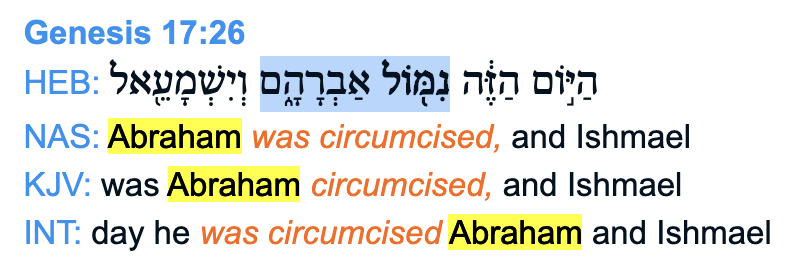

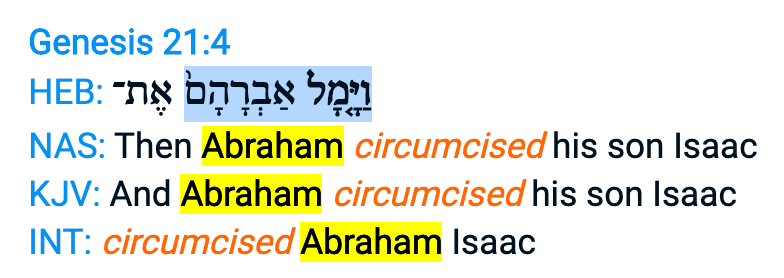

How scholars see it. Angelika Neuwirth proposed that Arabic millah is actually derived from Hebrew milah. Nicolai Sinai notes that this tallies well with the Medinan references to the millah of Abraham, though he ultimately rejects the derivation, as the presenters do. The point does not depend on etymology. Whether or not the words are historically related, the Quran’s consistent pairing of millah with Abraham looks like an interlinguistic pun: a subtle wordplay for attentive ears, which rabbis listening to the Quran could catch.
7. Aḥad (أَحَد)
Quran 112:1–4
قُلْ هُوَ اللَّهُ أَحَدٌ اللَّهُ الصَّمَدُ لَمْ يَلِدْ وَلَمْ يُولَدْ وَلَمْ يَكُن لَّهُ كُفُوًا أَحَدٌ
Say, “He is the one and only GOD. The Absolute GOD. Never did He beget, nor was He begotten. None equals Him.”
Deuteronomy 6:4 (RSV)
Hear, O Israel: The LORD our God is one LORD;
שְׁמַע יִשְׂרָאֵל יְהוָה אֱלֹהֵינוּ יְהוָה אֶחָד
The puzzle. What one would normally expect in Arabic is Allāhu wāḥid, but the Quran says Allāhu aḥad. The medieval scholar Ibn Taymiyyah observed that aḥad is not used this way in ordinary Arabic; it typically appears in negations and similar contexts, not as an affirmative description. Its use here is unprecedented.
The explanation. Hebrew eḥad (אֶחָד) in the Shema is the natural counterpart. Angelika Neuwirth argues that the Quran’s peculiar use of the rare form aḥad is best heard against the cognate in the Shema, and Holger Zellentin concurs, noting that the Shema’s eḥad is likewise preserved in the Aramaic translation of the Targum and the Syriac Peshitta.
Takeaway. By using aḥad in an unprecedented way, the Quran shows knowledge of Deuteronomy 6:4 as Moses declared it in Hebrew.
8. Lā khalāqa lahum (لَا خَلَاقَ لَهُمْ)
Quran 3:77
إِنَّ الَّذِينَ يَشْتَرُونَ بِعَهْدِ اللَّهِ وَأَيْمَانِهِمْ ثَمَنًا قَلِيلًا أُولَٰئِكَ لَا خَلَاقَ لَهُمْ فِي الْآخِرَةِ وَلَا يُكَلِّمُهُمُ اللَّهُ وَلَا يَنظُرُ إِلَيْهِمْ يَوْمَ الْقِيَامَةِ وَلَا يُزَكِّيهِمْ وَلَهُمْ عَذَابٌ أَلِيمٌ
Those who trade GOD’s covenant and their oaths for a cheap price, will have no share for them in the Hereafter. GOD will not speak to them, nor look at them on the Day of Resurrection, nor will He purify them. They will suffer a painful retribution.
The Hebrew background. The Mishnah, the foundational text of rabbinic Judaism, says:
Mishnah Sanhedrin 10:1
כָּל־יִשְׂרָאֵל יֵשׁ לָהֶם חֵלֶק לָעוֹלָם הַבָּא
All Israel they have a share in the world to come.
The parallel. The Quranic phrase lā khalāqa lahum (“they have no share”) sounds like the Mishnah’s yesh lahem ḥēleq (“they have a share”), with the Quran inverting the Mishnah’s language. And it does so when speaking to the very Jews who believed in the Mishnah.
Haggai Mazuz, in his study of the Jews of Medina, calls this a bilingual pun, and Nicolai Sinai likewise points to this phrase (in 2:102, 2:200, and 3:77) as likely echoing Mishnaic declarations that certain categories of people have no share in the world to come. The phrase occurs only three times in the Quran, all in Medina, where the Jews lived, and two of the three are directed at the Jews specifically. All of this raises the likelihood that the phrase is a deliberate echo of a rabbinic formula.
9. Ḥanan (حَنَانًا)
Quran 19:12–13
يَا يَحْيَىٰ خُذِ الْكِتَابَ بِقُوَّةٍ ۖ وَآتَيْنَاهُ الْحُكْمَ صَبِيًّا وَحَنَانًا مِّن لَّدُنَّا وَزَكَاةً ۖ وَكَانَ تَقِيًّا
“O John, you shall uphold the scripture strongly.” We granted him wisdom as a child. And kindness from us, and purity. He was righteous.
The puzzle. The word ḥanān (affection, tenderness) occurs only here in the Quran, and it is given to John the Baptist (Yaḥyā). Why?
The Hebrew background. The Greek New Testament calls him Iōannēs, but his Hebrew name is Yoḥanan (יוֹחָנָן), built on the root ḥ-n-n (“to be gracious”). The Quran gives John ḥanān, a word that recalls the root of his Hebrew name.
Reinforcement within the surah. Surah Maryam draws deliberate parallels between John and Jesus. When Jesus is announced, the Quran uses the ordinary word for mercy:
Quran 19:21
قَالَ كَذَٰلِكِ قَالَ رَبُّكِ هُوَ عَلَيَّ هَيِّنٌ ۖ وَلِنَجْعَلَهُ آيَةً لِّلنَّاسِ وَرَحْمَةً مِّنَّا ۚ وَكَانَ أَمْرًا مَّقْضِيًّا
He said, “Thus said your Lord: ‘It is easy for Me. We will render him a sign for the people, and a mercy from us. It is a matter already decreed.'”
For Jesus it is raḥmah; for John it is ḥanān. Nicolai Sinai says ḥanān could be a pun going back to the Hebrew or Syriac form of John’s name. A more skeptical scholar, Alfred-Louis de Prémare, concludes that the Quranic author certainly has some knowledge of Aramaic, “at worst indirect, but more probably direct,” and cites this wordplay on John’s name in 19:13 as confirmation.
A further resonance: in Islamic tradition, the mother of Mary (for whom Surah Maryam is named) is called Hannah, which comes from the same Hebrew root.
10. Zakariyya (زَكَرِيَّا)
The same passage seems to pun on the name of John’s father.
Quran 19:2
ذِكْرُ رَحْمَتِ رَبِّكَ عَبْدَهُ زَكَرِيَّا
A mention of your Lord’s mercy towards His servant Zachariah.
The Hebrew background. The name Zechariah (זְכַרְיָה, Zekharyah) combines zākar (“remember”) and Yah, the short form of the divine name Yahweh. It means “Yahweh remembers.”
The parallel. In 19:2, the words dhikr (reminder, the Arabic equivalent of zakar) and rabb (Lord) are placed right beside the name Zachariah. Jews customarily substituted Adonai (“Lord”) for the divine name, and Christians used Kyrios (“Lord”), so rabb can function as a stand-in for Yahweh, and the pun is preserved: “your Lord’s remembrance … Zachariah.”
Why it looks intentional. Elsewhere in Surah Maryam the Quran says “remember in the scripture Mary” (19:16) and “remember in the scripture Abraham” (19:41), but only for Zachariah does it also mention the Lord alongside the remembrance. The pun appears a second time in Surah Al Imran, where Zachariah is told to remember his Lord:
Quran 3:41
قَالَ رَبِّ اجْعَل لِّي آيَةً ۖ قَالَ آيَتُكَ أَلَّا تُكَلِّمَ النَّاسَ ثَلَاثَةَ أَيَّامٍ إِلَّا رَمْزًا ۗ وَاذْكُر رَّبَّكَ كَثِيرًا وَسَبِّحْ بِالْعَشِيِّ وَالْإِبْكَارِ
He said, “My Lord, give me a sign.” He said, “Your sign is that you will not speak to the people for three days, except by gestures. Remember your Lord frequently, and praise Him evening and morning.”
Zachariah is not a prominent figure in the Quran the way Moses is, yet twice he is tied to remembrance and the Lord. That repetition suggests the pun is deliberate.
11. Ḥiṭṭah (حِطَّةٌ)
The passage. The Children of Israel are told to enter a city and say ḥiṭṭah, and God would forgive their sins. They changed the word.
Quran 2:58–59
وَإِذْ قُلْنَا ادْخُلُوا هَٰذِهِ الْقَرْيَةَ فَكُلُوا مِنْهَا حَيْثُ شِئْتُمْ رَغَدًا وَادْخُلُوا الْبَابَ سُجَّدًا وَقُولُوا حِطَّةٌ نَّغْفِرْ لَكُمْ خَطَايَاكُمْ ۚ وَسَنَزِيدُ الْمُحْسِنِينَ فَبَدَّلَ الَّذِينَ ظَلَمُوا قَوْلًا غَيْرَ الَّذِي قِيلَ لَهُمْ فَأَنزَلْنَا عَلَى الَّذِينَ ظَلَمُوا رِجْزًا مِّنَ السَّمَاءِ بِمَا كَانُوا يَفْسُقُونَ
Recall that we said, “Enter this community and eat from it as you please. Enter the gate humbly and say, ‘Forgive us,’ and we will forgive your sins and increase the reward for the righteous.” But the transgressors changed the word to something different from what had been said to them. We therefore sent down upon the transgressors a plague from the sky, for their wickedness.
Quran 7:161–162
وَإِذْ قِيلَ لَهُمُ اسْكُنُوا هَٰذِهِ الْقَرْيَةَ وَكُلُوا مِنْهَا حَيْثُ شِئْتُمْ وَقُولُوا حِطَّةٌ وَادْخُلُوا الْبَابَ سُجَّدًا نَّغْفِرْ لَكُمْ خَطِيئَاتِكُمْ ۚ سَنَزِيدُ الْمُحْسِنِينَ فَبَدَّلَ الَّذِينَ ظَلَمُوا مِنْهُمْ قَوْلًا غَيْرَ الَّذِي قِيلَ لَهُمْ فَأَرْسَلْنَا عَلَيْهِمْ رِجْزًا مِّنَ السَّمَاءِ بِمَا كَانُوا يَظْلِمُونَ
Recall that it was said to them, “Dwell in this community and eat from it as you please, and say, ‘Forgive us,’ and enter the gate humbly. We will forgive your sins and increase the reward for the righteous.” But the transgressors among them substituted a different word from what had been said to them. We sent upon them a plague from the sky for their transgression.
The puzzle. What does ḥiṭṭah mean? Classical commentators offered various opinions. One scholar reports an opinion that the people were commanded to say a word whose meaning “we do not know.” Al-Razi and al-Alusi also report an opinion that ḥiṭṭah is a word from the People of the Scripture whose meaning is unknown in Arabic. These scholars do not adopt that view, but they report that it existed, and it makes sense: the word is tied in both passages to God forgiving sins.
The Hebrew background. In the Hebrew Bible, the classic formula for seeking forgiveness is to confess sin with a form of ḥāṭāʾ (חטא), “to sin”: ḥāṭāʾtî (“I have sinned”) when an individual speaks, or ḥāṭāʾnû (“we have sinned”) when a group does.
Joshua 7:20 (RSV)
And Achan answered Joshua, “Of a truth I have sinned against the LORD God of Israel, and this is what I did:
וַיַּעַן עָכָן אֶת־יְהוֹשֻׁעַ וַיֹּאמֶר אָמְנָה אָנֹכִי חָטָאתִי לַיהוָה אֱלֹהֵי יִשְׂרָאֵל וְכָזֹאת וְכָזֹאת עָשִׂיתִי
Numbers 14:40 (RSV)
And in the morning they rose early and went up to the heights of the hill country, saying, “Here we are, we will go up to the place which the LORD has promised; for we have sinned.”
וַיַּשְׁכִּמוּ בַבֹּקֶר וַיַּעֲלוּ אֶל־רֹאשׁ־הָהָר לֵאמֹר הִנֶּנּוּ וְעָלִינוּ אֶל־הַמָּקוֹם אֲשֶׁר־אָמַר יְהוָה כִּי חָטָאנוּ
1 Samuel 7:6 (RSV)
So they gathered at Mizpah, and drew water and poured it out before the LORD, and fasted on that day, and said there, “We have sinned against the LORD.” And Samuel judged the people of Israel at Mizpah.
וַיִּקָּבְצוּ הַמִּצְפָּתָה וַיִּשְׁאֲבוּ־מַיִם וַיִּשְׁפְּכוּ לִפְנֵי יְהוָה וַיָּצוּמוּ בַּיּוֹם הַהוּא וַיֹּאמְרוּ שָׁם חָטָאנוּ לַיהוָה וַיִּשְׁפֹּט שְׁמוּאֵל אֶת־בְּנֵי יִשְׂרָאֵל בַּמִּצְפָּה
The parallel. The Quran tells the Israelites to say ḥiṭṭah and God will forgive their khaṭāyā (sins). The word khaṭāyā is the Arabic cognate of the Hebrew root ḥ-ṭ-ʾ. So the Quran seems first to transliterate a confession formula (ḥiṭṭah) and then to translate it by using the cognate word for sin. A scholar of Semitic languages argues that the Israelites are being asked to offer a confession of their unspecified sin, with the formula “we have sinned” in Hebrew, Aramaic, or Syriac represented in the Quran by ḥiṭṭah, a reasonably close Arabic approximation.
The changed word. The commentators also discuss what the Israelites said instead. One report says they said ḥinṭah, which means “wheat” in Arabic. (Ibn Abbas is reported to have said they may have said both words, or something like them.) This works even better in Hebrew, because the Hebrew for “wheat” is ḥiṭṭāh (חִטָּה), which sounds almost exactly like the formula for sin.
12. Asfar (أَسْفَارًا)
Quran 62:5
مَثَلُ الَّذِينَ حُمِّلُوا التَّوْرَاةَ ثُمَّ لَمْ يَحْمِلُوهَا كَمَثَلِ الْحِمَارِ يَحْمِلُ أَسْفَارًا ۚ بِئْسَ مَثَلُ الْقَوْمِ الَّذِينَ كَذَّبُوا بِآيَاتِ اللَّهِ ۚ وَاللَّهُ لَا يَهْدِي الْقَوْمَ الظَّالِمِينَ
The example of those who were entrusted with the Torah, then failed to uphold it, is that of a donkey carrying volumes. Miserable indeed is the example of people who reject GOD’s revelations. GOD does not guide the transgressing people.
The puzzle. The Quran’s normal word for “books” is kutub (singular kitāb), used all over the Quran. Here it says asfār, and this is the only time asfār appears in the Quran in the sense of “books.”
The explanation. The verse is addressed to the Jews, specifically to those who fail to observe the Torah. The Hebrew word for “book” is sēfer (סֵפֶר), plural sĕfārîm (סְפָרִים). The Arabic asfār matches the Hebrew plural, so a learned Jewish audience would immediately hear the echo.
13. Yamm (يَمّ)
The Quran’s normal word for sea is baḥr, but it also uses yamm, which can mean sea or river. It appears eight times, and all eight concern the story of Moses.
Quran 7:136
فَانتَقَمْنَا مِنْهُمْ فَأَغْرَقْنَاهُمْ فِي الْيَمِّ بِأَنَّهُمْ كَذَّبُوا بِآيَاتِنَا وَكَانُوا عَنْهَا غَافِلِينَ
Consequently, we avenged ourselves against them; we drowned them in the sea for rejecting our signs and for being heedless thereof.
Quran 28:7
وَأَوْحَيْنَا إِلَىٰ أُمِّ مُوسَىٰ أَنْ أَرْضِعِيهِ ۖ فَإِذَا خِفْتِ عَلَيْهِ فَأَلْقِيهِ فِي الْيَمِّ وَلَا تَخَافِي وَلَا تَحْزَنِي ۖ إِنَّا رَادُّوهُ إِلَيْكِ وَجَاعِلُوهُ مِنَ الْمُرْسَلِينَ
We inspired Moses’ mother: “Nurse him, and when you fear for him, put him in the river. Do not fear, and do not grieve. We will return him to you, and will make him one of the messengers.”
The eight uses cover God drowning Pharaoh and his army, God inspiring Moses’ mother to place him in the yamm, the promise that the yamm will cast him onto the bank, and Moses’ announcement that he will burn the golden calf and scatter it in the yamm. By contrast, baḥr is used generally, including in the story of Moses, but also for the signs of creation, the sea on the Day of Judgment, the lawfulness of seafood, and more. The Quran’s usual word for “river” (nahr) is likewise used generally.
Exodus 15:4 (RSV)
Pharaoh’s chariots and his host he cast into the sea; and his picked officers were sunk in the Red Sea.
מַרְכְּבֹת פַּרְעֹה וְחֵילוֹ יָרָה בַיָּם וּמִבְחַר שָׁלִשָׁיו טֻבְּעוּ בְיַם־סוּף
The parallel. The Hebrew word for “sea” is yām (יָם), and the cognate Syriac is yammā. Classical commentary on 7:136 states that yamm is Hebrew for baḥr. A modern commentator says its origin is Hebrew and that the Quran chose it when speaking of the Hebrews’ story. Gabriel Reynolds likewise notes that yamm is not the typical Arabic term but is closely related to the common word for sea in Syriac and other Semitic languages. The Quran’s use of yamm only for accounts of Moses shows awareness of the Hebrew and Syriac word.
14. Asbaṭ (أَسْبَاط)
Quran 7:160
وَقَطَّعْنَاهُمُ اثْنَتَيْ عَشْرَةَ أَسْبَاطًا أُمَمًا ۚ وَأَوْحَيْنَا إِلَىٰ مُوسَىٰ إِذِ اسْتَسْقَاهُ قَوْمُهُ أَنِ اضْرِب بِّعَصَاكَ الْحَجَرَ ۖ فَانبَجَسَتْ مِنْهُ اثْنَتَا عَشْرَةَ عَيْنًا ۖ قَدْ عَلِمَ كُلُّ أُنَاسٍ مَّشْرَبَهُمْ ۚ وَظَلَّلْنَا عَلَيْهِمُ الْغَمَامَ وَأَنزَلْنَا عَلَيْهِمُ الْمَنَّ وَالسَّلْوَىٰ ۖ كُلُوا مِن طَيِّبَاتِ مَا رَزَقْنَاكُمْ ۚ وَمَا ظَلَمُونَا وَلَٰكِن كَانُوا أَنفُسَهُمْ يَظْلِمُونَ
We divided them into twelve tribes, as separate communities. And we inspired Moses, when his people asked him for water: “Strike the rock with your staff.” Twelve springs gushed out therefrom, and every group of them knew their own source. We shaded them with clouds, and sent down to them manna and quail: “Eat from the good things we have provided for you.” It was not us that they wronged; it was their own souls that they wronged.
The word asbāṭ appears five times in the Quran, and every time it refers to the twelve tribes of Israel.
Genesis 49:28 (RSV)
All these are the twelve tribes of Israel; and this is what their father said to them as he blessed them, blessing each with the blessing suitable to him.
כָּל־אֵלֶּה שִׁבְטֵי יִשְׂרָאֵל שְׁנֵים עָשָׂר וְזֹאת אֲשֶׁר־דִּבֶּר לָהֶם אֲבִיהֶם וַיְבָרֶךְ אוֹתָם אִישׁ אֲשֶׁר כְּבִרְכָתוֹ בֵּרַךְ אֹתָם
The parallel. The Hebrew for “tribes” is shĕvāṭîm (שְׁבָטִים; singular shevet). Nicolai Sinai notes that asbāṭ is probably derived from Hebrew shevet or its Aramaic cognate and clearly designates the twelve tribes of Israel; he even suggests the word may come from the language of Arabic-speaking Jews. Whether or not he is right about the route, the Quran uses asbāṭ exclusively for the Israelite tribes.
The contrast. When the Quran speaks to humanity in general, it uses entirely different words for tribes and peoples:
Quran 49:13
يَا أَيُّهَا النَّاسُ إِنَّا خَلَقْنَاكُم مِّن ذَكَرٍ وَأُنثَىٰ وَجَعَلْنَاكُمْ شُعُوبًا وَقَبَائِلَ لِتَعَارَفُوا ۚ إِنَّ أَكْرَمَكُمْ عِندَ اللَّهِ أَتْقَاكُمْ ۚ إِنَّ اللَّهَ عَلِيمٌ خَبِيرٌ
O people, we created you from a male and a female, and rendered you distinct peoples and tribes, that you may recognize one another. The best among you in the sight of GOD is the most righteous. GOD is Omniscient, Cognizant.
Here the words are shuʿūb and qabāʾil. So the Quran reserves asbāṭ for Israel, recalling the Hebrew word that rabbis would have associated with tribes. As the co-presenter noted, even granting Sinai’s suggestion that the word was borrowed into Arabic, it still shows knowledge of the origin of the word, given its use only for the Jews.
15. Qudus (مُقَدَّس)
The Bible. At the burning bush:
Exodus 3:5 (RSV)
Then he said, “Do not come near; put off your shoes from your feet, for the place on which you are standing is holy ground.”
וַיֹּאמֶר אַל־תִּקְרַב הֲלֹם שַׁל־נְעָלֶיךָ מֵעַל רַגְלֶיךָ כִּי הַמָּקוֹם אֲשֶׁר אַתָּה עוֹמֵד עָלָיו אַדְמַת־קֹדֶשׁ הוּא
The Quran. The same incident:
Quran 20:12
إِنِّي أَنَا رَبُّكَ فَاخْلَعْ نَعْلَيْكَ ۖ إِنَّكَ بِالْوَادِ الْمُقَدَّسِ طُوًى
“I am your Lord. Take off your shoes; you are in the sacred valley of Tuwa.”
The parallel. The Hebrew word for “holy” is qōdesh (קֹדֶשׁ), and the Quran uses its Arabic cognate muqaddas (“sanctified”) for the same ground. Nicolai Sinai says the Quran’s characterization of the burning-bush site as holy may reflect Exodus 3:5, and Uri Rubin observes that the description of the valley as muqaddas bears an obvious resemblance to the word qōdesh, which the Hebrew Bible uses for the ground on which Moses stood.
The co-presenter added that the Quran uses the same root elsewhere in Jewish and Christian contexts, such as the Holy Spirit (rūḥ al-qudus), the Holy Land (al-arḍ al-muqaddasah), and the Arabic name for the Jerusalem temple (bayt al-maqdis).
16. Ḥaqq (الْحَقّ)
The story. In Surah Al-Baqarah 2:67–73, a man is murdered, and the Children of Israel are told to slaughter a cow. Part of the slaughtered cow is used to strike the dead man, who is revived. It is widely acknowledged that this story relates to two biblical laws, Numbers 19 (the red heifer) and Deuteronomy 21 (the heifer and the unsolved murder). In 2:71, after the Israelites have asked Moses for one specification after another, he gives the final one:
Quran 2:71
قَالَ إِنَّهُ يَقُولُ إِنَّهَا بَقَرَةٌ لَّا ذَلُولٌ تُثِيرُ الْأَرْضَ وَلَا تَسْقِي الْحَرْثَ مُسَلَّمَةٌ لَّا شِيَةَ فِيهَا ۚ قَالُوا الْآنَ جِئْتَ بِالْحَقِّ ۚ فَذَبَحُوهَا وَمَا كَادُوا يَفْعَلُونَ
He said, “He says it is a cow that has not been humiliated by plowing the land, or irrigating the crop; healthy, without blemish.” They said, “Now you have come with the truth.” They sacrificed it, albeit reluctantly.
The puzzle. The Israelites say jiʾta bil-ḥaqq (“you have brought the truth”). But saying this to Moses seems to imply that what he said before was not true, which would be a kind of apostasy. Some commentators therefore took ḥaqq here to mean not “truth” but “the decreed” or “a binding command.” Al-Alusi reports this opinion, and Ibn Ashur argued that ḥaqq here means not the opposite of falsehood but the firmly established command that admits of no ambiguity.
The Hebrew background.
Numbers 19:2 (RSV)
This is the statute (Torah) of the law which the LORD has commanded: Tell the people of Israel to bring you a red heifer without defect, in which is no blemish, and upon which a yoke has never come.
זֹאת חֻקַּת הַתּוֹרָה אֲשֶׁר־צִוָּה יְהוָה לֵאמֹר דַּבֵּר אֶל־בְּנֵי יִשְׂרָאֵל וְיִקְחוּ אֵלֶיךָ פָרָה אֲדֻמָּה תְּמִימָה אֲשֶׁר אֵין־בָּהּ מוּם אֲשֶׁר לֹא־עָלָה עָלֶיהָ עֹל
The red-heifer ritual is called a ḥuqqah (חֻקָּה), “statute” or “ordinance,” three times (Numbers 19:2, 19:10, and 19:21), and the rabbis likewise refer to it as a ḥuqqah.
The parallel. The Arabic ḥaqq is phonetically close to the Hebrew ḥuqqah and to its plural ḥuqqîm, and the meaning “decreed statute” that the commentators proposed fits the Hebrew meaning. As the presenter notes, Ibn Ashur obviously did not know about the Hebrew word in Numbers, so his reading is an independent verification derived purely from the context. A contemporary writer on Quranic intertextuality also argues that the Quranic term should not necessarily be understood as “truth,” but as a cognate of the Hebrew plural ḥuqqîm, understood here as a statute, and notes that Numbers 19 calls the red cow ritual a statute three times.
17. Al-Mu’tafikat (الْمُؤْتَفِكَات)
The Quran. The Quran sometimes calls the people of Lot, the inhabitants of Sodom and Gomorrah, al-mu’tafikāt, “the overturned cities” (9:70, 53:53, and 69:9).
Quran 69:9
وَجَاءَ فِرْعَوْنُ وَمَن قَبْلَهُ وَالْمُؤْتَفِكَاتُ بِالْخَاطِئَةِ
Pharaoh, and those before him, and the overturned cities, committed sins.
The Quran also states explicitly what happened:
Quran 15:74
فَجَعَلْنَا عَالِيَهَا سَافِلَهَا وَأَمْطَرْنَا عَلَيْهِمْ حِجَارَةً مِّن سِجِّيلٍ
We turned it upside down, and rained upon them stones of baked clay.
The Hebrew Bible. The Hebrew noun mahpēkhāh (מַהְפֵּכָה), “overthrow,” appears six times, and every time it is associated with Sodom and Gomorrah.
Isaiah 13:19 (RSV)
And Babylon, the glory of kingdoms, the splendor and pride of the Chaldeans, will be like Sodom and Gomorrah when God overthrew them.
וְהָיְתָה בָבֶל צְבִי מַמְלָכוֹת תִּפְאֶרֶת גְּאוֹן כַּשְׂדִּים כְּמַהְפֵּכַת אֱלֹהִים אֶת־סְדֹם וְאֶת־עֲמֹרָה
Amos 4:11 (RSV)
“I overthrew some of you, as when God overthrew Sodom and Gomorrah, and you were as a brand plucked out of the burning; yet you did not return to me,” says the LORD.
הָפַכְתִּי בָכֶם כְּמַהְפֵּכַת אֱלֹהִים אֶת־סְדֹם וְאֶת־עֲמֹרָה וַתִּהְיוּ כְּאוּד מֻצָּל מִשְּׂרֵפָה וְלֹא־שַׁבְתֶּם עָדַי נְאֻם־יְהוָה
Deuteronomy 29:23 (RSV)
the whole land brimstone and salt, and a burnt-out waste, unsown, and growing nothing, where no plant can sprout, an overthrow like that of Sodom and Gomorrah, Admah and Zeboiim, which the LORD overthrew in his anger and wrath—
גָּפְרִית וָמֶלַח שְׂרֵפָה כָּל־אַרְצָהּ לֹא תִזָּרֵעַ וְלֹא תַצְמִחַ וְלֹא־יַעֲלֶה בָהּ כָּל־עֵשֶׂב כְּמַהְפֵּכַת סְדֹם וַעֲמֹרָה אַדְמָה וּצְבוֹיִם אֲשֶׁר הָפַךְ יְהוָה בְּאַפּוֹ וּבַחֲמָתוֹ
(In the Hebrew text this is Deuteronomy 29:22.) The standard Hebrew lexicon (Brown–Driver–Briggs) says the word always refers to the overthrow of Sodom and Gomorrah, with Isaiah 1:7 the only apparent exception. Even there, verses 9–10 compare the city to Sodom and Gomorrah, so the connection holds.
The underlying verb hāfakh (to overturn) appears in the story itself:
Genesis 19:25 (RSV)
and he overthrew those cities, and all the valley, and all the inhabitants of the cities, and what grew on the ground.
וַיַּהֲפֹךְ אֶת־הֶעָרִים הָאֵל וְאֶת־כָּל־הַכִּכָּר וְאֵת כָּל־יֹשְׁבֵי הֶעָרִים וְצֶמַח הָאֲדָמָה
The parallel. The Hebrew Bible uses mahpēkhāh specifically for the people of Lot, and the Quran uses mu’tafikāt specifically for the same people. Gabriel Reynolds says the Arabic term is likely related to the use of the root hāfakh in both the Hebrew and the Aramaic versions of Genesis 19:25. He also notes that Quran 11:82 relates that God overturned Lot’s city, and links mu’tafikāt explicitly to the Hebrew Bible’s use of mahpēkhāh for Sodom and Gomorrah.
18. Ṭur (طُور)
Now to some Aramaic and Syriac examples.
Quran 28:46
وَمَا كُنتَ بِجَانِبِ الطُّورِ إِذْ نَادَيْنَا وَلَٰكِن رَّحْمَةً مِّن رَّبِّكَ لِتُنذِرَ قَوْمًا مَّا أَتَاهُم مِّن نَّذِيرٍ مِّن قَبْلِكَ لَعَلَّهُمْ يَتَذَكَّرُونَ
You were not at the side of the mountain when we called, but it is a mercy from your Lord, that you may warn a people to whom no warner has come before you, that they may take heed.
Quran 95:1–3
وَالتِّينِ وَالزَّيْتُونِ وَطُورِ سِينِينَ وَهَٰذَا الْبَلَدِ الْأَمِينِ
The fig, and the olive. And Mount Sinai. And this safe land.
The pattern. Ṭūr means “mountain” and appears ten times in the Quran, and each time it refers to Mount Sinai. The ordinary Arabic word for mountain, jabal, is used generally. (It refers to Mount Sinai only three times, all in Surah 7, and is also used in many other contexts.)
The explanation. The Aramaic Targums translate the Hebrew Bible’s references to Mount Sinai as Ṭūr Sīnay (טוּר סִינַי), and Syriac-speaking Christians likewise used Ṭūr Sīnā. So the Quran’s use of Ṭūr instead of jabal shows knowledge of how Jews and Christians referred to the mountain in Aramaic and Syriac.
Angelika Neuwirth comments that ṭūr in the Quran is an Arabization of Aramaic ṭūr, as in the Targum. Gabriel Reynolds says Aramaic ṭūr was used for Mount Sinai by both Jews and Christians. An article in the Harvard Theological Review notes that the mount of revelation is named not in Arabic but in Aramaic, the language of many Jews and Christians.
An objection. Why Aramaic or Syriac and not Hebrew? The answer has several parts. First, there are other indications elsewhere that the Quran knows Hebrew. Second, many Jews of the time knew Aramaic, and Syriac is a dialect of Aramaic. Third, Hebrew was largely a liturgical and scholarly language by the seventh century, while Jews and Christians spoke Aramaic and Syriac in daily life. Fourth, it is hardly an argument against the Quran that it engages people in the language they actually used. Muslims today say “Jesus” rather than “Yeshua” when speaking to Christians, because that is the name Christians use, even though it is neither the Greek nor the Hebrew form.
19. Ṭufan (طُوفَان)
The Quran uses ṭūfān (“flood”) twice, once in the story of Moses and once in the story of Noah.
Quran 29:14
وَلَقَدْ أَرْسَلْنَا نُوحًا إِلَىٰ قَوْمِهِ فَلَبِثَ فِيهِمْ أَلْفَ سَنَةٍ إِلَّا خَمْسِينَ عَامًا فَأَخَذَهُمُ الطُّوفَانُ وَهُمْ ظَالِمُونَ
We sent Noah to his people, and he stayed among them for one thousand years, less fifty. Then the flood overtook them, as they were transgressors.
Genesis 6:17 (RSV)
For behold, I will bring a flood of waters upon the earth, to destroy all flesh in which is the breath of life from under heaven; everything that is on the earth shall die.
וַאֲנִי הִנְנִי מֵבִיא אֶת־הַמַּבּוּל מַיִם עַל־הָאָרֶץ לְשַׁחֵת כָּל־בָּשָׂר אֲשֶׁר־בּוֹ רוּחַ חַיִּים מִתַּחַת הַשָּׁמָיִם כֹּל אֲשֶׁר־בָּאָרֶץ יִגְוָע
The parallel. The Hebrew word for the flood is mabbūl (מַבּוּל), but the Aramaic Targum Onkelos renders it in this verse with ṭūfānā (טוּפָנָא), the same word the Quran uses. Likewise, the Babylonian Talmud (Sanhedrin 96a) uses ṭūfānā for the flood of Noah, in a story in which a rabbi finds a plank from Noah’s ark and says that this is the great God who saved Noah from the ṭūfānā. So rabbis used the Aramaic word for the flood of Noah, and the Quran uses its Arabic form for the same event. Arthur Jeffery pointed out this connection.
20. Al-Ḥayy al-Qayyum (الْحَيُّ الْقَيُّوم)
Part of the Hebrew Bible is written in Aramaic, such as portions of the Book of Daniel. The two divine names al-Ḥayy al-Qayyūm appear together in Surah Al-Baqarah 2:255 (quoted above in section 4) and in Surah Al Imran 3:2:
Quran 3:2
اللَّهُ لَا إِلَٰهَ إِلَّا هُوَ الْحَيُّ الْقَيُّومُ
GOD: there is no god except He, the Living, the Eternal.
Daniel 6:26 (RSV)
I make a decree, that in all my royal dominion men tremble and fear before the God of Daniel, for he is the living God, enduring for ever; his kingdom shall never be destroyed, and his dominion shall be to the end.
מִן־קֳדָמַי שִׂים טְעֵם דִּי בְּכָל־שָׁלְטָן מַלְכוּתִי לֶהֱוֺן זָאֲעִין וְדָחֲלִין מִן־קֳדָם אֱלָהֵהּ דִּי דָנִיֵּאל דִּי־הוּא אֱלָהָא חַיָּא וְקַיָּם לְעָלְמִין וּמַלְכוּתֵהּ דִּי־לָא תִתְחַבַּל וְשָׁלְטָנֵהּ עַד־סוֹפָא
(In the Aramaic text this is Daniel 6:27.)
The parallel. The Arabic Allāh corresponds to Aramaic ʾĕlāhā, huwa corresponds to hū (he), al-ḥayy to ḥayyā (living), and al-qayyūm to qayyām (enduring). The two also follow a similar sequence: first God is named, then described as living and enduring. Nicolai Sinai points this out in The Qur’an: A Historical-Critical Introduction (p. 140).
21. Ḥanif (حَنِيف)
Quran 3:67
مَا كَانَ إِبْرَاهِيمُ يَهُودِيًّا وَلَا نَصْرَانِيًّا وَلَٰكِن كَانَ حَنِيفًا مُّسْلِمًا وَمَا كَانَ مِنَ الْمُشْرِكِينَ
Abraham was neither a Jew nor a Christian. He was a monotheist—a submitter. He never was an idol worshiper.
Quran 6:79
إِنِّي وَجَّهْتُ وَجْهِيَ لِلَّذِي فَطَرَ السَّمَاوَاتِ وَالْأَرْضَ حَنِيفًا ۖ وَمَا أَنَا مِنَ الْمُشْرِكِينَ
“I have devoted myself to the One who initiated the heavens and the earth, monotheism. I am not one of the idol worshipers.”
The pattern. Islamic tradition understands ḥanīf as one who follows a primordial monotheism apart from Judaism and Christianity. The Quran nearly always follows ḥanīf with the qualification “he was not among the mushrikīn” (2:135, 3:67, 3:95, 6:79, 6:161, 16:120, 16:123, and 22:31 are among the examples).
The explanation. A scholarly article on the Quran’s engagement with Jewish and Christian literature proposes an answer: the Quran is engaging Syriac Christian terminology. The Syriac cognate of ḥanīf is ḥanpā, which may originally have designated a gentile, but among Syriac Christians came to mean “pagan” or “heretic.” The Quran’s emphasis that Abraham was “not among the idolaters” therefore forecloses any possibility that a Syriac-Christian audience would misunderstand ḥanīf in the negative sense.
An objection. In 6:79, Abraham himself speaks the word. His people were not Syriac-speaking Christians, so why would he need to clarify? The answer is that Quranic dialogue is given by meaning, not verbatim. Abraham would not have literally used the Arabic word ḥanīf; he would have spoken whatever language his people spoke. We know this from the Quran itself: the same story appears in different surahs with slightly different dialogue, and, as we saw in section 3, the Quran does not intend everything it quotes to be verbatim. So the word choice reflects the Quran’s audience, and one of the wisdoms seems to be preventing misunderstanding.
22. Sakinah (سَكِينَة)
Quran 2:248
وَقَالَ لَهُمْ نَبِيُّهُمْ إِنَّ آيَةَ مُلْكِهِ أَن يَأْتِيَكُمُ التَّابُوتُ فِيهِ سَكِينَةٌ مِّن رَّبِّكُمْ وَبَقِيَّةٌ مِّمَّا تَرَكَ آلُ مُوسَىٰ وَآلُ هَارُونَ تَحْمِلُهُ الْمَلَائِكَةُ ۚ إِنَّ فِي ذَٰلِكَ لَآيَةً لَّكُمْ إِن كُنتُم مُّؤْمِنِينَ
Their prophet said to them, “The sign of his kingship is that the chest will come to you, containing tranquility from your Lord, and relics left behind by Moses’ folks and Aaron’s folks. It will be carried by the angels. This should be a sign for you, if you are believers.”
The Hebrew background. God commands that the ark be built so that He may dwell among the people:
Exodus 25:8 (RSV)
And let them make me a sanctuary, that I may dwell in their midst.
וְעָשׂוּ לִי מִקְדָּשׁ וְשָׁכַנְתִּי בְּתוֹכָם
The verb “dwell” is shākhan (שָׁכַן). The Aramaic Targum Onkelos renders the verse as God saying, “Let them make before me a sanctuary, and I will let my presence (shekhintā) rest among them.” The Talmud (Sotah 13a) likewise speaks of God’s presence dwelling in the ark.
The parallel. The Quran says the sakīnah from the Lord is in the ark. The word is cognate with shekhinah, and Gabriel Reynolds notes that this follows the usage of Aramaic texts that speak of God’s shekhinta, his dwelling or presence, residing in the ark.
The difference. The Jewish concept seems to be that God’s presence literally dwells in the ark in some sense. But the Quran’s usage shows that sakīnah means tranquility from the Lord and does not mean God Himself dwelling in the ark. We know this because other verses speak of sakīnah descending on the believers:
Quran 48:4
هُوَ الَّذِي أَنزَلَ السَّكِينَةَ فِي قُلُوبِ الْمُؤْمِنِينَ لِيَزْدَادُوا إِيمَانًا مَّعَ إِيمَانِهِمْ ۗ وَلِلَّهِ جُنُودُ السَّمَاوَاتِ وَالْأَرْضِ ۚ وَكَانَ اللَّهُ عَلِيمًا حَكِيمًا
He is the One who sent down tranquility into the hearts of the believers, to increase their faith, in addition to their faith. To GOD belong the soldiers of the heavens and the earth. GOD is Omniscient, Wise.
Nicolai Sinai observes that the Targum renders the verse as God causing his presence to dwell among them, while the Quran integrates the term into the theme of God’s reassuring impact on the hearts of the believers. In the presenters’ reading, the Quran therefore engages with the Jewish concept and corrects it: it is tranquility from God, not God dwelling in the ark.
The word for ark. The verse also calls the ark tābūt. Gabriel Reynolds notes that this is closer in form to the Aramaic tēvūtā, used in Targum Onkelos for both Noah’s ark and Moses’ basket, and even closer to Ethiopic tābot, the word for the ark of the covenant in the Ethiopic Bible. The Ethiopic connection may be especially important because, like Syriac, it uses the word for Noah’s ark, Moses’ basket, and the ark of the covenant.
23. Tabut (تَابُوت)
The Quran also calls the basket in which Moses’ mother placed him a tābūt:
Quran 20:38–39
إِذْ أَوْحَيْنَا إِلَىٰ أُمِّكَ مَا يُوحَىٰ أَنِ اقْذِفِيهِ فِي التَّابُوتِ فَاقْذِفِيهِ فِي الْيَمِّ فَلْيُلْقِهِ الْيَمُّ بِالسَّاحِلِ يَأْخُذْهُ عَدُوٌّ لِّي وَعَدُوٌّ لَّهُ ۚ وَأَلْقَيْتُ عَلَيْكَ مَحَبَّةً مِّنِّي وَلِتُصْنَعَ عَلَىٰ عَيْنِي
When we inspired your mother with what we inspired: “Put him in the chest, then throw it in the river, and the river will cast it to the shore. He will be picked up by an enemy of Mine and his enemy.” I bestowed upon you love from Me, and in order to be reared under My watchful eye.
Exodus 2:3 (RSV)
When she could hide him no longer she took for him a basket made of bulrushes, and daubed it with bitumen and pitch; and she put the child in it and placed it among the reeds at the river’s brink.
וְלֹא־יָכְלָה עוֹד הַצְּפִינוֹ וַתִּקַּח־לוֹ תֵּבַת גֹּמֶא וַתַּחְמְרָה בַחֵמָר וּבַזָּפֶת וַתָּשֶׂם בָּהּ אֶת־הַיֶּלֶד וַתָּשֶׂם בַּסּוּף עַל־שְׂפַת הַיְאֹר
The parallel. The Hebrew word for the basket is tēvāh (תֵּבָה, here in the construct form tēvat), the same word used for Noah’s ark. In modern Arabic, tābūt means a casket or coffin, but Gabriel Reynolds says the term is best understood in light of the Hebrew tēvāh, which means simply a chest or ark. Whether or not his etymology is right, he recognizes that the Quran uses the same word as the Hebrew of Exodus, and as noted in the previous section, the word also appears in the Targums and in the Ethiopic Bible.
24. Maqalid (مَقَالِيد)
The pattern. One Arabic word for “keys” is mafātīḥ, which the Quran uses three times in different contexts (the keys of the unseen, keys in general, and the keys of one’s house). Another word is maqālīd, used twice, and both times it refers to God owning the keys of the heavens and the earth:
Quran 39:63
لَّهُ مَقَالِيدُ السَّمَاوَاتِ وَالْأَرْضِ ۗ وَالَّذِينَ كَفَرُوا بِآيَاتِ اللَّهِ أُولَٰئِكَ هُمُ الْخَاسِرُونَ
To Him belong the keys of the heavens and the earth. Those who disbelieve in GOD’s revelations are the losers.
Quran 42:12
لَهُ مَقَالِيدُ السَّمَاوَاتِ وَالْأَرْضِ ۖ يَبْسُطُ الرِّزْقَ لِمَن يَشَاءُ وَيَقْدِرُ ۚ إِنَّهُ بِكُلِّ شَيْءٍ عَلِيمٌ
To Him belong the keys of the heavens and the earth. He increases the provision for whomever He wills, and He restricts it. He is fully aware of all things.
In both verses the phrase begins with lahu (“to Him”), which implies that the keys belong exclusively to God.
The Gospel background.
Matthew 16:19 (RSV)
I will give you the keys of the kingdom of heaven, and whatever you bind on earth shall be bound in heaven, and whatever you loose on earth shall be loosed in heaven.
δώσω σοι τὰς κλεῖδας τῆς βασιλείας τῶν οὐρανῶν, καὶ ὃ ἐὰν δήσῃς ἐπὶ τῆς γῆς ἔσται δεδεμένον ἐν τοῖς οὐρανοῖς, καὶ ὃ ἐὰν λύσῃς ἐπὶ τῆς γῆς ἔσται λελυμένον ἐν τοῖς οὐρανοῖς
The Greek word for “keys” here is kleidas. According to some grammarians, Arabic iqlīd (plural maqālīd) derives from this Greek word, and in the Syriac rendering of the verse the word is the equivalent of the Greek.
The parallel. In the Gospel, Jesus gives the keys to Peter. In the Quran, the keys of the heavens and the earth belong to God, using the same word. Where Arabic had the ordinary mafātīḥ, the Quran chose a word matching the Greek or its Syriac equivalent, which seems to show awareness of the wording in the Gospel. Even if one argues the Quran only needs Syriac, not Greek, the word choice still reflects knowledge of a language other than Arabic.
One scholar of Quranic intertextuality says that by using this word rather than the standard word for keys, the Quran appropriates Matthew’s notion of the keys to the kingdom, and recasts it in a stricter monotheistic form, keeping divine authority with God alone rather than entrusting it to a human intermediary. The presenters do not necessarily agree with the framing that the Quran “appropriates” Matthew, but cite him to show that the parallel has been noticed, and that he connects it to the Syriac rendering.
A note from the discussion: the co-presenter said that in his own evaluation of such cases he gives this one a more charitable reading, taking the meaning as sound even if the Quran may be editing the wording of what Jews or Christians were saying.
25. Psalm 84 and Bakkah (بَكَّة)
The Quran.
Quran 3:96–97
إِنَّ أَوَّلَ بَيْتٍ وُضِعَ لِلنَّاسِ لَلَّذِي بِبَكَّةَ مُبَارَكًا وَهُدًى لِّلْعَالَمِينَ فِيهِ آيَاتٌ بَيِّنَاتٌ مَّقَامُ إِبْرَاهِيمَ ۖ وَمَن دَخَلَهُ كَانَ آمِنًا ۗ وَلِلَّهِ عَلَى النَّاسِ حِجُّ الْبَيْتِ مَنِ اسْتَطَاعَ إِلَيْهِ سَبِيلًا ۚ وَمَن كَفَرَ فَإِنَّ اللَّهَ غَنِيٌّ عَنِ الْعَالَمِينَ
The first sanctuary established for the people is the one at Becca; blessed and a guide for the world. In it are clear signs, such as the shrine of Abraham. Anyone who enters it attains security. The people are obligated to GOD to make the pilgrimage to the sanctuary, if they can afford it. As for those who disbelieve, GOD is independent of the world.
The key words are bayt (house), nās (mankind), mubārak (blessed), Bakkah (the name used here instead of Makkah), and sabīl (way).
The Bible.
Psalm 84:5–7 (RSV)
Blessed are the men whose strength is in thee, in whose heart are the highways to Zion. As they go through the valley of Baca they make it a place of springs; the early rain also covers it with pools. They go from strength to strength; the God of gods will be seen in Zion.
אַשְׁרֵי אָדָם עוֹז־לוֹ בָךְ מְסִלּוֹת בִּלְבָבָם׃ עֹבְרֵי | בְּעֵמֶק הַבָּכָא מַעְיָן יְשִׁיתוּהוּ גַּם־בְּרָכוֹת יַעְטֶה מוֹרֶה׃ יֵלְכוּ מֵחַיִל אֶל־חָיִל יֵרָאֶה אֶל־אֱלֹהִים בְּצִיּוֹן
(In the Hebrew text these are verses 6–8.)
The parallel. Many have connected the Quranic passage to Psalm 84, which is about pilgrimage and the valley of Bākhā (Baca). Neal Robinson argues that the Christians of Arabia were probably more familiar with the Syriac version of the Psalm, which differs from the Hebrew in several respects and has remarkable similarities to the Quranic verses. In the Syriac, the Psalm speaks of the blessed man, of “ways” in his heart, of passing through the valley of weeping (bākhā) and making it a house of dwelling, and of the “lawgiver” being wrapped in blessing. Robinson notes the presence of Syriac words corresponding to bayt, mubārak, and sabīl in Quran 3:96, and that “the valley of weeping” resembles Bakkah. He also connects the Syriac “house of dwelling” to 52:4:
Quran 52:4
وَالْبَيْتِ الْمَعْمُورِ
And the frequented house.
This is usually understood as the heavenly counterpart of the Kaaba, a house of worship for the angels, although there is also an opinion that it is the Kaaba itself.
The Hebrew of the Psalm also has Bākhā, berākhōt (blessings), and mĕsillōt (highways), which correspond to Bakkah, mubārak, and sabīl in the verse.
Why Bakkah and not Makkah? The Quran appears to connect to the Hebrew Bākhā. In Hebrew, a mem and a bet often interchange across Semitic languages, as with many other words. One opinion is that Bakkah is the older name for Makkah and Makkah the newer one. So if the Psalm is about Makkah, it could have been called Bakkah when the Psalm was written.
Robinson makes a strong argument that the Quran recalls the Psalm as Christians would have understood it in Syriac. The co-presenter added that there is also a hadith echoing the Psalm’s idea that a day of worship there is better than elsewhere.
26. Rijz (رِجْز)
Quran 29:34
إِنَّا مُنزِلُونَ عَلَىٰ أَهْلِ هَٰذِهِ الْقَرْيَةِ رِجْزًا مِّنَ السَّمَاءِ بِمَا كَانُوا يَفْسُقُونَ
We will bring down upon the people of this town a retribution from the sky, as a consequence of their wickedness.
Quran 7:134–135
وَلَمَّا وَقَعَ عَلَيْهِمُ الرِّجْزُ قَالُوا يَا مُوسَى ادْعُ لَنَا رَبَّكَ بِمَا عَهِدَ عِندَكَ ۖ لَئِن كَشَفْتَ عَنَّا الرِّجْزَ لَنُؤْمِنَنَّ لَكَ وَلَنُرْسِلَنَّ مَعَكَ بَنِي إِسْرَائِيلَ فَلَمَّا كَشَفْنَا عَنْهُمُ الرِّجْزَ إِلَىٰ أَجَلٍ هُم بَالِغُوهُ إِذَا هُمْ يَنكُثُونَ
Whenever a plague befell them, they said, “O Moses, invoke your Lord on our behalf, in accordance with the covenant He has made with you. If you remove the plague from us, we will believe in you and let the Children of Israel go with you.” But when we removed the plague from them, until a time that they were to reach, they broke their promise.
The pattern. Rijz means punishment or torment, but it is not the Quran’s regular word for punishment. ʿAdhāb occurs 322 times, while rijz occurs only nine times. Joseph Witztum, in an article on the relationship between Arabic rijz and Syriac/Aramaic rugzā, notes that one of the nine has a different meaning, leaving eight, and that six of those are in retellings of biblical narratives: one concerns the punishment of Lot’s people (29:34), and three concern the plagues on Egypt (7:134–135). (The remaining two uses of the eight are the punishment of the transgressors in 2:59 and 7:162, quoted in section 11.)
The Jewish and Christian parallel. Witztum cites Jewish and Christian texts that use Aramaic and Syriac rugzā for the punishment of Lot’s people, including Jewish translations of Genesis 18:23–24 and a Samaritan Aramaic work referring to Genesis 19:1. He also shows that rugzā is used for the plagues on Egypt in the Aramaic Targum to Psalm 78:49 and in the Syriac Peshitta of that verse.
So the Quran uses rijz for the same two events (Lot’s people and the plagues of Egypt) for which Aramaic and Syriac texts use rugzā. Witztum concludes that the biblical contexts of most occurrences and the textual parallels strengthen the connection and that the Quran’s use of rijz is likely no matter of chance. Nicolai Sinai also agrees that rijz is related to rugzā.
A clarification. This does not mean the Quran endorses the reasoning behind the Jewish and Christian translations (in Genesis 18:23–24, for example, the reason for choosing that word may be strange). The point is only that the Quran knows how Jews and Christians spoke in their own languages, and it chooses its vocabulary carefully, possibly to be palatable to its audience. As the co-presenter added, the Quran can use the same vocabulary in its own innovative way.
27. Nuqaddisu laka (نُقَدِّسُ لَكَ)
Quran 2:30
وَإِذْ قَالَ رَبُّكَ لِلْمَلَائِكَةِ إِنِّي جَاعِلٌ فِي الْأَرْضِ خَلِيفَةً ۖ قَالُوا أَتَجْعَلُ فِيهَا مَن يُفْسِدُ فِيهَا وَيَسْفِكُ الدِّمَاءَ وَنَحْنُ نُسَبِّحُ بِحَمْدِكَ وَنُقَدِّسُ لَكَ ۖ قَالَ إِنِّي أَعْلَمُ مَا لَا تَعْلَمُونَ
Recall that your Lord said to the angels, “I am placing a successor on earth.” They said, “Will You place therein one who will commit evil therein, and shed blood, while we sing Your praises, and sanctify You?” He said, “I know what you do not know.”
The puzzle. The angels say nuqaddisu laka (“we sanctify You”). This root, in this verbal form (qaddasa), is never used elsewhere in the Quran.
The background. Jewish and Christian sources tell of Adam’s creation and of the angels’ prostration to him. In Christian accounts, the angels actively worshiped Adam. In the rabbinic work Genesis Rabbah, the angels likewise want to worship or sanctify Adam, until God puts Adam to sleep so that they realize their mistake. There is also a Jewish tradition of angels objecting to Adam’s creation. In these stories the Syriac and Aramaic cognate of qaddasa is used: the Christian Cave of Treasures says the angels sanctified Adam, and in Genesis Rabbah the angels seek to declare Adam holy.
The parallel. The Quran quotes the angels using the same root, but applies it to God rather than to Adam. The Quran thereby seems to refute the idea that the angels worshiped Adam: yes, they prostrate to Adam, but they worship God alone. A scholarly article on this theme notes that whereas the Christian account speaks of Adam’s divine glory and says the angels sanctified him, the Quran depicts the angels as declaring to God “we glorify You with praise and sanctify You,” using the Arabic cognates of the Syriac terms but applying them to God. It thus safeguards God’s exclusive divinity, upholds Adam’s exalted but non-divine status, and absolves the angels of having wrongly worshiped Adam. Holger Zellentin makes a similar observation.
On the late dating of these sources. One might object that these texts are too late to be Quranic sources. But, as the co-presenter noted, these traditions are often older than the specific texts. The idea of angels prostrating to Adam appears in the Life of Adam and Eve, which is dated much earlier than the Cave of Treasures. We should not assume a tradition is late simply because the surviving manuscript is.
28. Inheriting eternal life (أُورِثْتُمُوهَا)
This section requires background. Surah Al-A’raf 7:40–50 overlaps with several sayings of Jesus in the Gospels.
Quran 7:40
إِنَّ الَّذِينَ كَذَّبُوا بِآيَاتِنَا وَاسْتَكْبَرُوا عَنْهَا لَا تُفَتَّحُ لَهُمْ أَبْوَابُ السَّمَاءِ وَلَا يَدْخُلُونَ الْجَنَّةَ حَتَّىٰ يَلِجَ الْجَمَلُ فِي سَمِّ الْخِيَاطِ ۚ وَكَذَٰلِكَ نَجْزِي الْمُجْرِمِينَ
Surely, those who reject our revelations and are too arrogant to uphold them, the doors of Heaven will not open for them; nor will they enter Paradise until the camel passes through the needle’s eye. Thus, we requite the guilty.
Quran 7:42–43
وَالَّذِينَ آمَنُوا وَعَمِلُوا الصَّالِحَاتِ لَا نُكَلِّفُ نَفْسًا إِلَّا وُسْعَهَا أُولَٰئِكَ أَصْحَابُ الْجَنَّةِ ۖ هُمْ فِيهَا خَالِدُونَ وَنَزَعْنَا مَا فِي صُدُورِهِم مِّنْ غِلٍّ تَجْرِي مِن تَحْتِهِمُ الْأَنْهَارُ ۖ وَقَالُوا الْحَمْدُ لِلَّهِ الَّذِي هَدَانَا لِهَٰذَا وَمَا كُنَّا لِنَهْتَدِيَ لَوْلَا أَنْ هَدَانَا اللَّهُ ۖ لَقَدْ جَاءَتْ رُسُلُ رَبِّنَا بِالْحَقِّ ۖ وَنُودُوا أَن تِلْكُمُ الْجَنَّةُ أُورِثْتُمُوهَا بِمَا كُنتُمْ تَعْمَلُونَ
As for those who believe and lead a righteous life—we never burden any soul beyond its means—they are the dwellers of Paradise, where they abide forever. We will remove all rancor from their hearts. Rivers will flow beneath them. They will say, “Praise be to GOD, who guided us to this. We could not have been guided, if GOD did not guide us. The messengers of our Lord have indeed come with the truth.” They will be called: “This is the Paradise that you have inherited, for what you used to do.”
Quran 7:48
وَنَادَىٰ أَصْحَابُ الْأَعْرَافِ رِجَالًا يَعْرِفُونَهُم بِسِيمَاهُمْ قَالُوا مَا أَغْنَىٰ عَنكُمْ جَمْعُكُمْ وَمَا كُنتُمْ تَسْتَكْبِرُونَ
The occupants of the Purgatory will call on certain people whom they recognize by their looks, saying, “Of what avail were your accumulations and your arrogance?”
Quran 7:50
وَنَادَىٰ أَصْحَابُ النَّارِ أَصْحَابَ الْجَنَّةِ أَنْ أَفِيضُوا عَلَيْنَا مِنَ الْمَاءِ أَوْ مِمَّا رَزَقَكُمُ اللَّهُ ۚ قَالُوا إِنَّ اللَّهَ حَرَّمَهُمَا عَلَى الْكَافِرِينَ
The inmates of Hell will call on the inhabitants of Paradise: “Pour some water on us, or some of the provisions GOD has given you.” They will say, “GOD has forbidden both to the disbelievers.”
Parallel with Luke 16 (the rich man and Lazarus). A poor man, Lazarus, is with Abraham in the hereafter while a rich man is in torment. The rich man begs for water, and is refused:
Luke 16:24 (RSV)
And he called out, “Father Abraham, have mercy upon me, and send Lazarus to dip the end of his finger in water and cool my tongue; for I am in anguish in this flame.”
καὶ αὐτὸς φωνήσας εἶπεν· Πάτερ Ἀβραάμ, ἐλέησόν με καὶ πέμψον Λάζαρον ἵνα βάψῃ τὸ ἄκρον τοῦ δακτύλου αὐτοῦ ὕδατος καὶ καταψύξῃ τὴν γλῶσσάν μου, ὅτι ὀδυνῶμαι ἐν τῇ φλογὶ ταύτῃ
In the Quran (7:50), the people of Hell call out to the people of Paradise for water, and are refused.
Parallels with Mark 10 (the rich man). Here a rich man asks Jesus how to inherit eternal life, is told to keep the commandments and to give his wealth to the poor, and goes away sorrowful.
Mark 10:17 (RSV)
And as he was setting out on his journey, a man ran up and knelt before him, and asked him, “Good Teacher, what must I do to inherit eternal life?”
Καὶ ἐκπορευομένου αὐτοῦ εἰς ὁδὸν προσδραμὼν εἷς καὶ γονυπετήσας αὐτὸν ἐπηρώτα αὐτόν· Διδάσκαλε ἀγαθέ, τί ποιήσω ἵνα ζωὴν αἰώνιον κληρονομήσω;
Mark 10:25 (RSV)
It is easier for a camel to go through the eye of a needle than for a rich man to enter the kingdom of God.
εὐκοπώτερόν ἐστιν κάμηλον διὰ τῆς τρυμαλιᾶς τῆς ῥαφίδος διελθεῖν ἢ πλούσιον εἰς τὴν βασιλείαν τοῦ θεοῦ εἰσελθεῖν
The parallels with the Quranic passage are:
- The camel and the needle. Quran 7:40 says the arrogant will not enter Paradise until a camel passes through the eye of a needle, as Jesus says in Mark 10:25.
- Wealth. In 7:48 the disbelievers are told their jamʿ (gathering) was of no avail. According to some scholars, this can refer to a gathering of wealth, echoing the condemnation of rich people in Luke 16 and Mark 10.
- Keeping the commandments. In Mark 10, Jesus tells the man to keep the commandments; in 7:42, those who believe and do righteous deeds, within their capacity, are the people of Paradise, abiding eternally.
- Inheriting. In Mark 10:17 the man asks how to inherit eternal life. In 7:43 the people of Paradise are told, “This is the Paradise that you have been made to inherit” (ūrithtumūhā).
The linguistic point. The Greek verb in Mark and Luke is klēronomeō (“to inherit”), and the Aramaic equivalent is from the root y-r-th (Hebrew yārash, יָרַשׁ), cognate with Arabic waritha (“to inherit”). The Septuagint sometimes uses klēronomeō to translate the Hebrew yārash. One contemporary writer on Quranic intertextuality notes that the verb “inherit” in the Quran appears right after the camel and the needle, matching the Gospel context in which the rich man asks about inheriting eternal life.
A note from the discussion: the co-presenter added a point about the sequence. If the Syriac Diatessaron (a Gospel harmony widely circulating in Syriac) was available, then the Quran may be drawing on a text where these sayings follow one another, which would show textual knowledge. Alternatively, the Quran may be stitching the two themes together itself, since both concern how the rich find it hard to reach heaven. Either way, the Quran engages two sayings of Jesus in succession, on both the literary and thematic levels, even though it does not say “this is in the Gospel.” (It is a fallacy to assume the Quran must always say so.)
These books were not in Arabic!
A final, overarching point: the Quran is an Arabic text, yet it preserves information and stories found in a wide variety of Jewish and Christian sources:
- the Hebrew Bible (mostly Hebrew, with some Aramaic),
- the New Testament (Greek),
- the Mishnah (Hebrew),
- the Talmud (Aramaic),
- and apocryphal texts (in languages such as Greek and Syriac).
None of these was written in Arabic, and none had been translated into Arabic. There were translations of the Hebrew Bible into Greek and Syriac, but not into Arabic. Sidney Griffith, a leading scholar of Christianity in the Arabic-speaking world, says there is no compelling evidence that Arabic-speaking Jews translated any portion of the Hebrew Bible into Arabic in pre-Islamic times, and that the more probable course of events is that Arabic-speaking Christians, whose religious heritage was largely Aramaic and Syriac, first produced written Arabic translations of portions of the Bible, the Gospels in particular, in the later seventh century, around the time the nascent Muslim community was committing the Quran to writing. That is after the Prophet’s death.
The inference. To access the Jewish and Christian knowledge found in the Quran, the Quranic speaker must have had access to another language: at least one of Hebrew, Aramaic, or Syriac, and arguably more than one. Even if someone proposes a human teacher, whoever the source is has to know another language.
The teacher hypothesis. The teacher hypothesis faces serious problems. No such teacher is known, and if someone had been teaching the Prophet constantly, there would likely be reports of it. The Quran itself records that the Quraysh made this accusation, and could only point to someone who did not speak Arabic:
Quran 16:103
وَلَقَدْ نَعْلَمُ أَنَّهُمْ يَقُولُونَ إِنَّمَا يُعَلِّمُهُ بَشَرٌ ۗ لِّسَانُ الَّذِي يُلْحِدُونَ إِلَيْهِ أَعْجَمِيٌّ وَهَٰذَا لِسَانٌ عَرَبِيٌّ مُّبِينٌ
We know that they say, “A human being is teaching him.” The language of the one they refer to is foreign, while this is a clear Arabic language.
This suggests that Mecca had no real candidates who could have taught the Prophet.
Conclusion
The examples above establish that the Quranic speaker knows at least one of Hebrew, Aramaic, or Syriac. In fact, the presenters argue, the evidence probably shows knowledge of Hebrew and at least one of Aramaic or Syriac.
The argument then runs as follows:
- The Quran shows detailed command of a wide variety of Jewish and Christian sources, in some cases down to precise vocabulary and wording.
- That command requires access to a foreign language, since none of these sources existed in Arabic at the time.
- The Prophet was an Arab who spoke Arabic, could not read or write, was not known to have had a teacher, and grew up among Arabs who did not even know the basics of the Bible.
- The Quran therefore did not come from the Prophet. As the presenters put it, the Quran knows Hebrew, Aramaic, and Syriac because God knows all languages, knows exactly what the Bible says in Hebrew, and knows how Jews and Christians spoke in Aramaic and Syriac, and He is an independent witness to the true history recorded by the People of the Scripture.
The presenters frame this as one of the Quran’s own arguments, in the same vein as the argument from the Prophet’s unlettered status and from his description in the Torah and the Gospel, and say these are arguments Muslims need to revive. They expect that as time goes on, more evidence will be found of the Quran’s knowledge of Hebrew, Syriac, Greek, and perhaps other languages.
Note on sources: the scholars named above are cited as they were in the presentation. Readers wishing to verify a claim should consult the works directly, in particular Nicolai Sinai’s The Qur’an: A Historical-Critical Introduction and Key Terms of the Qur’an, Gabriel Said Reynolds’s work on the Quran and the Bible, Angelika Neuwirth’s work on Quranic intertextuality, Holger Zellentin’s work on the Quran and rabbinic law, and Sidney Griffith’s The Bible in Arabic.


