
The Tanak, the Hebrew Bible, is the scripture that Christianity inherited and still claims as its own. Christians call it the Old Testament and read it as the first half of a single story that ends with Jesus. The central Christian claim about Jesus, formulated in the creeds of the fourth and fifth centuries, is that he is God incarnate: the second person of the Trinity, fully God and fully man, one person with two natures. Christians did not simply say that God was especially close to Jesus or especially active in him. They said that Jesus is God.
This article is an internal critique. It does not ask whether the Tanak is true. It asks whether the Christian doctrine of the incarnation is compatible with what the Tanak itself says about God, taking the Tanak on its own terms, which is the standard Christianity sets for itself when it claims to fulfill it. The argument is that the two cannot be reconciled, and that the place where they collide is the simplest and most repeated statement the Tanak makes about the divine: no human being can see God and live.
What the Tanak says
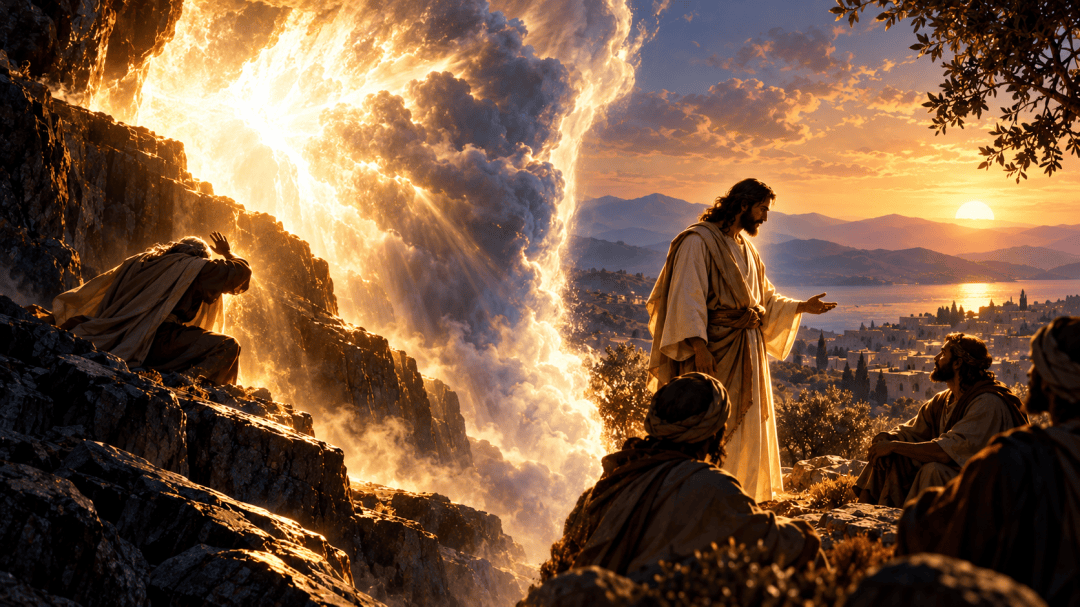
The foundational statement comes in Exodus 33. Moses has asked to see God’s glory, and God answers that Moses may not see his face. God then offers Moses a concession: Moses will be hidden in a cleft of the rock, covered by God’s hand as the glory passes, and allowed to see only God’s back.
[18] Moses said, “I pray thee, show me thy glory.” [19] And he said, “I will make all my goodness pass before you, and will proclaim before you my name `The LORD’; and I will be gracious to whom I will be gracious, and will show mercy on whom I will show mercy. [20] But,” he said, “you cannot see my face; for man shall not see me and live.” [21] And the LORD said, “Behold, there is a place by me where you shall stand upon the rock; [22] and while my glory passes by I will put you in a cleft of the rock, and I will cover you with my hand until I have passed by; [23] then I will take away my hand, and you shall see my back; but my face shall not be seen.” (Exodus 33:18-23)
The statement does not say that sinners cannot see God, or that Moses personally is unready. It states a rule about man as such, and it gives the consequence: death.
The rest of the Tanak behaves as though this rule is in force. After an encounter with the angel of the Lord, Manoah reacts with terror.
[22] And Mano’ah said to his wife, “We shall surely die, for we have seen God.” (Judges 13:22)
Isaiah, confronted with a vision of the Lord on his throne, does not rejoice. He is undone.
[5] And I said: “Woe is me! For I am lost; for I am a man of unclean lips, and I dwell in the midst of a people of unclean lips; for my eyes have seen the King, the LORD of hosts!” (Isaiah 6:5)
When Israel stands at Sinai, the people hear a voice out of the fire but see no form at all, and Moses makes this the basis for the prohibition on images.
[15] “Therefore take good heed to yourselves. Since you saw no form on the day that the LORD spoke to you at Horeb out of the midst of the fire, [16] beware lest you act corruptly by making a graven image for yourselves, in the form of any figure, the likeness of male or female, [17] the likeness of any beast that is on the earth, the likeness of any winged bird that flies in the air, [18] the likeness of anything that creeps on the ground, the likeness of any fish that is in the water under the earth. [19] And beware lest you lift up your eyes to heaven, and when you see the sun and the moon and the stars, all the host of heaven, you be drawn away and worship them and serve them, things which the LORD your God has allotted to all the peoples under the whole heaven. (Deuteronomy 4:15-19)
Even the great exceptions confirm the pattern. Jacob names the place Peniel after wrestling through the night, and the text presents his survival as astonishing, not as something anyone might expect.
[30] So Jacob called the name of the place Peni’el, saying, “For I have seen God face to face, and yet my life is preserved.” (Genesis 32:30)
Exodus 33 also says the Lord spoke to Moses face to face, but the very same chapter, nine verses later, makes plain that this is an idiom of intimate conversation and not literal sight of God’s face.
[11] Thus the LORD used to speak to Moses face to face, as a man speaks to his friend. When Moses turned again into the camp, his servant Joshua the son of Nun, a young man, did not depart from the tent. (Exodus 33:11)
The Tanak is just as direct about what God is not. God is not a man.
[19] God is not man, that he should lie, or a son of man, that he should repent. Has he said, and will he not do it? Or has he spoken, and will he not fulfil it? (Numbers 23:19)
God says it of Himself through Hosea, setting his holiness against the human.
[9] I will not execute my fierce anger, I will not again destroy E’phraim; for I am God and not man, the Holy One in your midst, and I will not come to destroy. (Hosea 11:9)
When Isaiah asks to whom God can be compared, the question is rhetorical, and its answer is that nothing can.
[18] To whom then will you liken God, or what likeness compare with him? (Isaiah 40:18)
And God does not change.
[6] “For I the LORD do not change; therefore you, O sons of Jacob, are not consumed. (Malachi 3:6)
Put these together, and the Tanak gives a consistent picture. God is not visible to human beings. Where humans encounter him, the encounter is mediated by a voice, a cloud, a fire, a messenger, or a vision, and the text takes care to mark the distance between what is seen and God himself. And God is categorically different from man.
Indwelling and incarnation
The Tanak does have a rich vocabulary for God’s presence with his people, and it is important to separate this from the Christian doctrine, because the two are often blurred together.
Indwelling is the idea that God’s presence, glory, or spirit takes up residence in a place or acts through a person without God becoming that place or that person. God commands Israel to build a sanctuary so that he may dwell among them.
[8] And let them make me a sanctuary, that I may dwell in their midst. (Exodus 25:8)
When the tabernacle is finished, the cloud of glory fills it, and Moses cannot enter.
[34] Then the cloud covered the tent of meeting, and the glory of the LORD filled the tabernacle. [35] And Moses was not able to enter the tent of meeting, because the cloud abode upon it, and the glory of the LORD filled the tabernacle. (Exodus 40:34-35)
When Solomon dedicates the temple, he says what the whole tradition assumes.
[27] “But will God indeed dwell on the earth? Behold, heaven and the highest heaven cannot contain thee; how much less this house which I have built! (1 Kings 8:27)
The Spirit of God comes upon judges, fills Bezalel with skill for the work of the tabernacle, and rests on the prophets. In every case the vessel stays a vessel. The temple is a building, and the prophet is a man. God’s presence is there, working in or through them, but nobody confuses the two, and nobody who stands in the courtyard or listens to the prophet is said to be looking at God.
Incarnation is a different claim, and a much stronger one. It does not say that God’s presence is in a man. It says that God is a man. The one who is the eternal Son, who is God in the fullest sense, took on a human nature and became the same person as Jesus of Nazareth. On this view, Jesus is not a vessel that God fills. The subject who is born in Bethlehem, grows hungry, gets tired, and dies on a cross is God himself. This is why the creeds insist on the word “incarnate,” from the Latin for “in flesh,” and why the Gospel of John says the Word was God and the Word became flesh.
[1] In the beginning was the Word, and the Word was with God, and the Word was God. (John 1:1)
[14] And the Word became flesh and dwelt among us, full of grace and truth; we have beheld his glory, glory as of the only Son from the Father. (John 1:14)
The difference can be stated in one sentence. In indwelling, God is present in a creature, and the creature remains a creature. In incarnation, God is identical with the person, so that anything true of the person is true of God. If Jesus eats, God eats. If Jesus is seen, God is seen. If Jesus dies, God dies.
A Jewish reader, or a Muslim one, or a Unitarian Christian, could accept indwelling language about Jesus without difficulty, since it fits the pattern of the prophets. It is the incarnation, the claim of identity, that creates the problem.
The contradiction
Here is the problem stated as plainly as possible. According to the Tanak, no human can see God and live. According to Christian doctrine, Jesus is God. Thousands of people saw Jesus. They sat with him, ate with him, touched him, and went on living. The New Testament itself leans on this, opening the First Epistle of John with the claim of eyewitness contact.
[1] That which was from the beginning, which we have heard, which we have seen with our eyes, which we have looked upon and touched with our hands, concerning the word of life — (1 John 1:1)
And in the Gospel of John, Jesus tells Philip that to see him is to see the Father.
[9] Jesus said to him, “Have I been with you so long, and yet you do not know me, Philip? He who has seen me has seen the Father; how can you say, `Show us the Father’? (John 14:9)
There are only two ways to read this. If Jesus is God, then the people who saw him saw God and lived, which falsifies the rule laid down in Exodus 33:20. If the rule holds, then the people who saw Jesus did not see God, which means Jesus is not God in the sense the creeds require. The incarnation cannot satisfy both statements at once.
The problem is not limited to sight. The Tanak says God is not a man. The doctrine says God is a man. The Tanak says God does not change. The doctrine says God, who was not a man, became one. The Tanak ties the holiness of God to his separateness from creation. The doctrine says that the Creator was born of a woman, nursed, and executed by his creatures. These are not tensions in emphasis. They are direct contradictions of what the Tanak asserts.
It is worth noticing that the New Testament itself feels some of this pressure. In the very chapter that announces the Word became flesh, John says that no one has seen God.
[18] No one has ever seen God; the only Son, who is in the bosom of the Father, he has made him known. (John 1:18)
John’s Gospel can say both things only by treating Jesus as the one who makes God known, and the question is whether “makes known” is the same as “is.”
What Christians say in reply
The most serious Christian responses deserve a direct answer.
The first is that people saw Jesus’s human nature, not his divine nature, and the rule in Exodus concerns seeing the divine essence. This distinction is a staple of Christian theology, but it concedes the central point. In the doctrine of the incarnation, the divine and human natures belong to one person. When you see a person, you see that person and not a nature in the abstract. If Jesus is God, the one the disciples looked at was God. If the claim is that they looked at a human body that was not, in the relevant sense, God, then Jesus is being divided in a way that the creeds themselves forbid. Moreover, Exodus 33:20 says nothing about essence versus appearance. It says man cannot see God and live, and it expects the reader to understand this as a statement about what happens in an encounter.
The second reply is that the appearances of God in the Tanak, such as the angel of the Lord, the figure who wrestled with Jacob, and the one Isaiah saw, were pre-incarnate appearances of the Son, so the Tanak already contains seeing God and living. This reading depends entirely on the later doctrine and cannot be used to establish it. It also runs into the texts themselves, which are careful to say that these encounters are brushes with the divine that leave people terrified, protected, or changed, and which never present God as simply walking about in a human body for years. Even on this reading, the Tanak treats the encounters as exceptional, dangerous, and limited. The incarnation as claimed is none of those things.
The third reply is that God is free to do what he wishes, and if he chose to become a man and make himself visible, the earlier rule need not bind him. This is a theological position and not an interpretation of the text. It means that the statement in Exodus, which is given as a reason, becomes something that God may suspend at will, and the Tanak gives no indication that its language about God’s invisibility and God’s difference from man carries such an exception. It also asks the Tanak to be read in light of a revelation that the Tanak does not contain.
Finally, many Christians argue that the Tanak itself is more ambiguous than this article allows, pointing to Jacob, to the face-to-face language about Moses, and to passages where the Lord appears in human form to Abraham. These are real texts, and they are why this question has been debated for two thousand years. But in each case the narrative marks the event as unusual, and in none does the Tanak say that God has become a man. The most that can be said is that the Tanak is willing to depict God appearing in mediated ways. It does not say that God and a human being are one and the same.
Conclusion
The Tanak sets a boundary between God and man and states it in terms that are hard to misread: man cannot see God and live, God is not a man, God does not change. Indwelling stays inside that boundary, because it keeps the creature a creature and God God. Incarnation crosses it, because it asserts that a man walked the roads of Galilee who was himself the God that no one can see. Christians are free to believe this, but they cannot also claim that it is what the Tanak teaches. By the Tanak’s own standard, the doctrine of the incarnation is not a fulfillment of its picture of God but a contradiction of it.


