
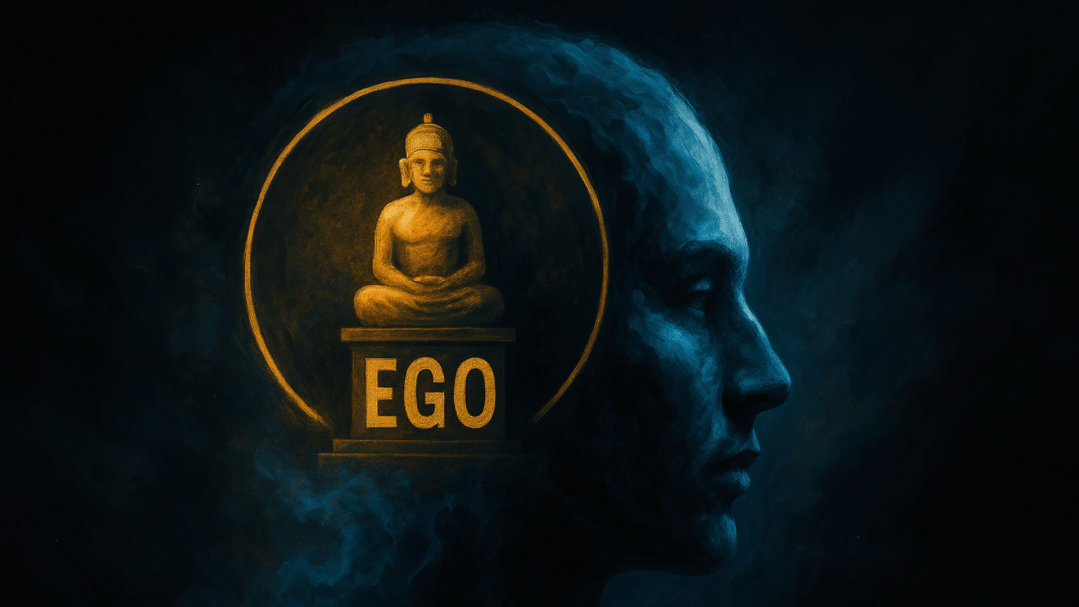
In several places in the Quran, a profound truth emerges: what human beings set up as idols beside God are ultimately nothing. This realization will become crystal clear on the Day of Judgment when those who practiced idol worship, and called upon other than God, will be asked about the partners they claimed to associate with God. At that moment, they will admit that what they were invoking was, in fact, nothing.
[40:73] They will be asked, “Where are the idols you used to worship,
[40:74] “beside GOD?” They will say, “They have abandoned us. In fact, when we worshiped them, we were worshiping nothing.” Thus does GOD send the disbelievers astray.
ثُمَّ قِيلَ لَهُمْ أَيْنَ مَا كُنتُمْ تُشْرِكُونَ
مِن دُونِ ٱللَّهِ قَالُوا۟ ضَلُّوا۟ عَنَّا بَل لَّمْ نَكُن نَّدْعُوا۟ مِن قَبْلُ شَيْـًٔا كَذَٰلِكَ يُضِلُّ ٱللَّهُ ٱلْكَـٰفِرِينَ
[29:42] GOD knows full well that whatever they worship besides Him are really nothing. He is the Almighty, the Most Wise.
إِنَّ ٱللَّهَ يَعْلَمُ مَا يَدْعُونَ مِن دُونِهِۦ مِن شَىْءٍ وَهُوَ ٱلْعَزِيزُ ٱلْحَكِيمُ
Yet, from a surface-level perspective, this claim seems puzzling. After all, the things people worship do exist. People worship idols beside God such as Jesus, scholars, saints, celestial bodies, statues, or sacred relics—and all of these are tangible things. So how can the Quran insist that these idols are nothing?
The Root of All Idol Worship
The key lies in understanding what truly constitutes setting up a partner with God. The Quran clarifies that idol worship is not merely about bowing to an image or naming an object divine. It is ultimately about who or what we obey and prioritize. If someone obeys another command over the command of God—be it tradition, community, authority, or desire—they have effectively set that other entity up as a god beside God.
[6:121] Do not eat from that upon which the name of GOD has not been mentioned, for it is an abomination. The devils inspire their allies to argue with you; if you obey them, you will be idol worshipers.
وَلَا تَأْكُلُوا۟ مِمَّا لَمْ يُذْكَرِ ٱسْمُ ٱللَّهِ عَلَيْهِ وَإِنَّهُۥ لَفِسْقٌ وَإِنَّ ٱلشَّيَـٰطِينَ لَيُوحُونَ إِلَىٰٓ أَوْلِيَآئِهِمْ لِيُجَـٰدِلُوكُمْ وَإِنْ أَطَعْتُمُوهُمْ إِنَّكُمْ لَمُشْرِكُونَ
However, if someone decides to elevate another source above God’s revealed truth, they must first believe that doing so is justified. That belief itself is an act of ego. It is a judgment that my understanding, my preference, or my authority is more trustworthy than God’s. In this way, the root of all idol worship is not ultimately the object or person being worshipped—it is the self’s willingness to override God’s words. Therefore, at the core of every form of idolatry lies the ego.
Ego as a god
[45:23] Have you noted the one whose god is his ego? Consequently, GOD sends him astray, despite his knowledge, seals his hearing and his mind, and places a veil on his eyes. Who then can guide him, after such a decision by GOD? Would you not take heed?
أَفَرَءَيْتَ مَنِ ٱتَّخَذَ إِلَـٰهَهُۥ هَوَىٰهُ وَأَضَلَّهُ ٱللَّهُ عَلَىٰ عِلْمٍ وَخَتَمَ عَلَىٰ سَمْعِهِۦ وَقَلْبِهِۦ وَجَعَلَ عَلَىٰ بَصَرِهِۦ غِشَـٰوَةً فَمَن يَهْدِيهِ مِنۢ بَعْدِ ٱللَّهِ أَفَلَا تَذَكَّرُونَ
[25:43] Have you seen the one whose god is his own ego? Will you be his advocate?
أَرَءَيْتَ مَنِ ٱتَّخَذَ إِلَـٰهَهُۥ هَوَىٰهُ أَفَأَنتَ تَكُونُ عَلَيْهِ وَكِيلًا
Here, “ego” is not meant in the Freudian sense, nor merely as pride. It refers to the act of taking one’s own opinions or preferences as more valid than God’s truth. It is when we replace divine guidance with our own inclinations. That is what makes the ego not only dangerous, but also the central idol behind all others.
And yet, the Quran also tells us that what is worshipped besides God is nothing. So if the ego is what is truly being worshipped—and if what is worshipped is ultimately nothing—then we must ask: what is the ego?
What Is The Ego?
The answer is just as profound: the ego is not a real, independent thing. It is a construct—a false center of self that we assemble from fear, pride, desire, and forgetfulness of God. It feels real because it drives our decisions and perceptions, but it has no substance outside of us. It is not a being, not a presence—it is a deficiency, a lack of submission, a shadow that takes shape only when we turn away from the light of divine truth.
To understand this better, consider a simple example: imagine a person walking with a warped mirror in hand. They look into it and see a distorted version of themselves—taller, larger, more powerful. They begin to believe that this image is who they really are. They follow its guidance. They defend it. They serve it. But the mirror image is not a thing. It has no will, no wisdom, no reality. It’s a projection. The ego functions the same way: it is our own distorted self-image elevated above truth, and it becomes an idol only when we forget that it is not real.
Thus, when the Quran says that idol worshipers were “worshiping nothing,” it is not using poetic exaggeration. It is stating a spiritual fact. Those who set up partners beside God—whether they worship saints, prophets, or personal judgments—are, in the end, worshiping their own egos. And their egos are nothing more than illusions. They have no real power, no real authority, and no real existence. They are empty vessels through which self-deception speaks.
True monotheism, then, is not merely the rejection of false gods out there—it is the surrender of the false god within. It is the decision to stop obeying illusions, and to follow only the One who is Real, the only true God.
Salvation Depends on Killing the Ego
In the translation of the Quran, the Final Testament, Rashad Khalifa emphasizes that the requirement for redemption rests in our ability to kill our egos. In his footnotes for verses 2:51 and 2:54, he writes the following:
[2:51] Yet, when we summoned Moses for forty nights, you worshiped the calf in his absence, and turned wicked.
وَإِذْ وَٰعَدْنَا مُوسَىٰٓ أَرْبَعِينَ لَيْلَةً ثُمَّ ٱتَّخَذْتُمُ ٱلْعِجْلَ مِنۢ بَعْدِهِۦ وَأَنتُمْ ظَـٰلِمُونَ
Footnote 2:51: This incident reflects the humans’ idolatrous tendency. Despite the profound miracles, Moses’ followers worshiped the calf in his absence, and Moses ended up with only two believers (5:23). As pointed out in the Introduction, the humans are rebels whose egos are their gods.
[2:54] Recall that Moses said to his people, “O my people, you have wronged your souls by worshiping the calf. You must repent to your Creator. You shall kill your egos. This is better for you in the sight of your Creator.” He did redeem you. He is the Redeemer, Most Merciful.
وَإِذْ قَالَ مُوسَىٰ لِقَوْمِهِۦ يَـٰقَوْمِ إِنَّكُمْ ظَلَمْتُمْ أَنفُسَكُم بِٱتِّخَاذِكُمُ ٱلْعِجْلَ فَتُوبُوٓا۟ إِلَىٰ بَارِئِكُمْ فَٱقْتُلُوٓا۟ أَنفُسَكُمْ ذَٰلِكُمْ خَيْرٌ لَّكُمْ عِندَ بَارِئِكُمْ فَتَابَ عَلَيْكُمْ إِنَّهُۥ هُوَ ٱلتَّوَّابُ ٱلرَّحِيمُ
Footnote 2:54: It is the ego that led to Satan’s fall. It is the ego that caused our exile to this world, and it is the ego that is keeping most of us from redemption to God’s Kingdom.
These notes make it clear: the root cause of entities being exiled from God’s kingdom is the ego—the self’s insistence on choosing one’s own way over God’s truth.
Satan: The First Entity to Have Its Ego Exposed
This idea is not only conceptually sound but is modeled in the most ancient and consequential act of rebellion: Satan’s defiance. When God commanded the angels to fall prostrate before Adam, Satan refused. He did not deny God’s existence or His authority—rather, he set his own judgment above God’s explicit command. In that act, Satan wasn’t merely disobeying; he was asserting that his view was superior to God’s. This was the first open instance of someone setting up their own ego as a god beside God.
This understanding is reflected in Dr. Rashad Khalifa’s rendering of verse 2:30 in Quran: The Final Testament, where he refers to Satan’s role on Earth using the following phrase:
Satan: A Temporary “god”
[2:30] Recall that your Lord said to the angels, “I am placing a representative (a temporary god) on Earth.” They said, “Will You place therein one who will spread evil therein and shed blood, while we sing Your praises, glorify You, and uphold Your absolute authority?” He said, “I know what you do not know.”
The key to understanding this phrase lies in the use of scare quotes around the word “god.” In rhetorical terms, scare quotes are used to express irony, skepticism, or the denial of legitimacy. They signal to the reader that the word inside the quotes is not to be accepted at face value. According to standard usage, scare quotes “may imply skepticism or disagreement, belief that the words are misused, or that the writer intends a meaning opposite to the words enclosed in quotes.” In this context, Dr. Khalifa’s use of the term “temporary ‘god’” is not in any way affirming Satan’s divinity, power, or legitimacy. On the contrary, the phrasing explicitly mocks Satan’s self-delusion—his claim to a status he could never possess.
This rhetorical device is consistent with how the Quran itself speaks. For example, when Moses rebuked the Samarian for creating the golden calf, he used similar language:
[20:97] He said, “Then go, and, throughout your life, do not even come close. You have an appointed time (for your final judgment) that you can never evade. Look at your god that you used to worship; we will burn it and throw it into the sea, to stay down there forever.”
قَالَ فَٱذْهَبْ فَإِنَّ لَكَ فِى ٱلْحَيَوٰةِ أَن تَقُولَ لَا مِسَاسَ وَإِنَّ لَكَ مَوْعِدًا لَّن تُخْلَفَهُۥ وَٱنظُرْ إِلَىٰٓ إِلَـٰهِكَ ٱلَّذِى ظَلْتَ عَلَيْهِ عَاكِفًا لَّنُحَرِّقَنَّهُۥ ثُمَّ لَنَنسِفَنَّهُۥ فِى ٱلْيَمِّ نَسْفًا
Clearly, Moses did not recognize the calf as a legitimate god. He was using their own terminology to highlight the absurdity of their beliefs. Likewise, when Abraham challenged his people who were setting up statues as gods, or when he referred to the sun, moon, and stars as “my Lord” in a series of rhetorical reflections, he wasn’t confused or deceived; he was leading his audience to confront the absurdity of their assumptions.
[6:74] Recall that Abraham said to his father Ãzer, “How could you worship statues as gods? I see that you and your people have gone far astray.”
[6:75] We showed Abraham the marvels of the heavens and the earth, and blessed him with certainty:
[6:76] When the night fell, he saw a shining planet. “Maybe this is my Lord,” he said. When it disappeared, he said, “I do not like (gods) that disappear.”
[6:77] When he saw the moon rising, he said, “Maybe this is my Lord!” When it disappeared, he said, “Unless my Lord guides me, I will be with the strayers.”
[6:78] When he saw the sun rising, he said, “This must be my Lord. This is the biggest.” But when it set, he said, “O my people, I denounce your idolatry.
[6:79] “I have devoted myself absolutely to the One who initiated the heavens and the earth; I will never be an idol worshiper.”
This method of argumentation is known as reductio ad absurdum—a logical technique used to disprove a proposition by following its implications to an absurd conclusion. By temporarily assuming the validity of a claim (e.g., that the sun or calf is a god), and then showing its failure or contradiction, the speaker exposes the falseness of the belief. Abraham used this to lead his people to realize that only the unseen, unchanging Creator could truly be God. Moses used it to humiliate the golden calf. And Khalifa, in labeling Satan a “temporary ‘god,’” follows the same tradition: he uses the enemy’s own claim to show how laughably empty it really is.
This is further reinforced in Khalifa’s introduction to his authorized translation when he states:
It all began billions of years ago when one of God’s high-ranking creatures, Satan, developed a supercilious idea that he could run a dominion as an independent god besides God. This challenge to God’s absolute authority was not only blasphemous, it was also erroneous. Satan was ignorant of the fact that God alone possesses the ability to be a god, and that there is much more to godhood than he realized. It was the ego—arrogance augmented by ignorance—that led Satan to believe that he could take care of a dominion, as a god, and run it without disease, misery, war, accidents, and chaos. The vast majority of God’s creatures disagreed with Satan. Yet, the minute egoistic minority that agreed with him to various extents were in the billions. Thus, a profound dispute erupted within the Heavenly Community (38:69). The rebels’ unjustifiable challenge to God’s absolute authority was met and resolved in the most efficient manner. After giving the rebels sufficient chances to denounce their crime and submit to Him, God decided to exile the hard core rebels on a space ship called Earth, and give them yet another chance to redeem themselves.
If you claim that you can fly a plane, the best way to test your claim is to give you a plane and ask you to fly it. This is precisely what God decided to do in response to Satan’s claim that he could be a god; God appointed him a temporary god on the tiny speck Earth (2:30, 36:60). As for those who agreed with Satan, they were given a chance to kill their egos and submit to God’s absolute authority. While the vast majority of the guilty creatures took advantage of this opportunity, a miniscule minority consisting of about 150 billion creatures failed to take advantage of this offer (33:72).
God Granted Satan A Respite to Retain His Ego (His god) Till The Day of Resurrection
When Satan was confronted for his disobedience, he did not humble himself or acknowledge his error. He refused to kill his ego. Instead of seeking forgiveness, as Adam did, Satan doubled down and requested a respite—a delay of judgment.
[7:14] He said, “Grant me a respite, until the Day of Resurrection.”
[7:15] He said, “You are granted a respite.”
(١٤) قَالَ أَنظِرْنِىٓ إِلَىٰ يَوْمِ يُبْعَثُونَ
(١٥) قَالَ إِنَّكَ مِنَ ٱلْمُنظَرِينَ
In granting Satan this respite, God permitted Satan’s ego—his false god—to temporarily persist. Satan was allowed to carry this delusion with him into the earthly realm. This moment marks a profound divergence between Satan and Adam. When Adam’s own ego was exposed through his disobedience, he turned back to God in sincere repentance. He diminished his ego and was granted a path to redemption. In contrast, Satan was not cast down with remorse, but descended with defiance—preserving the very self-idol that caused his fall.
In essence, Satan was given space on Earth to maintain his internal idol—his ego—as a “god” beside God. But this allowance was not an endorsement; it was a trial. It was a permission granted not to validate his path, but to expose its futility. The ego, like all false gods, has no reality—only illusion. And so, Satan, like all who follow conjecture in place of revelation, will ultimately be brought face to face with the truth: that the “god” he followed was never real.
Satan believed his opinion had weight. He believed his judgment was superior. He felt justified in rejecting God’s command. But this belief was not grounded in truth. It was a projection of arrogance—a product of ego. And just like every idol worshiper who sets up a “god” that lacks power, authority, or reality, Satan too will come to realize that what he followed was nothing.
[10:66] Absolutely, to GOD belongs everyone in the heavens and everyone on earth. Those who set up idols beside GOD are really following nothing. They only think that they are following something. They only guess.
أَلَآ إِنَّ لِلَّهِ مَن فِى ٱلسَّمَـٰوَٰتِ وَمَن فِى ٱلْأَرْضِ وَمَا يَتَّبِعُ ٱلَّذِينَ يَدْعُونَ مِن دُونِ ٱللَّهِ شُرَكَآءَ إِن يَتَّبِعُونَ إِلَّا ٱلظَّنَّ وَإِنْ هُمْ إِلَّا يَخْرُصُونَ

 Quran Talk Blog
Praise God, Lord of the universes. I was waiting for this moment.
LikeLike