
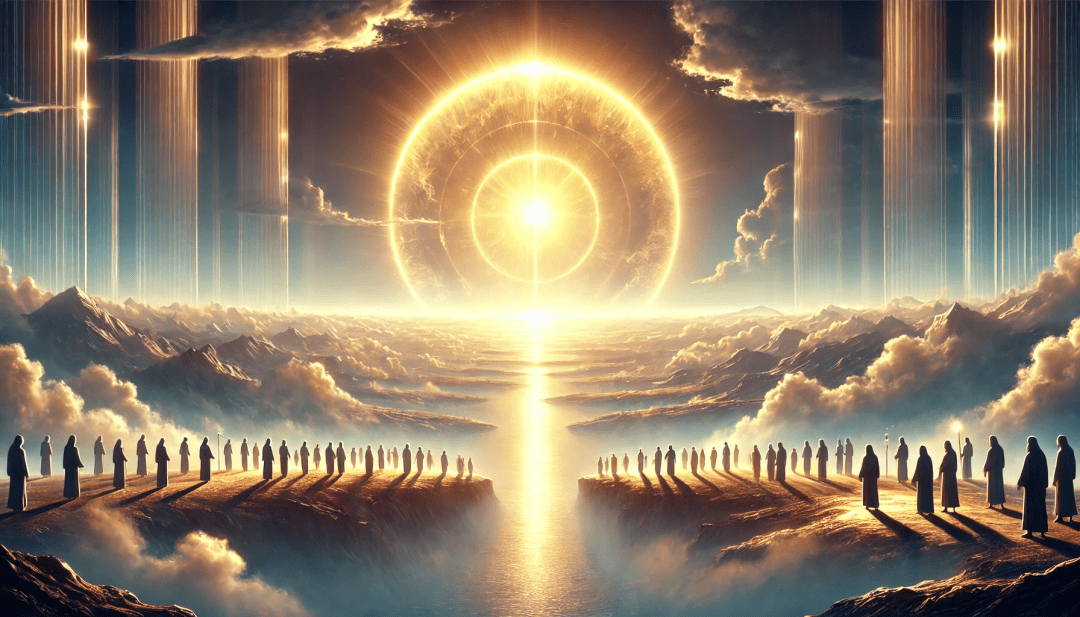
A common misconception among Muslims is that humans are born sinless. However, the Quran reveals that this is not true. It suggests that all humans—and even all creatures—carry consequences of a primordial event that predates our earthly lives. Unlike the Christian doctrine of original sin, which ties inherited guilt to Adam and Eve’s disobedience, the Quran introduces a broader heavenly narrative involving all of humanity, our pre-existence, and moral responsibility.
Humans and Original Sin
The Quran highlights that all humans and all creatures on earth have sinned, and this accountability is not limited to our earthly actions.
If GOD punished the people for their sins, He would not leave a single creature on earth. But He respites them for a predetermined interim. Once their interim is fulfilled, then GOD is Seer of His servants. – Quran 35:45
If GOD punished the people for their transgressions, He would have annihilated every creature on earth. But He respites them for a specific, predetermined time. Once their interim ends, they cannot delay it by one hour, nor advance it. – Quran 16:61
These verses verse demonstrate that if God were to punish humanity for their sins, He would not leave a single creature on earth. This implies that sin is a universal condition affecting all earthly creatures and not just humans. As we will see, creatures cannot sin in this world as they did not accept the responsibility humans opted for. Therefore, the sin must have been earned before our descent into this world.
The Primordial Covenant
The Quran informs us that before our arrival here on earth, God had all the descendants of Adam bear witness that there is no god besides God.
Recall that your Lord summoned all the descendants of Adam, and had them bear witness for themselves: “Am I not your Lord?” They all said, “Yes. We bear witness.” Thus, you cannot say on the Day of Resurrection, “We were not aware of this.” – Quran 7:172
This verse describes a moment when all of humanity’s souls were gathered before God, and bearing witness to Him as their only Lord. It suggests a pre-earthly existence where human beings were conscious of their relationship with God before being sent to Earth. After this event, God put the souls to death before their arrival on earth in order to distinguish which human will be able to fulfill this promise during their life here.
The One who created death and life for the purpose of distinguishing those among you who would do better. He is the Almighty, the Forgiving. – Quran 67:1
Human Pre-Existence
The Quran also indicates that humans lived in a pre-earthly state when it states that on the Day of Resurrection, people will become aware of their pre-existence on Earth. On that day, the disbelievers will realize that they suffered two deaths, one before their arrival on Earth and the other on Earth because of their transgressions and disbelief.
They will say, ‘Our Lord, You have put us to death twice, and You gave us two lives; now we have confessed our sins. Is there any way out?’ – Quran 40:11
This verse suggests a life prior to our earthly existence and a death transitioning into this world. Similarly, the Quran describes the righteous in the Hereafter as being spared the “second death”:
The righteous will be in a secure position. Enjoying gardens and springs. Wearing velvet and satin; close to each other. We grant them wonderful spouses. They enjoy in it all kinds of fruits, in perfect peace. They do not taste death therein— beyond the first death—and He has spared them the retribution of Hell.– Quran 44:51-56
This implies the “first death” must have occurred when transitioning from our first life to Earth. This is also what is stated by the righteous who make it to Paradise, as they will remember the life they used to live before their arrival on Earth when they recall the provisions they used to have access to.
Give good news to those who believe and lead a righteous life that they will have gardens with flowing streams. When provided with a provision of fruits therein, they will say, “This is what was provided for us previously.” Thus, they are given allegorical descriptions. They will have pure spouses therein, and they abide therein forever. – Quran 2:25
Humanity’s Unique Responsibility
One of the defining characteristics of humans is their acceptance of responsibility and free will. The Quran portrays this as an enormously consequential decision made before our arrival on Earth:
We have offered the responsibility (freedom of choice) to the heavens and the earth, and the mountains, but they refused to bear it and were afraid of it. But the human being accepted it; he was transgressing, ignorant. – Quran 33:72
This acceptance of free will sets humans apart from other creatures in this world, granting them the ability to choose between obedience and disobedience. However, it also led to their deficiency of being “transgressing and ignorant,” reflecting the risks inherent in this choice.
Human Ego
Ego is when we take our own opinion over God’s recommendations. From the Quran, we can extrapolate that the human decision to accept the trust of freedom and responsibility was a manifestation of this ego, leading to God describing humanity as “transgressing and ignorant.” By choosing an option that God was not pleased with, humans demonstrated a preference for their own judgment over God’s divine wisdom, believing they knew better. This decision not only reflected human arrogance but also had profound consequences for their nature and status in creation. However, when the other creatures chose not to accept this responsibility, they indicated that they killed their egos and adhered to what was pleasing to God.
We created man in the best design. Then turned him into the lowliest of the lowly.” – Quran 95:4-5
Despite God creating the human being perfect, when we opted for this responsibility, it caused a significant weakness in our creation: ego. When this weakness is exploited, it causes man to fall. This explains the sin of the human, but what about the other creatures?
The Feud in the High Society
The Quran also alludes to a primordial event involving all creatures, referred to as “the feud in the High Society.” This event precedes the creation of Adam or the exposing of Satan, and its placement in the chronological narrative puts this as the catalyst that triggered those events.
Say, ‘Here is awesome news. That you are totally oblivious to. I had no knowledge previously, about the feud in the High Society.’ – Quran 38:67-69
We can deduce that this feud was the reason God created the heavens and earth and the plan for the Day of Resurrection, as these are discussed during God’s exposing of Satan in the verses that follow the mention of this heavenly feud.
This feud marked a cosmic stratification between creatures who questioned God’s authority and those who did not. The obedient creatures who never questioned God’s authority were the angels, while the others were classified into roles based on their responses to God’s authority. Humans chose the unique path of free will, while creatures opted out of this responsibility, reflecting their desire for guaranteed redemption. Lastly, Satan, after being exposed, became a jinn because he openly rebelled against God’s authority and command.
We said to the angels, “Fall prostrate before Adam.” They fell prostrate, except Satan. He became a jinn, for he disobeyed the order of His Lord. Will you choose him and his descendants as lords instead of Me, even though they are your enemies? What a miserable substitute! – Quran 18:50
Conclusion
The Quran presents a profound and intricate perspective on human existence, extending far beyond our earthly lives. It reveals a pre-earthly realm where a subset of God’s creatures questioned his absolute authority marked by the Great Feud. This gave these guilty creatures an opportunity to either renounce their crime and be redeemed or opt-in for a demonstration where they could choose for themselves in this world. Humans accepted the extraordinary responsibility of freedom of choice, setting themselves apart from other creatures who declined this weighty trust. While this choice grants humanity the potential for immense spiritual elevation, it also places them at risk of eternal consequences. Conversely, creatures who opted out of this responsibility are not burdened with the same moral accountability. This framework underscores that all humans and creatures came to this world with sin, and as for humans, it is through our thoughts, words, and actions that we may be redeemed back to God’s kingdom.
To delve deeper into these concepts, one should read the Introduction of Dr. Rashad Khalifa’s Authorized English Version of the Quran, which can be found here.

 Quran Talk Blog
Wonderful blog. I especially like the comments about verses 95:4-5, as I have been pondering the 27 verses in the Quran that include the word design. For example, every one of those verses in concerned with God’s design. I had forgotten the connection of 95:4 to 94:5. Anyone who has a bone to pick with God because of their ignorance needs to read this blog and ponder the verses carefully.
LikeLiked by 1 person