
A challenge that Quranists who reject Code 19 have to navigate is: how do they determine which Qira’at of the Quran is the correct recitation? Qirāʼāt ( قراءات ) are different recitations or readings of the Quran. While most differences between Qiraʼat are slight and include varying rules regarding the prolongation, intonation, and pronunciation of words, they also have more significant differences between stops, vowels, and consonants. This can lead to different pronouns, verb forms, and determinations where one verse stops and the next begins. Additionally, the different Qira’at may also have variations to the prefixes and suffixes of words and occasionally the inclusion or omission of entire words.
To avoid this conundrum, Quranists who reject Code 19 typically make one of two arguments:
- They may argue that one reading causes a contradiction and should be rejected
- Or that the differences are negligible, so it doesn’t matter.
While these arguments may be acceptable for many of the discrepancies between different Qira’at, there is a simple example where their arguments still fall short. This example concerns Sura 5 verse 6 and the fourth step of ablution (wudu) and whether one needs to wipe or wash one’s feet.
[5:6] O you who believe, when you observe the Contact Prayers (Salat), you shall: (1) wash your faces, (2) wash your arms to the elbows, (3) wipe your heads, and (4) and your feet to the ankles. If you were unclean due to sexual orgasm, you shall bathe. If you are ill, or traveling, or had any digestive excretion (urinary, fecal, or gas), or had (sexual) contact with the women, and you cannot find water, you shall observe the dry ablution (Tayammum) by touching clean dry soil, then rubbing your faces and hands. GOD does not wish to make the religion difficult for you; He wishes to cleanse you and to perfect His blessing upon you, that you may be appreciative.
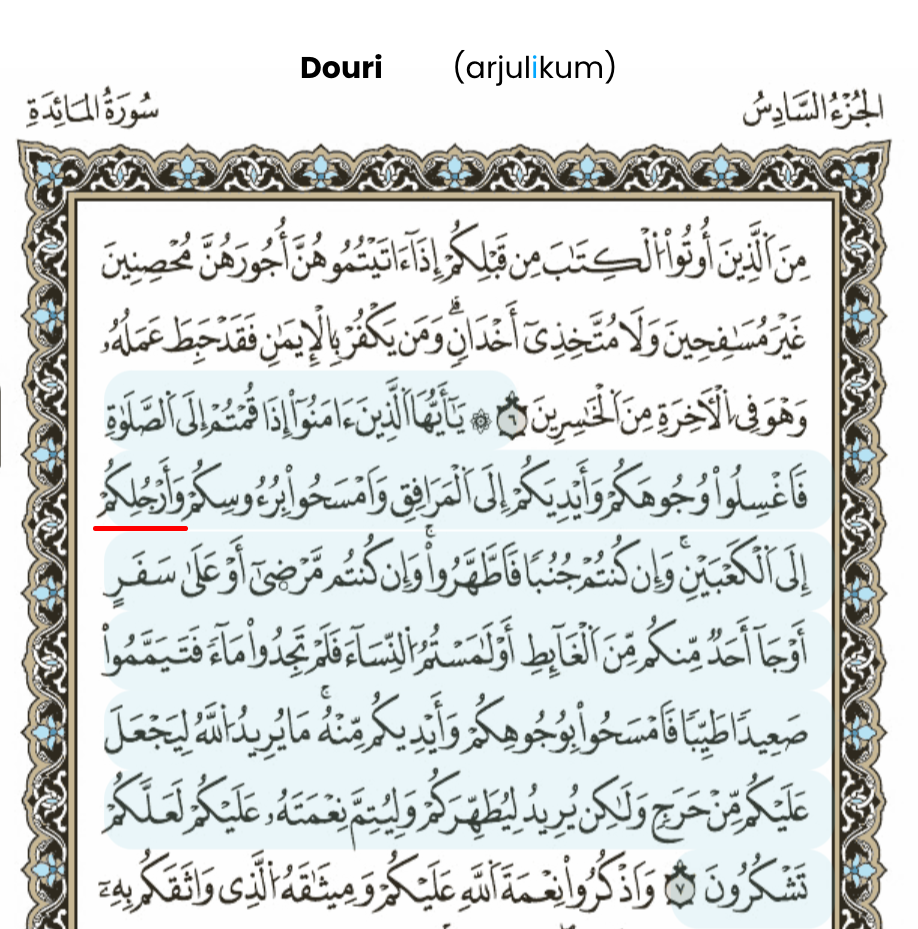
يَـٰٓأَيُّهَا ٱلَّذِينَ ءَامَنُوٓا۟ إِذَا قُمْتُمْ إِلَى ٱلصَّلَوٰةِ فَٱغْسِلُوا۟ وُجُوهَكُمْ وَأَيْدِيَكُمْ إِلَى ٱلْمَرَافِقِ وَٱمْسَحُوا۟ بِرُءُوسِكُمْ وَأَرْجُلَكُمْ إِلَى ٱلْكَعْبَيْنِ وَإِن كُنتُمْ جُنُبًا فَٱطَّهَّرُوا۟ وَإِن كُنتُم مَّرْضَىٰٓ أَوْ عَلَىٰ سَفَرٍ أَوْ جَآءَ أَحَدٌ مِّنكُم مِّنَ ٱلْغَآئِطِ أَوْ لَـٰمَسْتُمُ ٱلنِّسَآءَ فَلَمْ تَجِدُوا۟ مَآءً فَتَيَمَّمُوا۟ صَعِيدًا طَيِّبًا فَٱمْسَحُوا۟ بِوُجُوهِكُمْ وَأَيْدِيكُم مِّنْهُ مَا يُرِيدُ ٱللَّهُ لِيَجْعَلَ عَلَيْكُم مِّنْ حَرَجٍ وَلَـٰكِن يُرِيدُ لِيُطَهِّرَكُمْ وَلِيُتِمَّ نِعْمَتَهُۥ عَلَيْكُمْ لَعَلَّكُمْ تَشْكُرُونَ
The problem occurs because, depending on the recitation, it determines whether one should wash or wipe their feet. The crux of this rests with the vowel marking on the word “and your feet,” which, pending on the recitation, can be read as either “warjulakum” ( وَأَرْجُلَكُمْ ) or as “warjulikum” ( وَأَرْجُلِكُمْ ).
أَرْجُلَكُمْ (arjulakum): This reading, with a fatha on the “ل” (lam), is used in the recitation of Hafs and would imply that the feet should be washed.
أَرْجُلِكُمْ (arjulikum): This reading, with a kasra under the “ل” (lam), is found in the recitation of Douri and would imply that the feet should be wiped.
According to the book, “The Fourteen Qur’anic Readings” by Dr. Waleed Edrees Al-Meneese, on page 242 it states:
Nāfiʿ, Ibn ʿĀmir, Ḥafṣ, from ʿĀṣim, Kisāʾī, and Yaʿqūb, who read the word in the accusative case [wa arjulakum]. Abū Jaʿfar, Abū ʿAmr, Ibn Kathīr, Shuʿbah from ʿĀṣim, Ḥamzah, Khalaf, Ibn Muḥaysin, Aʿmash, and Yazīdī read the word in the genitive case [wa arjulikum].

Interestingly the above mentioned book also states:
Ḥasan al-Baṣrī read the word in the nominative case [wa arjulukum]:
قٰلَ الَّذِيْنَ اٰمَنُوْا اِذَا قُمْتُمْ اِلَى الصَّلٰوةِ فَاغْسِلُوْا وُجُوْهَكُمْ وَاَيْدِيَكُمْ اِلَى الْمَرَافِقِ وَامْسَحُوْا بِرُءُوْسِكُمْ وَارْجُلُكُمْ اِلَى الْكَعْبَيْنِ ۚ
{Believers! When you stand up for prayer, wash your faces and your hands up to the elbows, and wipe your heads, and as for your feet, [wash them] up to the ankles.}

 Quran Talk Blog
From which grammar book or lexicon does it say arjulikum means to wipe. I am not for a debate I just want to know from where
LikeLike