Dr. Michael Egnor was a committed atheist and accomplished neurosurgeon who believed that all of life’s mysteries could ultimately be explained through material processes. In his view, every question—from the nature of consciousness to the origin of thought—had a purely physical answer rooted in the brain. But the deeper he went into his surgical career, the more unsettling anomalies he encountered. Patients retained their minds despite severe brain damage. Conscious awareness seemed to persist where it shouldn’t. Slowly, the cracks in his materialist worldview began to show. That quiet unraveling reached its breaking point with the birth of his son.
The following is an excerpt from the introduction to The Immortal Mind: A Neurosurgeon’s Case for the Existence of the Soul.
When my son was a few months old, my wife and I noticed that he wasn’t smiling or making eye contact with us. He would look at objects with interest, but not at people. We started to face the possibility that he might be autistic. This terrified me—I had always dreaded autism. I knew it would be the worst agony to have a child you love who doesn’t know you or love you back. I had nightmares about my son as an older child sitting in a room, alone and rocking back and forth, while his schoolmates played baseball and enjoyed normal childhoods.
We took the child to an autism specialist, but he said it was too soon to be sure. We would have to wait before we could know more. But at nearly six months of age, he was still not responding to us. I found it harder each day to go about my daily tasks because I thought about him all the time.
One night, it all came to a head.
I was called to see a patient at a Catholic hospital in another town. As I was leaving the hospital, I passed the chapel. I thought, “I don’t believe in God, but I’ll do anything now. I just want my son to know me.”
I went into the chapel and knelt before the altar. “God,” I said, “I don’t know if you exist, but I need help. I am terrified that my son is autistic. It’s agony to have a child who will never know or love me.”
Then I heard a voice—it was the only time in my life I’d ever heard a voice in my head that was not mine—and the voice said, But that’s what you’re doing to Me.
I collapsed in front of the altar. The voice I heard had only spoken seven words, but I felt like He knew me intimately and had been watching me with love and wisdom all my life and that He knew me better than I knew myself. It was like a curtain was lifted, and the Source of my life was speaking to me directly. My heart burned in me.
When I recovered, I prayed, “Lord, I will stop doing it to You. I’m sorry. I won’t be autistic to You any longer. Please heal my son, and please heal me.” I walked out of the chapel a shaken man, and a different man.
Egnor’s story reveals something profoundly human: even a man steeped in scientific materialism, trained to trust only what could be seen, measured, or dissected, found himself brought to his knees—not by evidence, but by love and helplessness. Faced with the possibility that his son might never know or love him, he cried out in desperation. And in that moment, he heard a voice—gentle, piercing, undeniable—telling him, “But that’s what you’re doing to Me.” It was a divine reversal: the pain he felt as a father was the very pain he had been inflicting on God through a lifetime of disbelief and distance. Suddenly, the God he had ignored made Himself known.
[2:152] You shall remember Me, that I may remember you, and be thankful to Me; do not be unappreciative.
[2:186] When My servants ask you about Me, I am always near. I answer their prayers when they pray to Me. The people shall respond to Me and believe in Me, in order to be guided.
Faith and Children
For believers, the arrival of a child is not just a biological milestone—it is a sacred unveiling. In the helplessness of a newborn, we witness the miracle of divine creation. In their breath, we feel the breath of God. Parenthood strips away the illusion of control and replaces it with awe, humility, and reverence. Suddenly, the verses we may have recited for years about God’s mercy, provision, and purpose come alive before our eyes. The child is not just ours—they are a trust from the One who fashioned them, and their very existence draws the heart upward in gratitude and surrender. Becoming a parent doesn’t just change how you see your child—it transforms how you see God.
People often say that for mothers, the bond begins gradually—formed in the quiet, rhythmic months of pregnancy. But for fathers, it arrives all at once, like a tidal wave crashing over the seawall. I didn’t fully understand that until I experienced it myself.
When my wife was pregnant with our first child, I knew—intellectually—that a life was growing inside her. We saw the ultrasounds, felt the kicks, made plans. But still, it all felt strangely abstract. A distant miracle, too distant to touch. Then the moment came. Our child emerged into the world, slippery and crying—and so was I. As much as I had doubted how I’d respond, I couldn’t help myself. The flood of oxytocin hit me like a freight train. I started laughing and sobbing all at once.
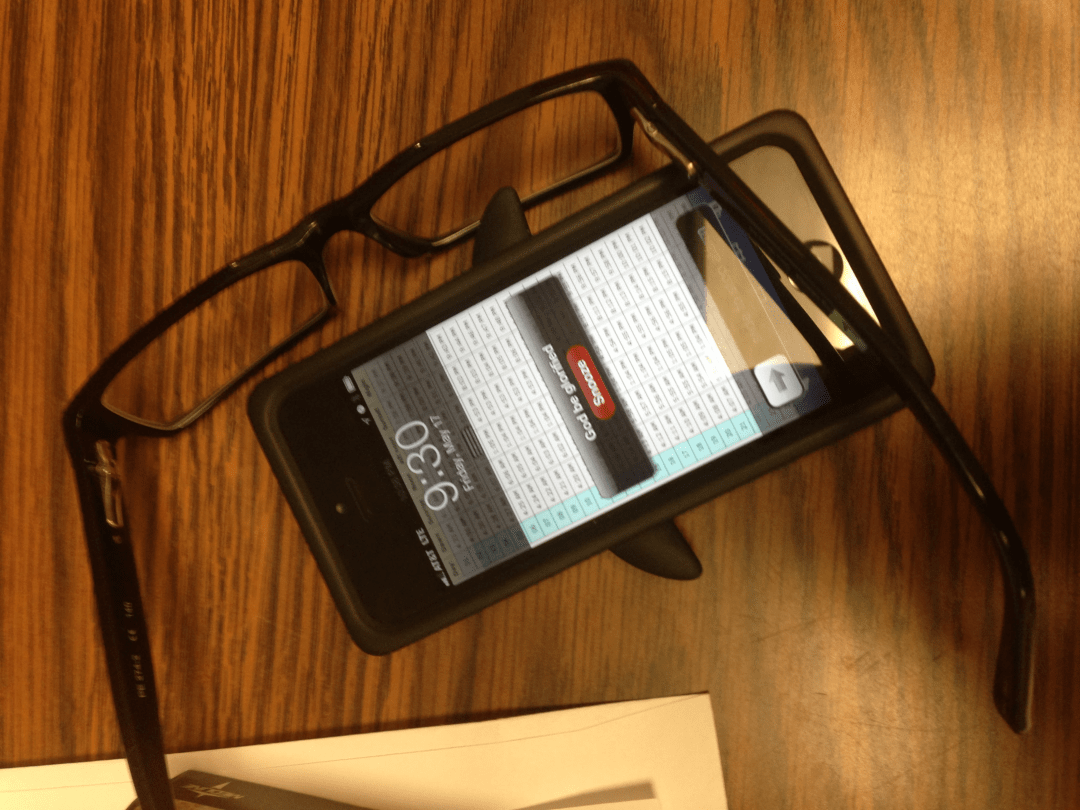
Prior to the delivery, my wife had handed me her phone to hold. As fate would have it, just as our baby was born, her phone alarm began to ring in my pocket. I unzipped my scrubs to silence it and saw the message glowing on the screen: “God be glorified.”
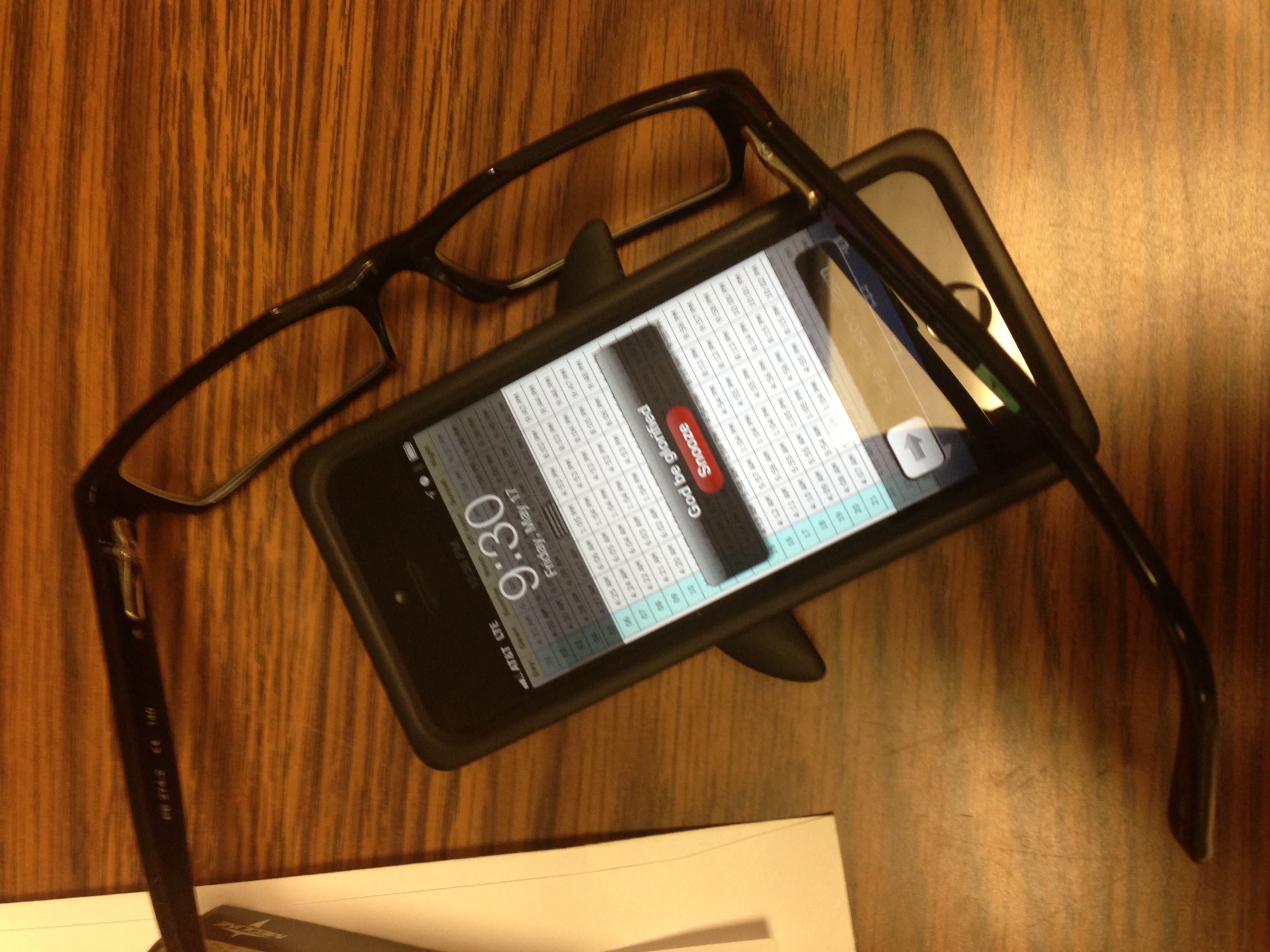
I nearly fell into prostration.
In that instant—my newborn crying, the world forever changed—God sent me a message through a screen. The timing was too perfect, too intimate, to be a coincidence. It was as if the veil between heaven and earth had briefly lifted, and I caught a glimpse of divine orchestration in the most personal way possible.
Because of moments like these, children become living signs—constant reminders of God’s mercy, provision, and presence. Every laugh, every tear, every quiet breath is a testament to the One who created them and entrusted them to us. Their very existence should stir our gratitude and strengthen our faith. They are not merely part of our lives—they are sacred trusts, gentle affirmations that God is near. His signs are not only written in the sky, but also swaddled in our arms.
[16:72] And God made for you spouses from among yourselves, and produced for you from your spouses children and grandchildren, and provided you with good provisions. Should they believe in falsehood, and turn unappreciative of God’s blessings?
Dave Smith: From Athiest to Believer
This is part of the reason God designed the world so that new life enters through the union of parents. The process itself—so fragile, so miraculous—has a way of breaking through our defenses. In the presence of a newborn, or in the fear of losing one, even the most hardened hearts begin to soften. The intellect may resist, but the soul remembers. It rebels against sterile explanations. It reaches for something greater. It reaches for God.
I’m not alone in this. In a recent interview with Tucker Carlson, comedian and political commentator Dave Smith—a self-described lifelong atheist—shared how becoming a father transformed his worldview. The shift wasn’t gradual or theoretical; it was immediate and instinctive. He said that the moment he became a parent, he not only believed in God, but he also understood what God wanted from him.
Like so many others, it was fatherhood that stirred the sleeping soul and brought belief rushing to the surface—not as an abstract idea, but as a response to something unmistakably real.
Dave described that in his moment of desperation—facing the fragility of life, the weight of responsibility, and the miracle of fatherhood—he instinctively knew not only that God exists, but also what God wanted from him. It wasn’t something he learned from theology books or religious upbringing. It was written on his heart.
This aligns perfectly with the Quran’s affirmation of our innate spiritual compass:
[30:30] Therefore, you shall devote yourself to the religion of strict monotheism. Such is the natural instinct placed into the people by GOD. Such creation of GOD will never change. This is the perfect religion, but most people do not know.
True guidance isn’t foreign to us—it’s embedded within us. In adversity, our pretense dissolves, and the soul rises. The Quran continues:
[30:31] You shall submit to Him, reverence Him, observe the Contact Prayers (Salat), and—whatever you do—do not ever fall into idol worship.
Dave’s story is a rare example of someone who didn’t forget. Rather than treat God like a temporary lifeline, he continued to pray—not just for protection, but to express gratitude. As he explained, his prayers are often not requests but thanks.
This attitude reflects a deeper maturity in faith—one that recognizes that gratitude is the engine of spiritual growth. God promises:
[14:7] Your Lord has decreed: “The more you thank Me, the more I give you.” But if you turn unappreciative, then My retribution is severe.
Sadly, many people pray earnestly for children, and when God answers them, they honor the gift but forget the Giver. They build their lives around the child and push God to the margins. The Quran warns against this inversion of devotion:
[7:189] He created you from one person (Adam). Subsequently, He gives every man a mate to find tranquility with her. She then carries a light load that she can hardly notice. As the load gets heavier, they implore GOD their Lord: “If You give us a good baby, we will be appreciative.”
[7:190] But when He gives them a good baby, they turn His gift into an idol that rivals Him. GOD be exalted, far above any partnership.
[7:191] Is it not a fact that they are idolizing idols who create nothing, and are themselves created?
[7:192] Idols that can neither help them, nor even help themselves?
Our children are not meant to replace God in our hearts. They are meant to point us back to Him. They are signs—not ends. To raise them rightly, we must remember the Source who gave them to us.
When Prayers Aren’t Answered the Way We Expect
As parents, we often approach God with specific hopes—for health, success, strength, or ease. And while it’s natural to pray for what we believe is best for our children, sometimes those prayers are answered in ways we don’t align with our expectations, in ways that we don’t immediately understand. In those moments, it’s easy to feel confused or even abandoned. But if we trust in God’s wisdom, we may come to realize that the outcome we feared was not a failure—but an invitation to see a different kind of perfection. A deeper mercy. A higher calling.
Dr. Wayne Dyer tells a story in The Power of Intention about a father named Henry, whose son Shia had learning disabilities. At a fundraising event for Shia’s special needs school, the father addressed the crowd with a question both raw and sacred: “Where is God’s perfection in my son?” He acknowledged the teaching that God does everything with perfection—but struggled to reconcile this with his son’s limitations. The room fell silent.
He went on to recount a moment at a baseball field, when a group of boys—who could’ve easily excluded Shia—chose instead to rewrite the rules so his son could be included. When Shia struggled to hold the bat and swing they helped him. When Shia barely tapped the ball with the bat, they let him run to first. And then, boy by boy, they carried him across the bases, cheering his name, until he stepped on home plate and was lifted on their shoulders. In that act of selfless inclusion, those 18 boys touched the very perfection of God.
In this story, Shia’s father answered his own question, ‘When God brings a child like Shia into the world, the perfection lies in how people respond to him.”
This story reminds us that sometimes, God doesn’t answer our prayers with outcomes—we get something better: a transformation of character, a chance to rise to compassion, a deeper invitation to reflect His mercy. What feels like a limitation or heartbreak might, in reality, be a divine opportunity—for us and for others—to reach for something more noble, more eternal.
[94:5] With pain there is gain.
[94:6] Indeed, with pain there is gain.
The story of Shia is not about a miracle in the conventional sense. It’s about hearts that opened, expectations that were surrendered, and a community that chose love over victory. In that choice, they reached what the father called God’s perfection.
May we all remember this when our own prayers seem unanswered. God’s plan may not be the one we imagined—but it is always better than anything we could have orchestrated ourselves.
Final Thoughts
In a world obsessed with evidence, sometimes the clearest proof of God is not found under a microscope, but in a delivery room. In the cries of a newborn, in the trembling prayers of a parent, in the moments when we realize that love is not something we invented—it’s something we were entrusted with. Both Dr. Michael Egnor and Dave Smith reached for God not through argument, but through experience. Not by winning a debate, but by facing the awe and agony of fatherhood.
The Quran reminds us that turning to God in times of crisis is part of our innate nature. But the greater challenge is to remain thankful after the storm has passed—to love the Giver more than the gift. Parenthood, in all its joys and fears, is a divine appointment—an invitation to see God’s mercy with fresh eyes, to return to Him with softened hearts.
Our children are not accidents of biology. They are signs. And if we’re paying attention, they don’t just teach us how to care—they teach us how to worship. They remind us that belief isn’t just something we argue for; it’s something we remember.
So let us remember. And let us be thankful.
[31:12] We have endowed Luqmãn with wisdom: “You shall be appreciative of God.” Whoever is appreciative is appreciative for his own good. As for those who turn unappreciative, GOD is in no need, Praiseworthy.
[31:13] Recall that Luqmãn said to his son, as he enlightened him, “O my son, do not set up any idols beside GOD; idolatry is a gross injustice.”
[31:14] We enjoined the human being to honor his parents. His mother bore him, and the load got heavier and heavier. It takes two years (of intensive care) until weaning. You shall be appreciative of Me, and of your parents. To Me is the ultimate destiny.
[31:15] If they try to force you to set up any idols beside Me, do not obey them. But continue to treat them amicably in this world. You shall follow only the path of those who have submitted to Me. Ultimately, you all return to Me, then I will inform you of everything you have done.
[31:16] “O my son, know that even something as tiny as a mustard seed, deep inside a rock, be it in the heavens or the earth, GOD will bring it. GOD is Sublime, Cognizant.
[31:17] “O my son, you shall observe the Contact Prayers (Salat). You shall advocate righteousness and forbid evil, and remain steadfast in the face of adversity. These are the most honorable traits.
[31:18] “You shall not treat the people with arrogance, nor shall you roam the earth proudly. GOD does not like the arrogant showoffs.
[31:19] “Walk humbly and lower your voice—the ugliest voice is the donkey’s voice.”

 Quran Talk Blog