
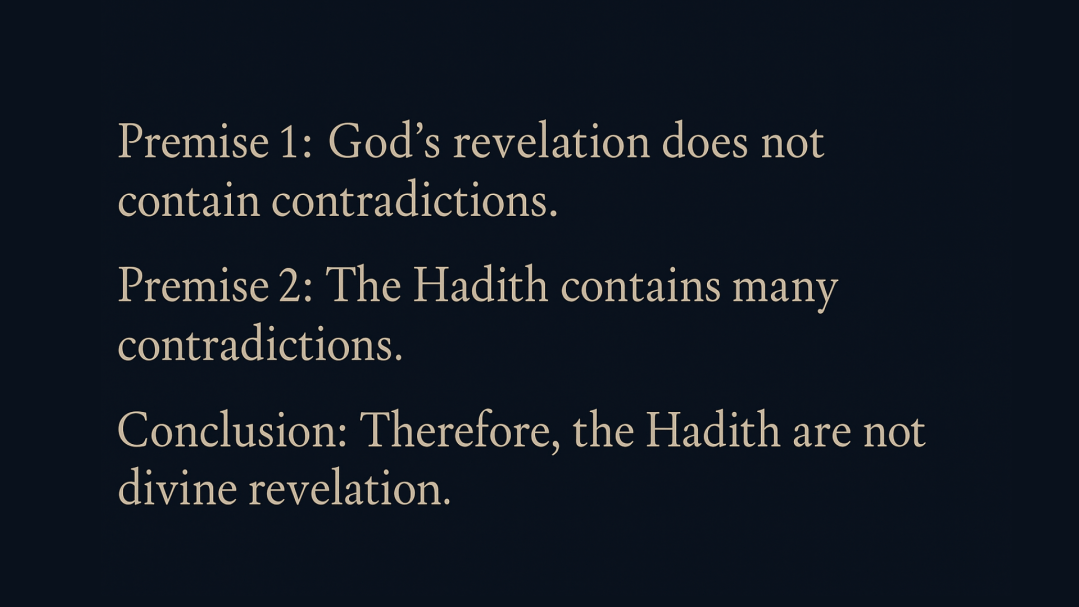
Throughout history, countless writings authored by men have been pawned off as divine revelation by religious authorities. The Quran, however, provides a clear and uncompromising litmus test—one that exposes forgeries and affirms what is truly from God:
[4:82] Why do they not study the Quran carefully? If it were from other than God, they would have found in it numerous contradictions.
أَفَلَا يَتَدَبَّرُونَ ٱلْقُرْءَانَ وَلَوْ كَانَ مِنْ عِندِ غَيْرِ ٱللَّهِ لَوَجَدُوا۟ فِيهِ ٱخْتِلَـٰفًا كَثِيرًا
According to this verse, consistency is not just a feature of divine revelation—it’s a prerequisite. Any text riddled with contradictions cannot be from God, no matter how sacred its label or how widespread its acceptance.
One of the claims we’ve discussed is that, ever since the time of Imam Shafi‘i, Sunni scholars have insisted that Hadith are wahi—divine revelation—in order to legitimize their use as a source of religious law alongside the Quran. But what happens when we apply the Quran’s test for divine authorship to the Hadith corpus? Unsurprisingly, we find it riddled with contradictions.
To cope with this, Sunni scholars developed elaborate tools to try to reconcile the chaos—by harmonizing conflicting reports, claiming abrogation, favoring certain chains over others, or reinterpreting context. Yet despite these efforts, the contradictions persist, exposing the fragile foundation of a system that insists on calling these texts divine revelation.
Many Hadith contradict the Quran outright, while others contradict each other—even within collections labeled as sahih (authentic). Below is a list of just some of the contradictions found in narrations that Sunni scholars themselves have classified as “authentic” that contradict themselves.
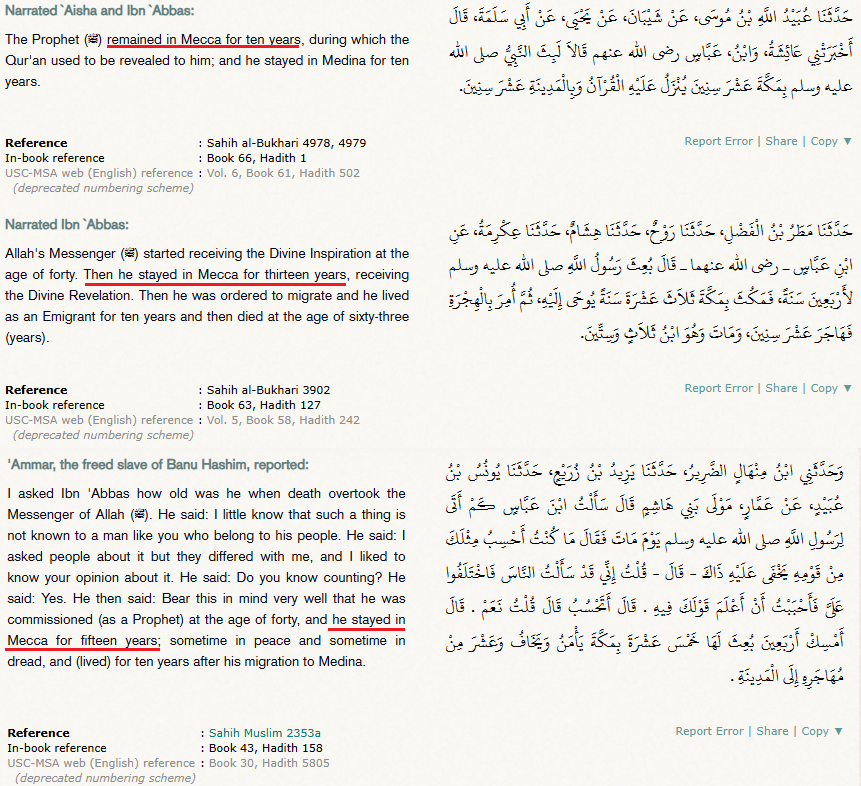
How Many Years Was the Prophet In Mecca?
What Was the First Revelation?
Sura 96:1-5
Narrated Aisha: The commencement of the Divine Inspiration to Allah’s Messenger (ﷺ) was in the form of true dreams. The Angel came to him and said, “Read, in the Name of your Lord Who has created (all that exists), has created man a clot. Read! And your Lord is Most Generous” ..(96.1,2,3)
حَدَّثَنَا ابْنُ بُكَيْرٍ، حَدَّثَنَا اللَّيْثُ، عَنْ عُقَيْلٍ، عَنِ ابْنِ شِهَابٍ، عَنْ عُرْوَةَ، أَنَّ عَائِشَةَ ـ رضى الله عنها ـ قَالَتْ أَوَّلُ مَا بُدِئَ بِهِ رَسُولُ اللَّهِ صلى الله عليه وسلم الرُّؤْيَا الصَّالِحَةُ فَجَاءَهُ الْمَلَكُ فَقَالَ {اقْرَأْ بِاسْمِ رَبِّكَ الَّذِي خَلَقَ * خَلَقَ الإِنْسَانَ مِنْ عَلَقٍ * اقْرَأْ وَرَبُّكَ الأَكْرَمُ}
Sahih al-Bukhari 4955
https://sunnah.com/bukhari:4955
Sura 74
Narrated Yahya bin Abi Kathir: I asked Aba Salama bin Abdur-Rahman about the first Sura revealed of the Qur’an. He replied “O you, wrapped-up (i.e. Al Muddaththir).” I said, “They say it was, ‘Read, in the Name of your Lord Who created,’ (i.e. Surat Al-Alaq (the Clot).” On that, Abu Salama said, “I asked Jabir bin `Abdullah about that, saying the same as you have said, whereupon he said, ‘I will not tell you except what Allah’s Messenger (ﷺ) had told us. Allah’s Messenger (ﷺ) said, “I was in seclusion in the cave of Hiram’, and after I completed the limited period of my seclusion. I came down (from the cave) and heard a voice calling me. I looked to my right, but saw nothing. Then I looked up and saw something. So I went to Khadija (the Prophet’s wife) and told her to wrap me up and pour cold water on me. So they wrapped me up and poured cold water on me.” Then, ‘O you, (Muhammad) wrapped up! Arise and warn,’ (Surat Al Muddaththir) was revealed.” (74.1)
حَدَّثَنَا يَحْيَى، حَدَّثَنَا وَكِيعٌ، عَنْ عَلِيِّ بْنِ الْمُبَارَكِ، عَنْ يَحْيَى بْنِ أَبِي كَثِيرٍ، سَأَلْتُ أَبَا سَلَمَةَ بْنَ عَبْدِ الرَّحْمَنِ عَنْ أَوَّلِ، مَا نَزَلَ مِنَ الْقُرْآنِ. قَالَ {يَا أَيُّهَا الْمُدَّثِّرُ} قُلْتُ يَقُولُونَ {اقْرَأْ بِاسْمِ رَبِّكَ الَّذِي خَلَقَ} فَقَالَ أَبُو سَلَمَةَ سَأَلْتُ جَابِرَ بْنَ عَبْدِ اللَّهِ رضى الله عنهما عَنْ ذَلِكَ وَقُلْتُ لَهُ مِثْلَ الَّذِي قُلْتَ فَقَالَ جَابِرٌ لاَ أُحَدِّثُكَ إِلاَّ مَا حَدَّثَنَا رَسُولُ اللَّهِ صلى الله عليه وسلم قَالَ ” جَاوَرْتُ بِحِرَاءٍ، فَلَمَّا قَضَيْتُ جِوَارِي هَبَطْتُ فَنُودِيتُ فَنَظَرْتُ عَنْ يَمِينِي فَلَمْ أَرَ شَيْئًا، وَنَظَرْتُ عَنْ شِمَالِي فَلَمْ أَرَ شَيْئًا، وَنَظَرْتُ أَمَامِي فَلَمْ أَرَ شَيْئًا، وَنَظَرْتُ خَلْفِي فَلَمْ أَرَ شَيْئًا، فَرَفَعْتُ رَأْسِي فَرَأَيْتُ شَيْئًا، فَأَتَيْتُ خَدِيجَةَ فَقُلْتُ دَثِّرُونِي وَصُبُّوا عَلَىَّ مَاءً بَارِدًا ـ قَالَ ـ فَدَثَّرُونِي وَصَبُّوا عَلَىَّ مَاءً بَارِدًا قَالَ فَنَزَلَتْ {يَا أَيُّهَا الْمُدَّثِّرُ * قُمْ فَأَنْذِرْ * وَرَبَّكَ فَكَبِّرْ} ”.
Sahih al-Bukhari 4922
https://sunnah.com/bukhari:4922
What Was The Last Verse Revealed?
4:176
Narrated Al-Bara: The last Sura that was revealed was Bara’a, and the last Verse that was revealed was: “They ask you for a legal verdict, Say: Allah gives a legal verdict about those who leave no descendants or ascendants as heirs.” (4.176)
حَدَّثَنَا سُلَيْمَانُ بْنُ حَرْبٍ، حَدَّثَنَا شُعْبَةُ، عَنْ أَبِي إِسْحَاقَ، سَمِعْتُ الْبَرَاءَ ـ رضى الله عنه ـ قَالَ آخِرُ سُورَةٍ نَزَلَتْ بَرَاءَةَ، وَآخِرُ آيَةٍ نَزَلَتْ {يَسْتَفْتُونَكَ }
Sahih al-Bukhari 4605
https://sunnah.com/bukhari:4605
2:281
Narrated Ibn `Abbas: The last Verse (in the Qur’an) revealed to the Prophet (ﷺ) was the Verse dealing with usury (i.e. Riba).
حَدَّثَنَا قَبِيصَةُ بْنُ عُقْبَةَ، حَدَّثَنَا سُفْيَانُ، عَنْ عَاصِمٍ، عَنِ الشَّعْبِيِّ، عَنِ ابْنِ عَبَّاسٍ ـ رضى الله عنهما ـ قَالَ آخِرُ آيَةٍ نَزَلَتْ عَلَى النَّبِيِّ صلى الله عليه وسلم آيَةُ الرِّبَا.
Sahih al-Bukhari 4544
https://sunnah.com/bukhari:4544
Breathing While Drinking
Narrated Thumama bin `Abdullah: Anas used to breathe twice or thrice in the vessel (while drinking) and used to say that the Prophet; used to take three breaths while drinking.
حَدَّثَنَا أَبُو عَاصِمٍ، وَأَبُو نُعَيْمٍ قَالاَ حَدَّثَنَا عَزْرَةُ بْنُ ثَابِتٍ، قَالَ أَخْبَرَنِي ثُمَامَةُ بْنُ عَبْدِ اللَّهِ، قَالَ كَانَ أَنَسٌ يَتَنَفَّسُ فِي الإِنَاءِ مَرَّتَيْنِ أَوْ ثَلاَثًا، وَزَعَمَ أَنَّ النَّبِيَّ صلى الله عليه وسلم كَانَ يَتَنَفَّسُ ثَلاَثًا.
Sahih al-Bukhari 5631
https://sunnah.com/bukhari:5631
Abu Qatada reported on the authority of his father that Allah’s Apostle (ﷺ) forbade breathing in a vessel.
حَدَّثَنَا ابْنُ أَبِي عُمَرَ، حَدَّثَنَا الثَّقَفِيُّ، عَنْ أَيُّوبَ، عَنْ يَحْيَى بْنِ أَبِي كَثِيرٍ، عَنْ عَبْدِ، اللَّهِ بْنِ أَبِي قَتَادَةَ عَنْ أَبِيهِ، أَنَّ النَّبِيَّ صلى الله عليه وسلم نَهَى أَنْ يُتَنَفَّسَ فِي الإِنَاءِ .
Sahih Muslim 267d
https://sunnah.com/muslim:267d
Drinking While Standing
Abu Huraira reported Allah’s Messenger (ﷺ) as saying: None of you should drink while standing; and if anyone forgets, he must vomit.
حَدَّثَنِي عَبْدُ الْجَبَّارِ بْنُ الْعَلاَءِ، حَدَّثَنَا مَرْوَانُ، – يَعْنِي الْفَزَارِيَّ – حَدَّثَنَا عُمَرُ بْنُ، حَمْزَةَ أَخْبَرَنِي أَبُو غَطَفَانَ الْمُرِّيُّ، أَنَّهُ سَمِعَ أَبَا هُرَيْرَةَ، يَقُولُ قَالَ رَسُولُ اللَّهِ صلى الله عليه وسلم “ لاَ يَشْرَبَنَّ أَحَدٌ مِنْكُمْ قَائِمًا فَمَنْ نَسِيَ فَلْيَسْتَقِئْ ” .
Sahih Muslim 2026
https://sunnah.com/muslim:2026
Narrated An-Nazzal: Ali came to the gate of the courtyard (of the Mosque) and drank (water) while he was standing and said, “Some people dislike to drink while standing, but I saw the Prophet (ﷺ) doing (drinking water) as you have seen me doing now.”
حَدَّثَنَا أَبُو نُعَيْمٍ، حَدَّثَنَا مِسْعَرٌ، عَنْ عَبْدِ الْمَلِكِ بْنِ مَيْسَرَةَ، عَنِ النَّزَّالِ، قَالَ أَتَى عَلِيٌّ ـ رضى الله عنه ـ عَلَى باب الرَّحَبَةِ، فَشَرِبَ قَائِمًا فَقَالَ إِنَّ نَاسًا يَكْرَهُ أَحَدُهُمْ أَنْ يَشْرَبَ وَهْوَ قَائِمٌ، وَإِنِّي رَأَيْتُ النَّبِيَّ صلى الله عليه وسلم فَعَلَ كَمَا رَأَيْتُمُونِي فَعَلْتُ.
Sahih al-Bukhari 5615
https://sunnah.com/bukhari:5615
Narrated Anas ibn Malik: The Prophet (ﷺ) forbade that a man should drink while standing.
حَدَّثَنَا مُسْلِمُ بْنُ إِبْرَاهِيمَ، حَدَّثَنَا هِشَامٌ، عَنْ قَتَادَةَ، عَنْ أَنَسٍ، أَنَّ رَسُولَ اللَّهِ صلى الله عليه وسلم نَهَى أَنْ يَشْرَبَ الرَّجُلُ قَائِمًا .
Sunan Abi Dawud 3717
https://sunnah.com/abudawud:3717
It was narrated that Ibn Abbas said: “I gave the Messenger of Allah some Zamzam to drink and he drank it while standing.
أَخْبَرَنَا عَلِيُّ بْنُ حُجْرٍ، قَالَ أَنْبَأَنَا عَبْدُ اللَّهِ بْنُ الْمُبَارَكِ، عَنْ عَاصِمٍ، عَنِ الشَّعْبِيِّ، عَنِ ابْنِ عَبَّاسٍ، قَالَ سَقَيْتُ رَسُولَ اللَّهِ صلى الله عليه وسلم مِنْ زَمْزَمَ فَشَرِبَهُ وَهُوَ قَائِمٌ .
Sunan an-Nasa’i 2965
https://sunnah.com/nasai:2965

Retaliation for Poisoning
Narrated Anas bin Malik: A Jewess brought a poisoned sheep to the Messenger of Allah (ﷺ), and he ate of it. She was then brought to the Messenger of Allah (ﷺ) who asked her about it. She said: I intended to kill you. He said: Allah will not give you control over it ; or he said: over me. They (the Companions) said: Should we not kill her ? He said: No. He (Anas) said: I always found it in the uvula of the Messenger of Allah (ﷺ)
حَدَّثَنَا يَحْيَى بْنُ حَبِيبِ بْنِ عَرَبِيٍّ، حَدَّثَنَا خَالِدُ بْنُ الْحَارِثِ، حَدَّثَنَا شُعْبَةُ، عَنْ هِشَامِ بْنِ زَيْدٍ، عَنْ أَنَسِ بْنِ مَالِكٍ، أَنَّ امْرَأَةً، يَهُودِيَّةً أَتَتْ رَسُولَ اللَّهِ صلى الله عليه وسلم بِشَاةٍ مَسْمُومَةٍ فَأَكَلَ مِنْهَا فَجِيءَ بِهَا إِلَى رَسُولِ اللَّهِ صلى الله عليه وسلم فَسَأَلَهَا عَنْ ذَلِكَ فَقَالَتْ أَرَدْتُ لأَقْتُلَكَ . فَقَالَ ” مَا كَانَ اللَّهُ لِيُسَلِّطَكِ عَلَى ذَلِكَ ” . أَوْ قَالَ ” عَلَىَّ ” . قَالَ فَقَالُوا أَلاَ نَقْتُلُهَا قَالَ ” لاَ ” . فَمَا زِلْتُ أَعْرِفُهَا فِي لَهَوَاتِ رَسُولِ اللَّهِ صلى الله عليه وسلم .
Sunan Abi Dawud 4508
https://sunnah.com/abudawud:4508
Narrated Abu Salamah: A Jewess presented a roasted sheep to the Messenger of Allah (ﷺ) at Khaybar.
He then mentioned the rest of the tradition like that of Jabir (No. 4495). He said: Then Bashir ibn al-Bara’ ibn Ma’rur al-Ansari died. He sent someone to call on the Jewess, and said to her (when she came): What motivated you to do the work you have done? He then mentioned the rest of the tradition similar to the one mentioned by Jabir (No. 4495).
The Messenger of Allah (ﷺ) then ordered regarding her, and she was killed. But he (AbuSalamah) did not mention the matter of cupping.
حَدَّثَنَا وَهْبُ بْنُ بَقِيَّةَ، حَدَّثَنَا خَالِدٌ، عَنْ مُحَمَّدِ بْنِ عَمْرٍو، عَنْ أَبِي سَلَمَةَ، أَنَّ رَسُولَ اللَّهِ صلى الله عليه وسلم أَهْدَتْ لَهُ يَهُودِيَّةٌ بِخَيْبَرَ شَاةً مَصْلِيَّةً نَحْوَ حَدِيثِ جَابِرٍ قَالَ فَمَاتَ بِشْرُ بْنُ الْبَرَاءِ بْنِ مَعْرُورٍ الأَنْصَارِيُّ فَأَرْسَلَ إِلَى الْيَهُودِيَّةِ “ مَا حَمَلَكِ عَلَى الَّذِي صَنَعْتِ ” . فَذَكَرَ نَحْوَ حَدِيثِ جَابِرٍ فَأَمَرَ بِهَا رَسُولُ اللَّهِ صلى الله عليه وسلم فَقُتِلَتْ وَلَمْ يَذْكُرْ أَمْرَ الْحِجَامَةِ .
Sunan Abi Dawud 4511
https://sunnah.com/abudawud:4511
Lying with One Foot Above the Other
Jalbir b. Abdullah reported Allah’s Messenger (ﷺ) as saying: None of you should lie on his back and place one of his feet upon the other.
وَحَدَّثَنِي إِسْحَاقُ بْنُ مَنْصُورٍ، أَخْبَرَنَا رَوْحُ بْنُ عُبَادَةَ، حَدَّثَنِي عُبَيْدُ اللَّهِ، – يَعْنِي ابْنَ الأَخْنَسِ – عَنْ أَبِي الزُّبَيْرِ، عَنْ جَابِرِ بْنِ عَبْدِ اللَّهِ، أَنَّ النَّبِيَّ صلى الله عليه وسلم قَالَ
“ لاَ يَسْتَلْقِيَنَّ أَحَدُكُمْ ثُمَّ يَضَعُ إِحْدَى رِجْلَيْهِ عَلَى الأُخْرَى ” .
Sahih Muslim 2099e
https://sunnah.com/muslim:2099e
It was narrated from ‘Abbad bin Tamim, from his paternal uncle, that he saw the messenger of Allah (ﷺ) lying on his back in the Masjid, placing one foot on top of the other.
أَخْبَرَنَا قُتَيْبَةُ، عَنْ مَالِكٍ، عَنِ ابْنِ شِهَابٍ، عَنْ عَبَّادِ بْنِ تَمِيمٍ، عَنْ عَمِّهِ، أَنَّهُ رَأَى رَسُولَ اللَّهِ صلى الله عليه وسلم مُسْتَلْقِيًا فِي الْمَسْجِدِ وَاضِعًا إِحْدَى رِجْلَيْهِ عَلَى الأُخْرَى .
Sunan an-Nasa’i 721
https://sunnah.com/nasai:721
Punishment for Drinking
Narrated Mu’awiyah ibn Abu Sufyan:
The Prophet (ﷺ) said: If they (the people) drink wine, flog them, again if they drink it, flog them. Again if they drink it, kill them.
حَدَّثَنَا مُوسَى بْنُ إِسْمَاعِيلَ، حَدَّثَنَا أَبَانُ، عَنْ عَاصِمٍ، عَنْ أَبِي صَالِحٍ، ذَكْوَانَ عَنْ مُعَاوِيَةَ بْنِ أَبِي سُفْيَانَ، قَالَ قَالَ رَسُولُ اللَّهِ صلى الله عليه وسلم “ إِذَا شَرِبُوا الْخَمْرَ فَاجْلِدُوهُمْ ثُمَّ إِنْ شَرِبُوا فَاجْلِدُوهُمْ ثُمَّ إِنْ شَرِبُوا فَاجْلِدُوهُمْ ثُمَّ إِنْ شَرِبُوا فَاقْتُلُوهُمْ ” .
Sunan Abi Dawud 4482
https://sunnah.com/abudawud:4482
Narrated Ali ibn Abu Talib:
The Messenger of Allah (ﷺ) and Abu Bakr gave forty lashes for drinking wine and Umar made it eighty. And all this is sunnah, the model and standard practice.
Abu Dawud said: Al-Asma’i explaning the maxim, “He who enjoys its cold should bear its heat,” said: He who enjoys the easy if it should also take the responsibility of the hard of it.
Abu Dawud said: Hudain b. al-Mundhir Abu Sasan was the leader of his tribe.
حَدَّثَنَا مُسَدَّدٌ، حَدَّثَنَا يَحْيَى، عَنِ ابْنِ أَبِي عَرُوبَةَ، عَنِ الدَّانَاجِ، عَنْ حُضَيْنِ بْنِ الْمُنْذِرِ، عَنْ عَلِيٍّ، رضى الله عنه قَالَ جَلَدَ رَسُولُ اللَّهِ صلى الله عليه وسلم فِي الْخَمْرِ وَأَبُو بَكْرٍ أَرْبَعِينَ وَكَمَّلَهَا عُمَرُ ثَمَانِينَ وَكُلٌّ سُنَّةٌ . قَالَ أَبُو دَاوُدَ وَقَالَ الأَصْمَعِيُّ وَلِّ حَارَّهَا مَنْ تَوَلَّى قَارَّهَا وَلِّ شَدِيدَهَا مَنْ تَوَلَّى هَيِّنَهَا . قَالَ أَبُو دَاوُدَ هَذَا كَانَ سَيِّدَ قَوْمِهِ حُضَيْنُ بْنُ الْمُنْذِرِ أَبُو سَاسَانَ .
Sunan Abi Dawud 4481
https://sunnah.com/abudawud:4481
’Ali said: I shall not pay blood-money or (he said): I am not going to pay blood-money for him on whom I inflicted the prescribed punishment except for the one who drank wine, for the Messenger of Allah (ﷺ) did not prescribe anything definite. It is a thing which we have decided (by agreement) ourselves.
حَدَّثَنَا إِسْمَاعِيلُ بْنُ مُوسَى الْفَزَارِيُّ، حَدَّثَنَا شَرِيكٌ، عَنْ أَبِي حُصَيْنٍ، عَنْ عُمَيْرِ بْنِ سَعِيدٍ، عَنْ عَلِيٍّ، رضى الله عنه قَالَ لاَ أَدِي – أَوْ مَا كُنْتُ لأَدِيَ – مَنْ أَقَمْتُ عَلَيْهِ حَدًّا إِلاَّ شَارِبَ الْخَمْرِ فَإِنَّ رَسُولَ اللَّهِ صلى الله عليه وسلم لَمْ يَسُنَّ فِيهِ شَيْئًا إِنَّمَا هُوَ شَىْءٌ قُلْنَاهُ نَحْنُ .
Sunan Abi Dawud 4486
https://sunnah.com/abudawud:4486
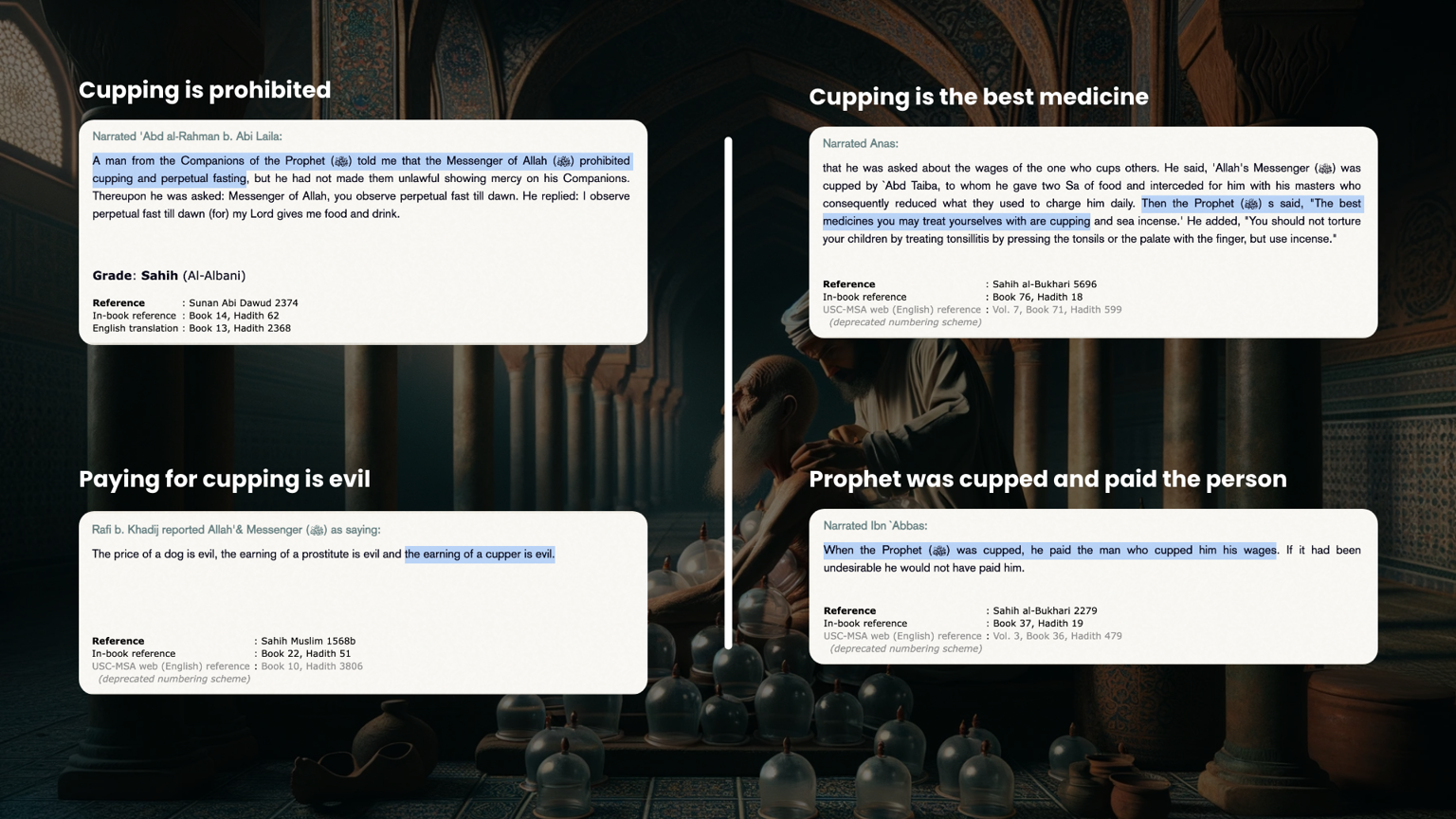
Cupping: Permissible or Prohibited
Narrated ‘Abd al-Rahman b. Abi Laila: A man from the Companions of the Prophet (ﷺ) told me that the Messenger of Allah (ﷺ) prohibited cupping and perpetual fasting, but he had not made them unlawful showing mercy on his Companions. Thereupon he was asked: Messenger of Allah, you observe perpetual fast till dawn. He replied: I observe perpetual fast till dawn (for) my Lord gives me food and drink.
حَدَّثَنَا أَحْمَدُ بْنُ حَنْبَلٍ، حَدَّثَنَا عَبْدُ الرَّحْمَنِ بْنُ مَهْدِيٍّ، عَنْ سُفْيَانَ، عَنْ عَبْدِ الرَّحْمَنِ بْنِ عَابِسٍ، عَنْ عَبْدِ الرَّحْمَنِ بْنِ أَبِي لَيْلَى، حَدَّثَنِي رَجُلٌ، مِنْ أَصْحَابِ النَّبِيِّ صلى الله عليه وسلم أَنَّ رَسُولَ اللَّهِ صلى الله عليه وسلم نَهَى عَنِ الْحِجَامَةِ وَالْمُوَاصَلَةِ وَلَمْ يُحَرِّمْهُمَا إِبْقَاءً عَلَى أَصْحَابِهِ فَقِيلَ لَهُ يَا رَسُولَ اللَّهِ إِنَّكَ تُوَاصِلُ إِلَى السَّحَرِ . فَقَالَ “ إِنِّي أُوَاصِلُ إِلَى السَّحَرِ وَرَبِّي يُطْعِمُنِي وَيَسْقِينِي ” .
Sunan Abi Dawud 2374
https://sunnah.com/abudawud:2374
Narrated Ibn `Abbas: (The Prophet (ﷺ) said), “Healing is in three things: A gulp of honey, cupping, and branding with fire (cauterizing).” But I forbid my followers to use (cauterization) branding with fire.”
حَدَّثَنِي الْحُسَيْنُ، حَدَّثَنَا أَحْمَدُ بْنُ مَنِيعٍ، حَدَّثَنَا مَرْوَانُ بْنُ شُجَاعٍ، حَدَّثَنَا سَالِمٌ الأَفْطَسُ، عَنْ سَعِيدِ بْنِ جُبَيْرٍ، عَنِ ابْنِ عَبَّاسٍ ـ رضى الله عنهما ـ قَالَ “ الشِّفَاءُ فِي ثَلاَثَةٍ شَرْبَةِ عَسَلٍ، وَشَرْطَةِ مِحْجَمٍ، وَكَيَّةِ نَارٍ، وَأَنْهَى أُمَّتِي عَنِ الْكَىِّ ”. رَفَعَ الْحَدِيثَ وَرَوَاهُ الْقُمِّيُّ عَنْ لَيْثٍ عَنْ مُجَاهِدٍ عَنِ ابْنِ عَبَّاسٍ عَنِ النَّبِيِّ صلى الله عليه وسلم فِي الْعَسَلِ وَالْحَجْمِ.
Sahih al-Bukhari 5680
https://sunnah.com/bukhari:5680
Paying for Cupping
Rafi b. Khadij (Allah be pleased with him) reported: I heard Allah’s Apostle (ﷺ) as saying: The worst earning is the earning of a prostitute, the price of a dog and the earning of a cupper.
وَحَدَّثَنِي مُحَمَّدُ بْنُ حَاتِمٍ، حَدَّثَنَا يَحْيَى بْنُ سَعِيدٍ الْقَطَّانُ، عَنْ مُحَمَّدِ بْنِ يُوسُفَ، قَالَ سَمِعْتُ السَّائِبَ بْنَ يَزِيدَ، يُحَدِّثُ عَنْ رَافِعِ بْنِ خَدِيجٍ، قَالَ سَمِعْتُ النَّبِيَّ صلى الله عليه وسلم يَقُولُ “ شَرُّ الْكَسْبِ مَهْرُ الْبَغِيِّ وَثَمَنُ الْكَلْبِ وَكَسْبُ الْحَجَّامِ ” .
Sahih Muslim 1568a
https://sunnah.com/muslim:1568a
Narrated Ibn `Abbas: When the Prophet (ﷺ) was cupped, he paid the man who cupped him his wages. If it had been undesirable he would not have paid him.
حَدَّثَنَا مُسَدَّدٌ، حَدَّثَنَا يَزِيدُ بْنُ زُرَيْعٍ، عَنْ خَالِدٍ، عَنْ عِكْرِمَةَ، عَنِ ابْنِ عَبَّاسٍ ـ رضى الله عنهما ـ قَالَ احْتَجَمَ النَّبِيُّ صلى الله عليه وسلم وَأَعْطَى الْحَجَّامَ أَجْرَهُ، وَلَوْ عَلِمَ كَرَاهِيَةً لَمْ يُعْطِهِ.
Sahih al-Bukhari 2279
https://sunnah.com/bukhari:2279
Cupping & Breaking Fast
Narrated Thawban:
The Prophet (ﷺ) said: A man who cupped and a man who has himself cupped broke their fast. The narrator Shayban said in his version: AbuQilabah told me that AbuAsma’ ar-Rahbi told him that Thawban, the client of the Messenger of Allah (ﷺ), told him that he heard the Prophet (ﷺ) say this.
حَدَّثَنَا مُسَدَّدٌ، حَدَّثَنَا يَحْيَى، عَنْ هِشَامٍ، ح وَحَدَّثَنَا أَحْمَدُ بْنُ حَنْبَلٍ، حَدَّثَنَا حَسَنُ بْنُ مُوسَى، حَدَّثَنَا شَيْبَانُ، – جَمِيعًا – عَنْ يَحْيَى، عَنْ أَبِي قِلاَبَةَ، عَنْ أَبِي أَسْمَاءَ، – يَعْنِي الرَّحَبِيَّ – عَنْ ثَوْبَانَ، عَنِ النَّبِيِّ صلى الله عليه وسلم قَالَ “ أَفْطَرَ الْحَاجِمُ وَالْمَحْجُومُ ” . قَالَ شَيْبَانُ أَخْبَرَنِي أَبُو قِلاَبَةَ أَنَّ أَبَا أَسْمَاءَ الرَّحَبِيَّ حَدَّثَهُ أَنَّ ثَوْبَانَ مَوْلَى رَسُولِ اللَّهِ صلى الله عليه وسلم أَخْبَرَهُ أَنَّهُ سَمِعَ رَسُولَ اللَّهِ صلى الله عليه وسلم .
Sunan Abi Dawud 2367
https://sunnah.com/abudawud:2367
Narrated Ibn `Abbas: The Prophet (ﷺ) was cupped while he was in the state of lhram, and also while he was observing a fast.
حَدَّثَنَا مُعَلَّى بْنُ أَسَدٍ، حَدَّثَنَا وُهَيْبٌ، عَنْ أَيُّوبَ، عَنْ عِكْرِمَةَ، عَنِ ابْنِ عَبَّاسٍ ـ رضى الله عنهما ـ أَنَّ النَّبِيَّ صلى الله عليه وسلم احْتَجَمَ، وَهْوَ مُحْرِمٌ وَاحْتَجَمَ وَهْوَ صَائِمٌ.
Sahih al-Bukhari 1938
https://sunnah.com/bukhari:1938
Assassinations
Narrated Abu Hurayrah: The Prophet (ﷺ) said: Faith prevented assassination. A believer should not assassinate.
حَدَّثَنَا مُحَمَّدُ بْنُ حُزَابَةَ، حَدَّثَنَا إِسْحَاقُ، – يَعْنِي ابْنَ مَنْصُورٍ – حَدَّثَنَا أَسْبَاطُ الْهَمْدَانِيُّ، عَنِ السُّدِّيِّ، عَنْ أَبِيهِ، عَنْ أَبِي هُرَيْرَةَ، عَنِ النَّبِيِّ صلى الله عليه وسلم قَالَ “ الإِيمَانُ قَيَّدَ الْفَتْكَ لاَ يَفْتِكُ مُؤْمِنٌ ” .
Sunan Abi Dawud 2769
https://sunnah.com/abudawud:2769
Narrated Al-Bara bin Azib: Allah’s Messenger (ﷺ) sent a group of the Ansar to Abu Rafi. Abdullah bin Atik entered his house at night and killed him while he was sleeping.
حَدَّثَنِي عَبْدُ اللَّهِ بْنُ مُحَمَّدٍ، حَدَّثَنَا يَحْيَى بْنُ آدَمَ، حَدَّثَنَا يَحْيَى بْنُ أَبِي زَائِدَةَ، عَنْ أَبِيهِ، عَنْ أَبِي إِسْحَاقَ، عَنِ الْبَرَاءِ بْنِ عَازِبٍ ـ رضى الله عنهما ـ قَالَ بَعَثَ رَسُولُ اللَّهِ صلى الله عليه وسلم رَهْطًا مِنَ الأَنْصَارِ إِلَى أَبِي رَافِعٍ فَدَخَلَ عَلَيْهِ عَبْدُ اللَّهِ بْنُ عَتِيكٍ بَيْتَهُ لَيْلاً، فَقَتَلَهُ وَهْوَ نَائِمٌ.
Sahih al-Bukhari 3023
https://sunnah.com/bukhari:3023
What Interrupts Salat
Abu Huraira reported: The Messenger of Allah (ﷺ) said: A woman, an ass and a dog disrupt the prayer, but something like the back of a saddle guards against that.
وَحَدَّثَنَا إِسْحَاقُ بْنُ إِبْرَاهِيمَ، أَخْبَرَنَا الْمَخْزُومِيُّ، حَدَّثَنَا عَبْدُ الْوَاحِدِ، – وَهُوَ ابْنُ زِيَادٍ – حَدَّثَنَا عَبْدُ اللَّهِ بْنُ عَبْدِ اللَّهِ بْنِ الأَصَمِّ، حَدَّثَنَا يَزِيدُ بْنُ الأَصَمِّ، عَنْ أَبِي هُرَيْرَةَ، قَالَ قَالَ رَسُولُ اللَّهِ صلى الله عليه وسلم “ يَقْطَعُ الصَّلاَةَ الْمَرْأَةُ وَالْحِمَارُ وَالْكَلْبُ وَيَقِي ذَلِكَ مِثْلُ مُؤْخِرَةِ الرَّحْلِ ” .
Sahih Muslim 511
https://sunnah.com/muslim:511
‘Urwa b. Zubair reported: ‘A’isha asked: What disrupts the prayer? We said: The woman and the ass. Upon this she remarked: Is the woman an ugly animal? I lay in front of the Messenger of Allah (ﷺ) like the bier of a corpse and he said prayer.
وَحَدَّثَنِي عَمْرُو بْنُ عَلِيٍّ، حَدَّثَنَا مُحَمَّدُ بْنُ جَعْفَرٍ، حَدَّثَنَا شُعْبَةُ، عَنْ أَبِي بَكْرِ بْنِ حَفْصٍ، عَنْ عُرْوَةَ بْنِ الزُّبَيْرِ، قَالَ قَالَتْ عَائِشَةُ مَا يَقْطَعُ الصَّلاَةَ قَالَ فَقُلْنَا الْمَرْأَةُ وَالْحِمَارُ . فَقَالَتْ إِنَّ الْمَرْأَةَ لَدَابَّةُ سَوْءٍ لَقَدْ رَأَيْتُنِي بَيْنَ يَدَىْ رَسُولِ اللَّهِ صلى الله عليه وسلم مُعْتَرِضَةً كَاعْتِرَاضِ الْجِنَازَةِ وَهُوَ يُصَلِّي .
Sahih Muslim 512c
https://sunnah.com/muslim:512c
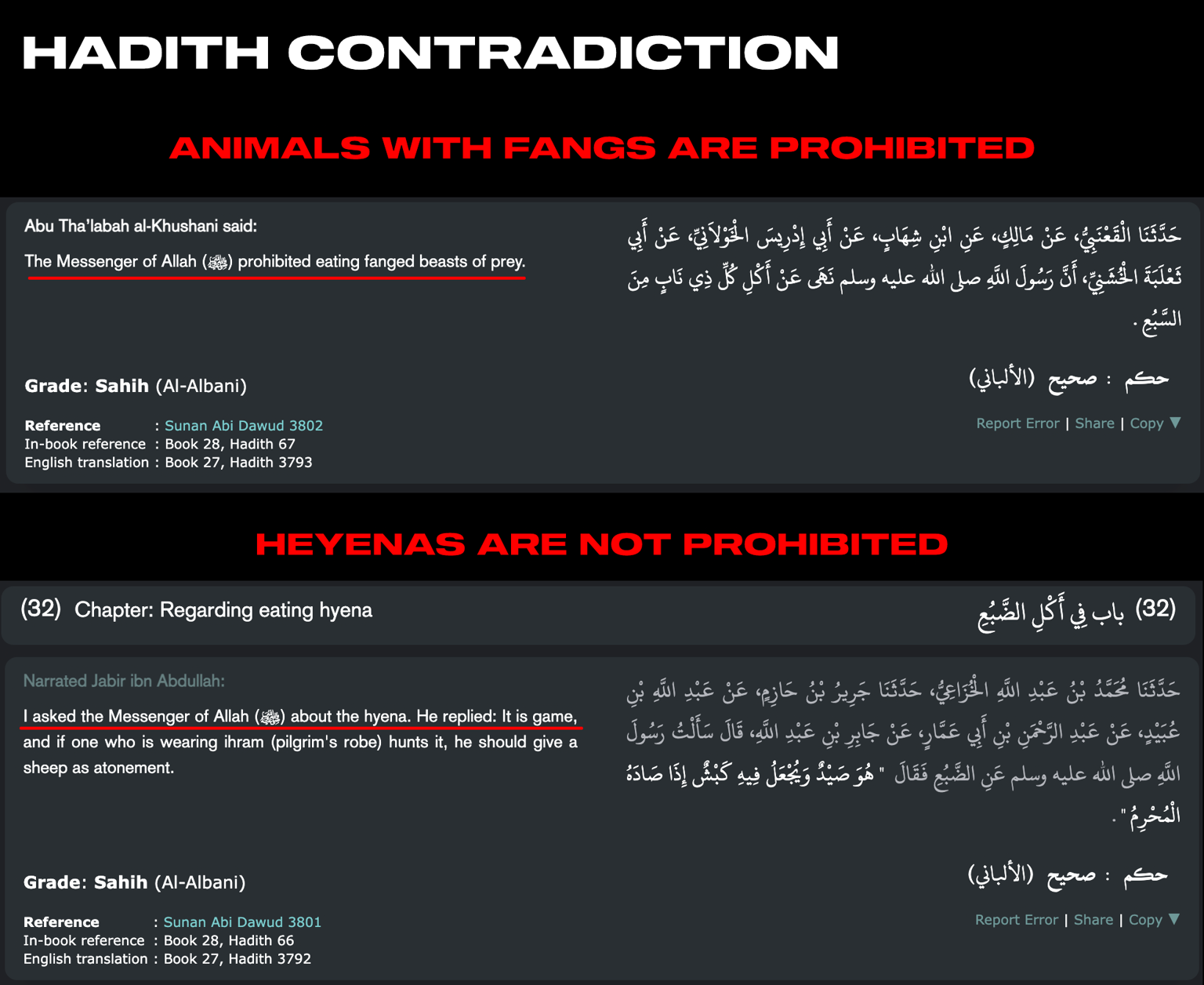
Eating Animals with Fangs
Abu Tha’labah al-Khushani said: The Messenger of Allah (ﷺ) prohibited eating fanged beasts of prey.
حَدَّثَنَا الْقَعْنَبِيُّ، عَنْ مَالِكٍ، عَنِ ابْنِ شِهَابٍ، عَنْ أَبِي إِدْرِيسَ الْخَوْلاَنِيِّ، عَنْ أَبِي ثَعْلَبَةَ الْخُشَنِيِّ، أَنَّ رَسُولَ اللَّهِ صلى الله عليه وسلم نَهَى عَنْ أَكْلِ كُلِّ ذِي نَابٍ مِنَ السَّبُعِ .
Sunan Abi Dawud 3802
https://sunnah.com/abudawud:3802
Narrated Jabir ibn Abdullah: I asked the Messenger of Allah (ﷺ) about the hyena. He replied: It is game, and if one who is wearing ihram (pilgrim’s robe) hunts it, he should give a sheep as atonement.
حَدَّثَنَا مُحَمَّدُ بْنُ عَبْدِ اللَّهِ الْخُزَاعِيُّ، حَدَّثَنَا جَرِيرُ بْنُ حَازِمٍ، عَنْ عَبْدِ اللَّهِ بْنِ عُبَيْدٍ، عَنْ عَبْدِ الرَّحْمَنِ بْنِ أَبِي عَمَّارٍ، عَنْ جَابِرِ بْنِ عَبْدِ اللَّهِ، قَالَ سَأَلْتُ رَسُولَ اللَّهِ صلى الله عليه وسلم عَنِ الضَّبُعِ فَقَالَ “ هُوَ صَيْدٌ وَيُجْعَلُ فِيهِ كَبْشٌ إِذَا صَادَهُ الْمُحْرِمُ ” .
Sunan Abi Dawud 3801
https://sunnah.com/abudawud:3801
Mutilation
Narrated `Abdullah bin Yazid Al-Ansari: The Prophet (ﷺ) forbade robbery (taking away what belongs to others without their permission), and also forbade mutilation (or maiming) of bodies.
حَدَّثَنَا آدَمُ بْنُ أَبِي إِيَاسٍ، حَدَّثَنَا شُعْبَةُ، حَدَّثَنَا عَدِيُّ بْنُ ثَابِتٍ، سَمِعْتُ عَبْدَ اللَّهِ بْنَ يَزِيدَ الأَنْصَارِيّ َ ـ وَهُوَ جَدُّهُ أَبُو أُمِّهِ ـ قَالَ نَهَى النَّبِيُّ صلى الله عليه وسلم عَنِ النُّهْبَى وَالْمُثْلَةِ.
Sahih al-Bukhari 2474
https://sunnah.com/bukhari:2474
Narrated Anas: Some people from `Uraina tribe came to Medina and its climate did not suit them, so Allah’s Messenger (ﷺ) (p.b.u.h) allowed them to go to the herd of camels (given as Zakat) and they drank their milk and urine (as medicine) but they killed the shepherd and drove away all the camels. So Allah’s Messenger (ﷺ) sent (men) in their pursuit to catch them, and they were brought, and he had their hands and feet cut, and their eyes were branded with heated pieces of iron and they were left in the Harra (a stony place at Medina) biting the stones. (See Hadith No. 234, Vol. 1)
حَدَّثَنَا مُسَدَّدٌ، حَدَّثَنَا يَحْيَى، عَنْ شُعْبَةَ، حَدَّثَنَا قَتَادَةُ، عَنْ أَنَسٍ ـ رضى الله عنه ـ أَنَّ نَاسًا، مِنْ عُرَيْنَةَ اجْتَوَوُا الْمَدِينَةَ، فَرَخَّصَ لَهُمْ رَسُولُ اللَّهِ صلى الله عليه وسلم أَنْ يَأْتُوا إِبِلَ الصَّدَقَةِ فَيَشْرَبُوا مِنْ أَلْبَانِهَا وَأَبْوَالِهَا، فَقَتَلُوا الرَّاعِيَ وَاسْتَاقُوا الذَّوْدَ، فَأَرْسَلَ رَسُولُ اللَّهِ صلى الله عليه وسلم فَأُتِيَ بِهِمْ، فَقَطَّعَ أَيْدِيَهُمْ وَأَرْجُلَهُمْ وَسَمَرَ أَعْيُنَهُمْ، وَتَرَكَهُمْ بِالْحَرَّةِ يَعَضُّونَ الْحِجَارَةَ. تَابَعَهُ أَبُو قِلاَبَةَ وَحُمَيْدٌ وَثَابِتٌ عَنْ أَنَسٍ.
Sahih al-Bukhari 1501
https://sunnah.com/bukhari:1501
Punishment for bestiality
It was narrated from Ibn`Abbas that the Messenger of Allah (ﷺ) said: “Whoever has intercourse with a Mahram relative, kill him; and whoever has intercourse with an animal, kill him, and kill the animal.”
حَدَّثَنَا عَبْدُ الرَّحْمَنِ بْنُ إِبْرَاهِيمَ الدِّمَشْقِيُّ، حَدَّثَنَا ابْنُ أَبِي فُدَيْكٍ، عَنْ إِبْرَاهِيمَ بْنِ إِسْمَاعِيلَ، عَنْ دَاوُدَ بْنِ الْحُصَيْنِ، عَنْ عِكْرِمَةَ، عَنِ ابْنِ عَبَّاسٍ، قَالَ قَالَ رَسُولُ اللَّهِ صلى الله عليه وسلم “ مَنْ وَقَعَ عَلَى ذَاتِ مَحْرَمٍ فَاقْتُلُوهُ وَمَنْ وَقَعَ عَلَى بَهِيمَةٍ فَاقْتُلُوهُ وَاقْتُلُوا الْبَهِيمَةَ ” .
Sunan Ibn Majah 2564
https://sunnah.com/ibnmajah:2564
Sufyan Ath-Thawri reported from ‘Asim, from Abu Razin, from Ibn ‘Abbas who said: “Whoever has relations with beast, then there is no legal punishment for him.”
وَقَدْ رَوَى سُفْيَانُ الثَّوْرِيُّ، عَنْ عَاصِمٍ، عَنْ أَبِي رَزِينٍ، عَنِ ابْنِ عَبَّاسٍ، أَنَّهُ قَالَ مَنْ أَتَى بَهِيمَةً فَلاَ حَدَّ عَلَيْهِ . حَدَّثَنَا بِذَلِكَ مُحَمَّدُ بْنُ بَشَّارٍ حَدَّثَنَا عَبْدُ الرَّحْمَنِ بْنُ مَهْدِيٍّ حَدَّثَنَا سُفْيَانُ الثَّوْرِيُّ . وَهَذَا أَصَحُّ مِنَ الْحَدِيثِ الأَوَّلِ . وَالْعَمَلُ عَلَى هَذَا عِنْدَ أَهْلِ الْعِلْمِ وَهُوَ قَوْلُ أَحْمَدَ وَإِسْحَاقَ .
Jami` at-Tirmidhi 1455
https://sunnah.com/tirmidhi:1455
Dead Punished For Crying of the Living
‘Abdullah b. ‘Umar reported that Hafsa wept for ‘Umar (when he was about to die). He (‘Umar) said: Be quiet, my daughter. Don’t you know that the Messenger of Allah (ﷺ) had said: ” The deceased is punished because of his family’s weeping over the death”?
حَدَّثَنَا أَبُو بَكْرِ بْنُ أَبِي شَيْبَةَ، وَمُحَمَّدُ بْنُ عَبْدِ اللَّهِ بْنِ نُمَيْرٍ، جَمِيعًا عَنِ ابْنِ بِشْرٍ، – قَالَ أَبُو بَكْرٍ حَدَّثَنَا مُحَمَّدُ بْنُ بِشْرٍ الْعَبْدِيُّ، – عَنْ عُبَيْدِ اللَّهِ بْنِ عُمَرَ، قَالَ حَدَّثَنَا نَافِعٌ، عَنْ عَبْدِ اللَّهِ، أَنَّ حَفْصَةَ، بَكَتْ عَلَى عُمَرَ فَقَالَ مَهْلاً يَا بُنَيَّةُ أَلَمْ تَعْلَمِي أَنَّ رَسُولَ اللَّهِ صلى الله عليه وسلم قَالَ “ إِنَّ الْمَيِّتَ يُعَذَّبُ بِبُكَاءِ أَهْلِهِ عَلَيْهِ ” .
Sahih Muslim 927a
https://sunnah.com/muslim:927a
Abu Musa reported that when ‘Umar was wounded, there came Suhaib from his house and went to ‘Umar and stood by his side, and began to wail. Upon this ‘Umar said: What are you weeping for? Are you weeping for me? He said: By Allah, it is for you that I weep, O Commander of the believers. He said: By Allah, you already know that the Messenger of Allah (ﷺ) had said: He who is lamented upon is punished. I made a mention of it to Musa b. Talha, and he said that ‘A’isha told that it concerned the Jews (only).
وَحَدَّثَنِي عَلِيُّ بْنُ حُجْرٍ، أَخْبَرَنَا شُعَيْبُ بْنُ صَفْوَانَ أَبُو يَحْيَى، عَنْ عَبْدِ الْمَلِكِ بْنِ، عُمَيْرٍ عَنْ أَبِي بُرْدَةَ بْنِ أَبِي مُوسَى، عَنْ أَبِي مُوسَى، قَالَ لَمَّا أُصِيبَ عُمَرُ أَقْبَلَ صُهَيْبٌ مِنْ مَنْزِلِهِ حَتَّى دَخَلَ عَلَى عُمَرَ فَقَامَ بِحِيَالِهِ يَبْكِي فَقَالَ عُمَرُ عَلاَمَ تَبْكِي أَعَلَىَّ تَبْكِي قَالَ إِي وَاللَّهِ لَعَلَيْكَ أَبْكِي يَا أَمِيرَ الْمُؤْمِنِينَ . قَالَ وَاللَّهِ لَقَدْ عَلِمْتَ أَنَّ رَسُولَ اللَّهِ صلى الله عليه وسلم قَالَ “ مَنْ يُبْكَى عَلَيْهِ يُعَذَّبُ ” . قَالَ فَذَكَرْتُ ذَلِكَ لِمُوسَى بْنِ طَلْحَةَ فَقَالَ كَانَتْ عَائِشَةُ تَقُولُ إِنَّمَا كَانَ أُولَئِكَ الْيَهُودَ .
Sahih Muslim 927f
https://sunnah.com/muslim:927f
Narrated Abdullah bin ‘Ubaidullah bin Abi Mulaika: One of the daughters of Uthman died at Mecca. We went to attend her funeral procession. Ibn Umar and Ibn Abbas were also present. I sat between them (or said, I sat beside one of them. Then a man came and sat beside me.) Abdullah bin Umar said to Amr bin Uthman, “Will you not prohibit crying as Allah’s Messenger (ﷺ) has said, ‘The dead person is tortured by the crying of his relatives. ‘” Ibn Abbas said, “Umar used to say so.” Then he added narrating, “I accompanied Umar on a journey from Mecca till we reached Al-Baida. There he saw some travelers in the shade of a Samura (A kind of forest tree). He said (to me), “Go and see who those travelers are.” So I went and saw that one of them was Suhaib. I told this to Umar, who then asked me to call him. So I went back to Suhaib and said to him, “Depart and follow the chief of the faithful believers.” Later, when Umar was stabbed, Suhaib came in weeping and saying, “O my brother, O my friend!” (On this, Umar said to him, “O Suhaib! Are you weeping for me while the Prophet (ﷺ) said, “The dead person is punished by some of the weeping of his relatives?” Ibn Abbas added, “When Umar died, I told all this to Aisha and she said, ‘May Allah be merciful to Umar. By Allah, Allah’s Messenger (ﷺ) did not say that a believer is punished by the weeping of his relatives. But he said, Allah increases the punishment of a non-believer because of the weeping of his relatives.” Aisha further added, “The Qur’an is sufficient for you (to clear up this point) as Allah has stated: ‘No burdened soul will bear another’s burden.’ ” (35.18). Ibn Abbas then said, “Only Allah makes one laugh or cry.” Ibn `Umar did not say anything after that.
حَدَّثَنَا عَبْدَانُ، حَدَّثَنَا عَبْدُ اللَّهِ، أَخْبَرَنَا ابْنُ جُرَيْجٍ، قَالَ أَخْبَرَنِي عَبْدُ اللَّهِ بْنُ عُبَيْدِ اللَّهِ بْنِ أَبِي مُلَيْكَةَ، قَالَ تُوُفِّيَتِ ابْنَةٌ لِعُثْمَانَ ـ رضى الله عنه ـ بِمَكَّةَ وَجِئْنَا لِنَشْهَدَهَا، وَحَضَرَهَا ابْنُ عُمَرَ وَابْنُ عَبَّاسٍ ـ رضى الله عنهم ـ وَإِنِّي لَجَالِسٌ بَيْنَهُمَا ـ أَوْ قَالَ جَلَسْتُ إِلَى أَحَدِهِمَا. ثُمَّ جَاءَ الآخَرُ، فَجَلَسَ إِلَى جَنْبِي فَقَالَ عَبْدُ اللَّهِ بْنُ عَمَرَ ـ رضى الله عنهما ـ لِعَمْرِو بْنِ عُثْمَانَ أَلاَ تَنْهَى عَنِ الْبُكَاءِ، فَإِنَّ رَسُولَ اللَّهِ صلى الله عليه وسلم قَالَ ” إِنَّ الْمَيِّتَ لَيُعَذَّبُ بِبُكَاءِ أَهْلِهِ عَلَيْهِ ”. فَقَالَ ابْنُ عَبَّاسٍ ـ رضى الله عنهما ـ قَدْ كَانَ عُمَرُ ـ رضى الله عنه ـ يَقُولُ بَعْضَ ذَلِكَ، ثُمَّ حَدَّثَ قَالَ صَدَرْتُ مَعَ عُمَرَ ـ رضى الله عنه ـ مِنْ مَكَّةَ حَتَّى إِذَا كُنَّا بِالْبَيْدَاءِ، إِذَا هُوَ بِرَكْبٍ تَحْتَ ظِلِّ سَمُرَةٍ فَقَالَ اذْهَبْ، فَانْظُرْ مَنْ هَؤُلاَءِ الرَّكْبُ قَالَ فَنَظَرْتُ فَإِذَا صُهَيْبٌ، فَأَخْبَرْتُهُ فَقَالَ ادْعُهُ لِي. فَرَجَعْتُ إِلَى صُهَيْبٍ فَقُلْتُ ارْتَحِلْ فَالْحَقْ أَمِيرَ الْمُؤْمِنِينَ. فَلَمَّا أُصِيبَ عُمَرُ دَخَلَ صُهَيْبٌ يَبْكِي يَقُولُ وَاأَخَاهُ، وَاصَاحِبَاهُ. فَقَالَ عُمَرُ ـ رضى الله عنه ـ يَا صُهَيْبُ أَتَبْكِي عَلَىَّ وَقَدْ قَالَ رَسُولُ اللَّهِ صلى الله عليه وسلم ” إِنَّ الْمَيِّتَ يُعَذَّبُ بِبَعْضِ بُكَاءِ أَهْلِهِ عَلَيْهِ ”. قَالَ ابْنُ عَبَّاسٍ ـ رضى الله عنهما فَلَمَّا مَاتَ عُمَرُ ـ رضى الله عنه ـ ذَكَرْتُ ذَلِكَ لِعَائِشَةَ ـ رضى الله عنها ـ فَقَالَتْ رَحِمَ اللَّهُ عُمَرَ، وَاللَّهِ مَا حَدَّثَ رَسُولُ اللَّهِ صلى الله عليه وسلم إِنَّ اللَّهَ لَيُعَذِّبُ الْمُؤْمِنَ بِبُكَاءِ أَهْلِهِ عَلَيْهِ. وَلَكِنَّ رَسُولَ اللَّهِ صلى الله عليه وسلم قَالَ ” إِنَّ اللَّهَ لَيَزِيدُ الْكَافِرَ عَذَابًا بِبُكَاءِ أَهْلِهِ عَلَيْهِ ”. وَقَالَتْ حَسْبُكُمُ الْقُرْآنُ {وَلاَ تَزِرُ وَازِرَةٌ وِزْرَ أُخْرَى}. قَالَ ابْنُ عَبَّاسٍ ـ رضى الله عنهما ـ عِنْدَ ذَلِكَ وَاللَّهُ هُوَ أَضْحَكَ وَأَبْكَى. قَالَ ابْنُ أَبِي مُلَيْكَةَ وَاللَّهِ مَا قَالَ ابْنُ عُمَرَ ـ رضى الله عنهما ـ شَيْئًا.
Sahih al-Bukhari 1286, 1287, 1288
https://sunnah.com/bukhari:1286
Wudu After Eating Cooked Food
Abu Hurairah reported: The Messenger of Allah (ﷺ) said: Perform ablution after eating anything which has been cooked by fire.
حَدَّثَنَا مُسَدَّدٌ، حَدَّثَنَا يَحْيَى، عَنْ شُعْبَةَ، حَدَّثَنِي أَبُو بَكْرِ بْنُ حَفْصٍ، عَنِ الأَغَرِّ، عَنْ أَبِي هُرَيْرَةَ، قَالَ قَالَ رَسُولُ اللَّهِ صلى الله عليه وسلم “ الْوُضُوءُ مِمَّا أَنْضَجَتِ النَّارُ ” .
Sunan Abi Dawud 194
https://sunnah.com/abudawud:194

Ibn ‘Abbas said: The Messenger of Allah (ﷺ) took (the meat of) a (goat’s) shoulder and offered prayer and did not perform ablution.
حَدَّثَنَا عَبْدُ اللَّهِ بْنُ مَسْلَمَةَ، حَدَّثَنَا مَالِكٌ، عَنْ زَيْدِ بْنِ أَسْلَمَ، عَنْ عَطَاءِ بْنِ يَسَارٍ، عَنِ ابْنِ عَبَّاسٍ، أَنَّ رَسُولَ اللَّهِ صلى الله عليه وسلم أَكَلَ كَتِفَ شَاةٍ ثُمَّ صَلَّى وَلَمْ يَتَوَضَّأْ .
Sunan Abi Dawud 187
https://sunnah.com/abudawud:187
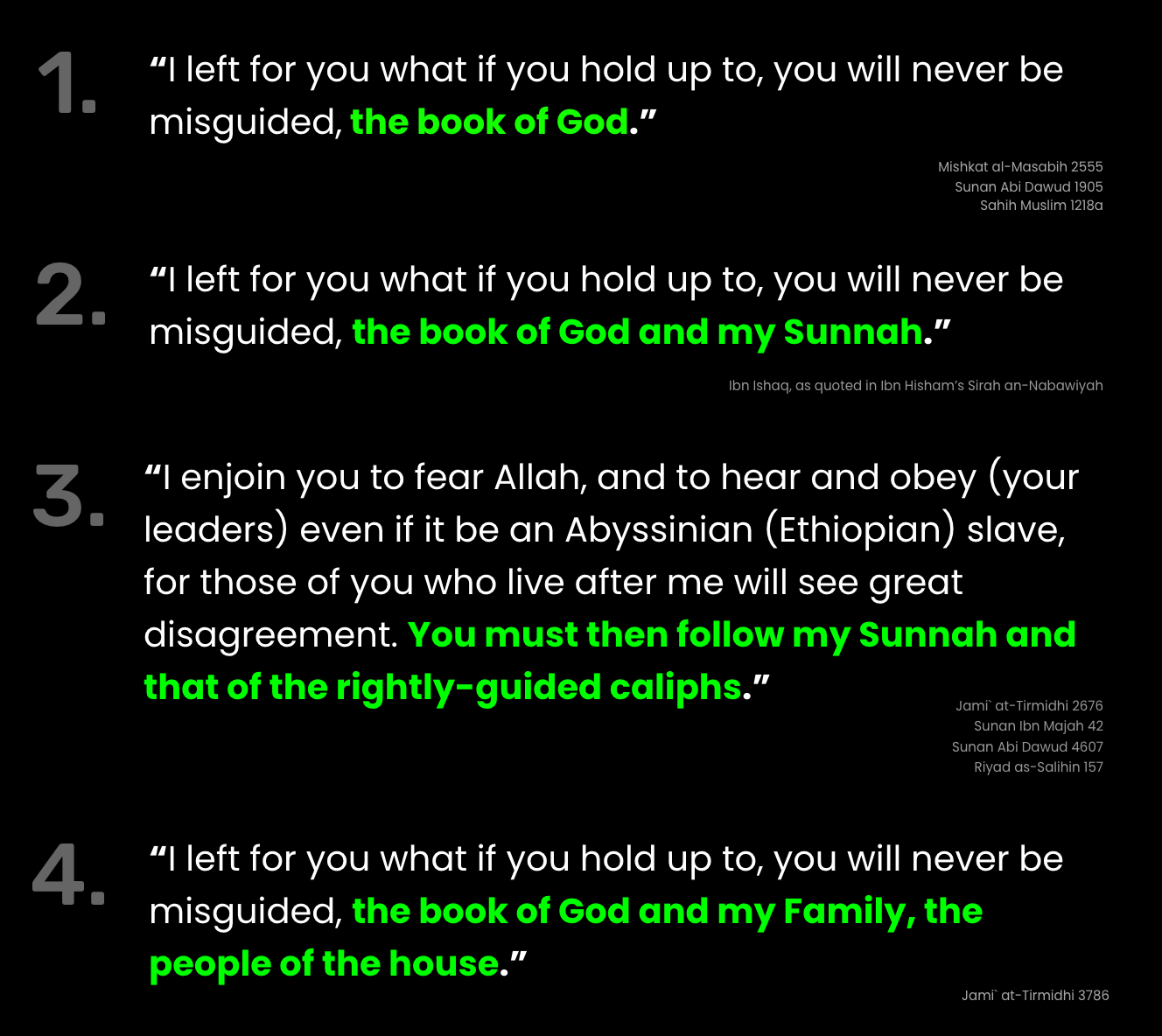
Farewell Sermon
Perfect Ablution (Wudu)
Narrated Rifa’ah ibn Rafi’:
This version (of Hadith No 856) adds: The Messenger of Allah (ﷺ) said: The prayer of any of you is not complete until he performs ablution perfectly, as Allah, the Exalted, has ordered you. He should wash his face and hands up to the elbows, and wipe his head and (wash) his feet up to the ankles. Then he should exalt Allah and praise Him. Then he should recite the Qur’an as much as it is convenient for him.
(Narrator then narrated the tradition like Hammad’s, No. 856). He said: He then utter the takbir and prostration himself so that his face is at rest.
Hammam (sub-narrator) said: Sometimes he reported: So that his forehead is at rest on the ground, and his joints return to their places and are loosened. Then he should say the takbir and then sit right on his hips and erect his back. He described the nature of prayer in this way by offering four rak’ahs until he finished it. The prayer of any of you is not complete unless he does so.
حَدَّثَنَا الْحَسَنُ بْنُ عَلِيٍّ، حَدَّثَنَا هِشَامُ بْنُ عَبْدِ الْمَلِكِ، وَالْحَجَّاجُ بْنُ مِنْهَالٍ، قَالاَ حَدَّثَنَا هَمَّامٌ، حَدَّثَنَا إِسْحَاقُ بْنُ عَبْدِ اللَّهِ بْنِ أَبِي طَلْحَةَ، عَنْ عَلِيِّ بْنِ يَحْيَى بْنِ خَلاَّدٍ، عَنْ أَبِيهِ، عَنْ عَمِّهِ، رِفَاعَةَ بْنِ رَافِعٍ بِمَعْنَاهُ قَالَ فَقَالَ رَسُولُ اللَّهِ صلى الله عليه وسلم ” إِنَّهَا لاَ تَتِمُّ صَلاَةُ أَحَدِكُمْ حَتَّى يُسْبِغَ الْوُضُوءَ كَمَا أَمَرَهُ اللَّهُ عَزَّ وَجَلَّ فَيَغْسِلَ وَجْهَهُ وَيَدَيْهِ إِلَى الْمِرْفَقَيْنِ وَيَمْسَحَ بِرَأْسِهِ وَرِجْلَيْهِ إِلَى الْكَعْبَيْنِ ثُمَّ يُكَبِّرُ اللَّهَ عَزَّ وَجَلَّ وَيَحْمَدُهُ ثُمَّ يَقْرَأُ مِنَ الْقُرْآنِ مَا أُذِنَ لَهُ فِيهِ وَتَيَسَّرَ ” . فَذَكَرَ نَحْوَ حَدِيثِ حَمَّادٍ قَالَ ” ثُمَّ يُكَبِّرُ فَيَسْجُدُ فَيُمَكِّنُ وَجْهَهُ ” . قَالَ هَمَّامٌ وَرُبَّمَا قَالَ ” جَبْهَتَهُ مِنَ الأَرْضِ حَتَّى تَطْمَئِنَّ مَفَاصِلُهُ وَتَسْتَرْخِيَ ثُمَّ يُكَبِّرُ فَيَسْتَوِي قَاعِدًا عَلَى مَقْعَدِهِ وَيُقِيمُ صُلْبَهُ ” . فَوَصَفَ الصَّلاَةَ هَكَذَا أَرْبَعَ رَكَعَاتٍ حَتَّى فَرَغَ ” لاَ تَتِمُّ صَلاَةُ أَحَدِكُمْ حَتَّى يَفْعَلَ ذَلِكَ ” .
Sunan Abi Dawud 858
https://sunnah.com/abudawud:858
[Quran 5:6] O you who believe, when you observe the Contact Prayers (Salat), you shall: (1) wash your faces, (2) wash your arms to the elbows, (3) wipe your heads, and (4) wash your feet to the ankles. If you were unclean due to sexual orgasm, you shall bathe. If you are ill, or traveling, or had any digestive excretion (urinary, fecal, or gas), or had (sexual) contact with the women, and you cannot find water, you shall observe the dry ablution (Tayammum) by touching clean dry soil, then rubbing your faces and hands. GOD does not wish to make the religion difficult for you; He wishes to cleanse you and to perfect His blessing upon you, that you may be appreciative.
يَاأَيُّهَا الَّذِينَ آمَنُوا إِذَا قُمْتُمْ إِلَى الصَّلَاةِ فَاغْسِلُوا وُجُوهَكُمْ وَأَيْدِيَكُمْ إِلَى الْمَرَافِقِ وَامْسَحُوا بِرُءُوسِكُمْ وَأَرْجُلَكُمْ إِلَى الْكَعْبَيْنِ وَإِنْ كُنْتُمْ جُنُبًا فَاطَّهَّرُوا وَإِنْ كُنْتُمْ مَرْضَىٰ أَوْ عَلَىٰ سَفَرٍ أَوْ جَاءَ أَحَدٌ مِنْكُمْ مِنَ الْغَائِطِ أَوْ لَامَسْتُمُ النِّسَاءَ فَلَمْ تَجِدُوا مَاءً فَتَيَمَّمُوا صَعِيدًا طَيِّبًا فَامْسَحُوا بِوُجُوهِكُمْ وَأَيْدِيكُمْ مِنْهُ مَا يُرِيدُ اللَّهُ لِيَجْعَلَ عَلَيْكُمْ مِنْ حَرَجٍ وَلَٰكِنْ يُرِيدُ لِيُطَهِّرَكُمْ وَلِيُتِمَّ نِعْمَتَهُ عَلَيْكُمْ لَعَلَّكُمْ تَشْكُرُونَ
Humran, the freed slave of ‘Uthman, said: Uthman b. ‘Affan called for ablution water and this is how he performed the ablution. He washed his hands thrice. He then rinsed his mouth and cleaned his nose with water (three times). He then washed his face three times, then washed his right arm up to the elbow three times, then washed his left arm like that, then wiped his head; then washed his right foot up to the ankle three times, then washed his left foot like that, and then said: I saw the Messenger of Allah (ﷺ) perform ablution like this ablution of mine. Then the Messenger of Allah (ﷺ) said: He who performs ablution like this ablution of mine and then stood up (for prayer) and offered two rak’ahs of prayer without allowing his thoughts to be distracted, all his previous sins are expiated. Ibn Shihab said: Our scholars remarked: This is the most complete of the ablutions performed for prayer.
حَدَّثَنِي أَبُو الطَّاهِرِ، أَحْمَدُ بْنُ عَمْرِو بْنِ عَبْدِ اللَّهِ بْنِ عَمْرِو بْنِ سَرْحٍ وَحَرْمَلَةُ بْنُ يَحْيَى التُّجِيبِيُّ قَالاَ أَخْبَرَنَا ابْنُ وَهْبٍ، عَنْ يُونُسَ، عَنِ ابْنِ شِهَابٍ، أَنَّ عَطَاءَ بْنَ يَزِيدَ اللَّيْثِيَّ، أَخْبَرَهُ أَنَّ حُمْرَانَ مَوْلَى عُثْمَانَ أَخْبَرَهُ أَنَّ عُثْمَانَ بْنَ عَفَّانَ – رضى الله عنه – دَعَا بِوَضُوءٍ فَتَوَضَّأَ فَغَسَلَ كَفَّيْهِ ثَلاَثَ مَرَّاتٍ ثُمَّ مَضْمَضَ وَاسْتَنْثَرَ ثُمَّ غَسَلَ وَجْهَهُ ثَلاَثَ مَرَّاتٍ ثُمَّ غَسَلَ يَدَهُ الْيُمْنَى إِلَى الْمِرْفَقِ ثَلاَثَ مَرَّاتٍ ثُمَّ غَسَلَ يَدَهُ الْيُسْرَى مِثْلَ ذَلِكَ ثُمَّ مَسَحَ رَأْسَهُ ثُمَّ غَسَلَ رِجْلَهُ الْيُمْنَى إِلَى الْكَعْبَيْنِ ثَلاَثَ مَرَّاتٍ ثُمَّ غَسَلَ الْيُسْرَى مِثْلَ ذَلِكَ ثُمَّ قَالَ رَأَيْتُ رَسُولَ اللَّهِ صلى الله عليه وسلم تَوَضَّأَ نَحْوَ وُضُوئِي هَذَا ثُمَّ قَالَ رَسُولُ اللَّهِ صلى الله عليه وسلم “ مَنْ تَوَضَّأَ نَحْوَ وُضُوئِي هَذَا ثُمَّ قَامَ فَرَكَعَ رَكْعَتَيْنِ لاَ يُحَدِّثُ فِيهِمَا نَفْسَهُ غُفِرَ لَهُ مَا تَقَدَّمَ مِنْ ذَنْبِهِ ” . قَالَ ابْنُ شِهَابٍ وَكَانَ عُلَمَاؤُنَا يَقُولُونَ هَذَا الْوُضُوءُ أَسْبَغُ مَا يَتَوَضَّأُ بِهِ أَحَدٌ لِلصَّلاَةِ .
Sahih Muslim 226a
https://sunnah.com/muslim:226a
Narrated Al-Miqdam ibn Ma’dikarib al-Kindi:
The ablution water was brought to the Messenger (ﷺ) and he performed ablution; he washed his hands up to wrists three times, then washed his forearms three times. He then rinsed his mouth and snuffed up water three times; then he wiped his head and ears inside and outside.
حَدَّثَنَا أَحْمَدُ بْنُ مُحَمَّدِ بْنِ حَنْبَلٍ، حَدَّثَنَا أَبُو الْمُغِيرَةِ، حَدَّثَنَا حَرِيزٌ، حَدَّثَنِي عَبْدُ الرَّحْمَنِ بْنُ مَيْسَرَةَ الْحَضْرَمِيُّ، سَمِعْتُ الْمِقْدَامَ بْنَ مَعْدِيكَرِبَ الْكِنْدِيَّ، قَالَ أُتِيَ رَسُولُ اللَّهِ صلى الله عليه وسلم بِوَضُوءٍ فَتَوَضَّأَ فَغَسَلَ كَفَّيْهِ ثَلاَثًا ثُمَّ تَمَضْمَضَ وَاسْتَنْشَقَ ثَلاَثًا وَغَسَلَ وَجْهَهُ ثَلاَثًا ثُمَّ غَسَلَ ذِرَاعَيْهِ ثَلاَثًا ثَلاَثًا ثُمَّ مَسَحَ بِرَأْسِهِ وَأُذُنَيْهِ ظَاهِرِهِمَا وَبَاطِنِهِمَا .
Sunan Abi Dawud 121
https://sunnah.com/abudawud:121
It was narrated that | Humran bin Aban, the freed slave of Uthman bin Affan (رضي الله عنه), said: I saw Uthman bin Affan رضي الله عنه call for water at the door of the mosque. He washed his hands, then he rinsed his mouth, and took water into his nose and blew it out; then he washed his face three times, then he washed his hands up to the elbows three times, then he wiped his head. Then he passed his hands over the outside of his ears, then passed them over his beard, then he washed his feet up to the ankles three times. Then he stood and prayed two rakahs, Then he said: I have done wudoo’ for you as I saw the Messenger of Allah (ﷺ) do wudoo’, then I prayed two rakahs as I saw him do. When the Messenger of Allah (ﷺ) had finished praying his two rakahs, he said:Whoever does wudoo’ as I have done, then prays two rakahs in which he does not let his mind wander, will be forgiven whatever sins came between that and his previous prayer.
حَدَّثَنَا يَعْقُوبُ، حَدَّثَنَا أَبِي، عَنِ ابْنِ إِسْحَاقَ، حَدَّثَنِي مُحَمَّدُ بْنُ إِبْرَاهِيمَ بْنِ الْحَارِثِ التَّيْمِيُّ، عَنْ مُعَاذِ بْنِ عَبْدِ الرَّحْمَنِ التَّيْمِيِّ، عَنْ حُمْرَانَ بْنِ أَبَانَ، مَوْلَى عُثْمَانَ بْنِ عَفَّانَ رَضِيَ اللَّهُ عَنْهُ قَالَ رَأَيْتُ عُثْمَانَ بْنَ عَفَّانَ رَضِيَ اللَّهُ عَنْهُ دَعَا بِوَضُوءٍ وَهُوَ عَلَى بَابِ الْمَسْجِدِ فَغَسَلَ يَدَيْهِ ثُمَّ مَضْمَضَ وَاسْتَنْشَقَ وَاسْتَنْثَرَ ثُمَّ غَسَلَ وَجْهَهُ ثَلَاثَ مَرَّاتٍ ثُمَّ غَسَلَ يَدَيْهِ إِلَى الْمِرْفَقَيْنِ ثَلَاثَ مَرَّاتٍ ثُمَّ مَسَحَ بِرَأْسِهِ وَأَمَرَّ بِيَدَيْهِ عَلَى ظَاهِرِ أُذُنَيْهِ ثُمَّ مَرَّ بِهِمَا عَلَى لِحْيَتِهِ ثُمَّ غَسَلَ رِجْلَيْهِ إِلَى الْكَعْبَيْنِ ثَلَاثَ مَرَّاتٍ ثُمَّ قَامَ فَرَكَعَ رَكْعَتَيْنِ ثُمَّ قَالَ تَوَضَّأْتُ لَكُمْ كَمَا رَأَيْتُ رَسُولَ اللَّهِ صَلَّى اللَّهُ عَلَيْهِ وَسَلَّمَ تَوَضَّأَ ثُمَّ رَكَعْتُ رَكْعَتَيْنِ كَمَا رَأَيْتُهُ رَكَعَ قَالَ ثُمَّ قَالَ قَالَ رَسُولُ اللَّهِ صَلَّى اللَّهُ عَلَيْهِ وَسَلَّمَ حِينَ فَرَغَ مِنْ رَكْعَتَيْهِ مَنْ تَوَضَّأَ كَمَا تَوَضَّأْتُ ثُمَّ رَكَعَ رَكْعَتَيْنِ لَا يُحَدِّثُ فِيهِمَا نَفْسَهُ غُفِرَ لَهُ مَا كَانَ بَيْنَهُمَا وَبَيْنَ صَلَاتِهِ بِالْأَمْسِ.
Musnad Ahmad 489
https://sunnah.com/ahmad:489
Narrated Abdullah ibn Amr ibn al-‘As:
A man came to the Prophet (ﷺ) and asked him: Messenger of Allah, how is the ablution (to performed)?
He (the Prophet) then called for water in a vessel and washed his hands up to the wrists three times, then washed his face three times, and washed his forearms three times. He then wiped his head and inserted both his index fingers in his ear-holes; he wiped the back of his ears with his thumbs and the front of his ears with the index fingers. He then washed his feet three times.
Then he said: This is how ablution should be performed. If anyone does more or less than this, he has done wrong and transgressed, or (said) transgressed and done wrong.
حَدَّثَنَا مُسَدَّدٌ، حَدَّثَنَا أَبُو عَوَانَةَ، عَنْ مُوسَى بْنِ أَبِي عَائِشَةَ، عَنْ عَمْرِو بْنِ شُعَيْبٍ، عَنْ أَبِيهِ، عَنْ جَدِّهِ، أَنَّ رَجُلاً، أَتَى النَّبِيَّ صلى الله عليه وسلم فَقَالَ يَا رَسُولَ اللَّهِ كَيْفَ الطُّهُورُ فَدَعَا بِمَاءٍ فِي إِنَاءٍ فَغَسَلَ كَفَّيْهِ ثَلاَثًا ثُمَّ غَسَلَ وَجْهَهُ ثَلاَثًا ثُمَّ غَسَلَ ذِرَاعَيْهِ ثَلاَثًا ثُمَّ مَسَحَ بِرَأْسِهِ فَأَدْخَلَ إِصْبَعَيْهِ السَّبَّاحَتَيْنِ فِي أُذُنَيْهِ وَمَسَحَ بِإِبْهَامَيْهِ عَلَى ظَاهِرِ أُذُنَيْهِ وَبِالسَّبَّاحَتَيْنِ بَاطِنَ أُذُنَيْهِ ثُمَّ غَسَلَ رِجْلَيْهِ ثَلاَثًا ثَلاَثًا ثُمَّ قَالَ ” هَكَذَا الْوُضُوءُ فَمَنْ زَادَ عَلَى هَذَا أَوْ نَقَصَ فَقَدْ أَسَاءَ وَظَلَمَ ” . أَوْ ” ظَلَمَ وَأَسَاءَ ” .
Sunan Abi Dawud 135
https://sunnah.com/abudawud:135
Conclusion
The Quran lays out a clear and objective test for identifying divine revelation: it must be free of contradictions (4:82). This is not a vague theological idea—it is a concrete standard that any text claiming to be from God must meet. And by this very standard, the Hadith corpus fails.
Hadith literature is riddled with contradictions. In this article, we examined only a small sample of the internal inconsistencies found within the very collections labeled sahih. We didn’t even touch on the numerous hadith that don’t meet this standard or the ones that directly contradict the Quran itself. To accept Hadith as divine revelation, then, is to reject the Quran’s own definition of what divine revelation looks like. It is to claim that God’s message is inconsistent, fragmented, and self-contradictory—something the Quran explicitly denies.
What’s striking is that many Sunnis are quick to point out contradictions in the Gospels when debating Christians, arguing that such inconsistencies prove the Bible has been corrupted and cannot be trusted as divine revelation. Yet when the same standard is applied to the Hadith, they fall silent—or worse, make excuses for contradictions that are just as blatant. This double standard is not only intellectually dishonest, but it also undermines the very principle the Quran gives us for discerning truth from falsehood.
Therefore, by the Quran’s own criteria, Hadith cannot be part of God’s revelation. They are human reports, shaped by political, sectarian, and cultural forces, and cannot be equated with the perfect, contradiction-free words of God. If we are to uphold the Quran as the final and complete revelation, we must reject any source that fails the test it gives us. The truth does not contradict itself—and neither does God’s word.

 Quran Talk Blog