
The Quran declares, without ambiguity, that God never forgets.
[19:64] We do not come down except by the command of your Lord. To Him belongs our past, our future, and everything between them. Your Lord is never forgetful.
وَمَا نَتَنَزَّلُ إِلَّا بِأَمْرِ رَبِّكَ لَهُۥ مَا بَيْنَ أَيْدِينَا وَمَا خَلْفَنَا وَمَا بَيْنَ ذَٰلِكَ وَمَا كَانَ رَبُّكَ نَسِيًّا
This is repeated by Moses when Pharoah questioned the account of the past generations.
[20:52] He said, “The knowledge thereof is with my Lord in a record. My Lord never errs, nor does He forget.”
قَالَ عِلْمُهَا عِندَ رَبِّى فِى كِتَـٰبٍ لَّا يَضِلُّ رَبِّى وَلَا يَنسَى
These statements affirm a foundational truth: God is All-Knowing, and His awareness spans the past, the present, and the future. His memory does not falter; His attention never lapses.
However, some verses appear to say the opposite,
[20:124] “As for the one who disregards My message, he will have a miserable life, and we resurrect him, on the Day of Resurrection, blind.”
[20:125] He will say, “My Lord, why did you summon me blind, when I used to be a seer?”
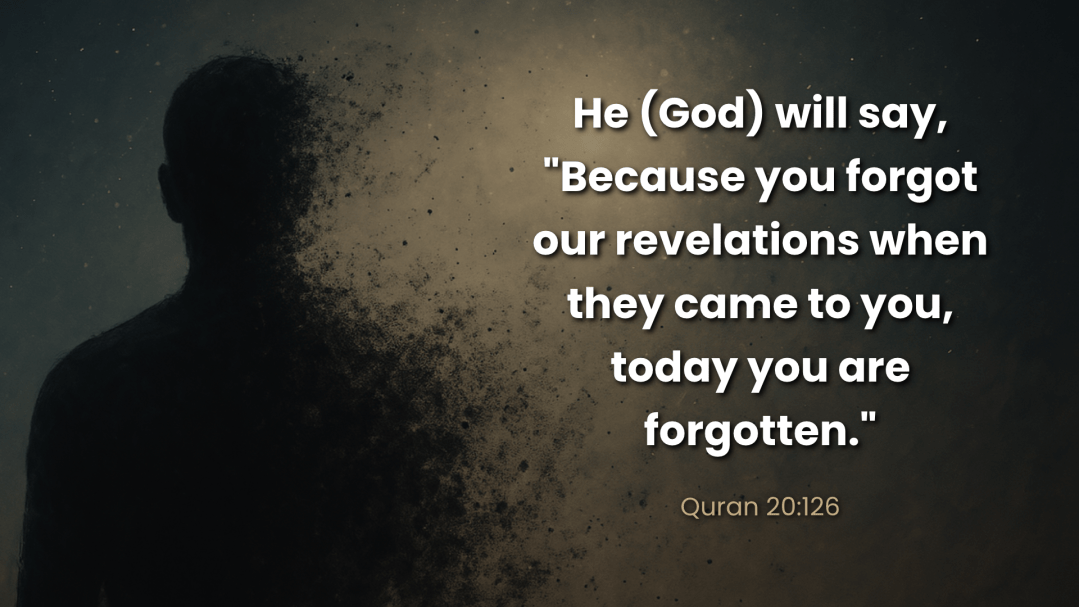
[20:126] He (God) will say, “Because you forgot our revelations when they came to you, today you are forgotten.”قَالَ كَذَٰلِكَ أَتَتْكَ ءَايَـٰتُنَا فَنَسِيتَهَا وَكَذَٰلِكَ ٱلْيَوْمَ تُنسَىٰ
[9:67] The hypocrite men and the hypocrite women belong with each other—they advocate evil and prohibit righteousness, and they are stingy. They forgot GOD, so He forgot them. The hypocrites are truly wicked.
ٱلْمُنَـٰفِقُونَ وَٱلْمُنَـٰفِقَـٰتُ بَعْضُهُم مِّنۢ بَعْضٍ يَأْمُرُونَ بِٱلْمُنكَرِ وَيَنْهَوْنَ عَنِ ٱلْمَعْرُوفِ وَيَقْبِضُونَ أَيْدِيَهُمْ نَسُوا۟ ٱللَّهَ فَنَسِيَهُمْ إِنَّ ٱلْمُنَـٰفِقِينَ هُمُ ٱلْفَـٰسِقُونَ
Is this a contradiction? How can God be both “never forgetful” and yet “forget” people? The answer reveals a deeper understanding of the Quran’s moral psychology and its eloquent use of metaphor.
Divine Forgetting Is Metaphorical, Not Literal
When the Quran says, “God forgot them,” it does not mean that God has lost awareness of their existence. Instead, it reflects a deliberate withdrawal of mercy, favor, or guidance. This is a judicial forgetting—not a cognitive one.
In Arabic rhetoric, “forgetting” (nasyān), which comes from the root “nun-siin-ya” ( ن س ي
), can imply neglect, abandonment, or disregard. The phrase “God forgot them” is a way of saying, “God left them to the consequences of their choices. He no longer intervenes in their favor.” Or put another way, “They neglected God, so He neglected them.”
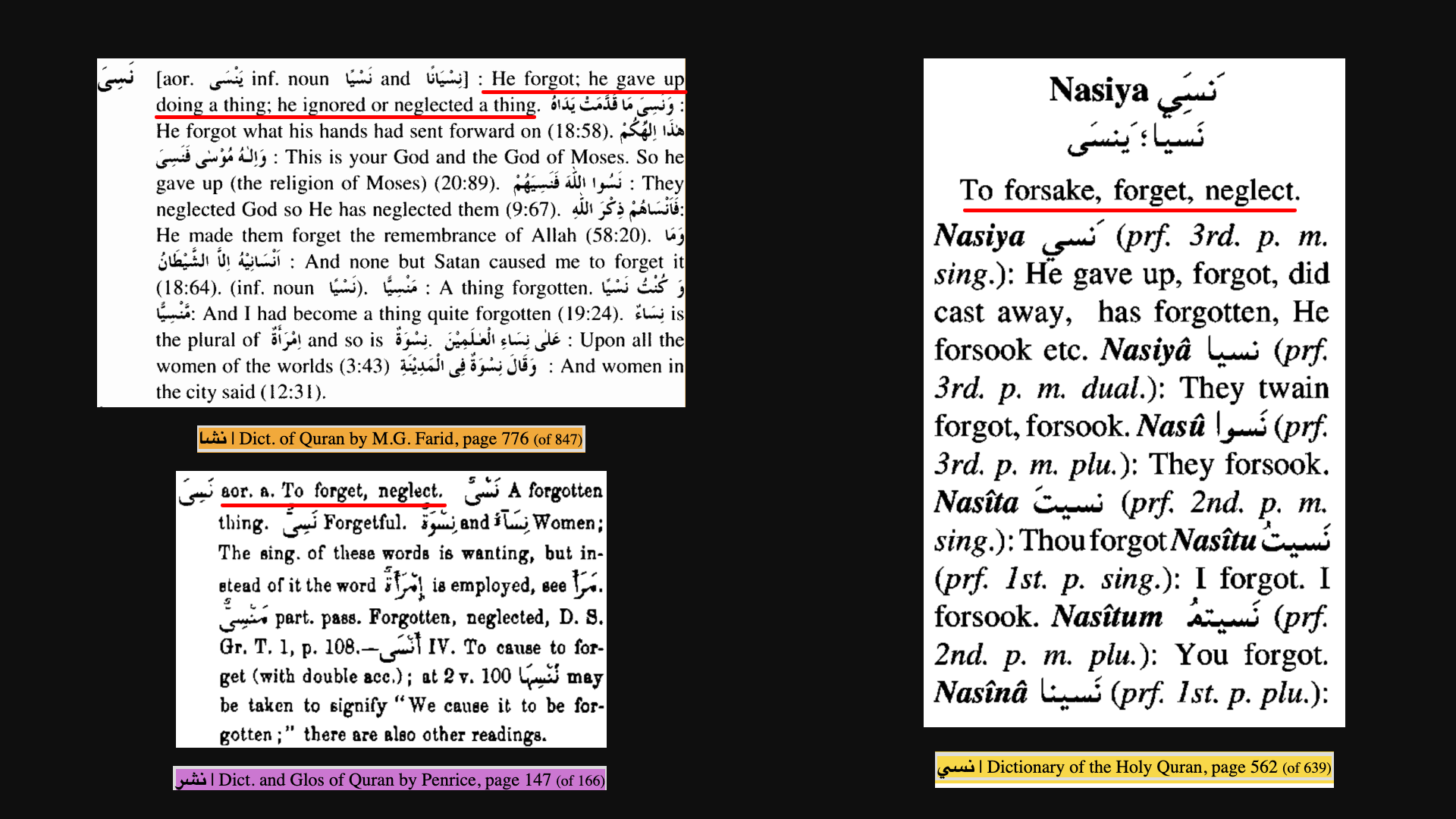
It’s a powerful literary device used to express moral retribution in a way that mirrors human conduct: You forgot God → now you are forgotten.
Forgetting God = Forgetting Your True Self
One of the most haunting verses in this theme is:
[59:19] Do not be like those who forgot GOD, so He made them forget themselves. These are the wicked.
وَلَا تَكُونُوا۟ كَٱلَّذِينَ نَسُوا۟ ٱللَّهَ فَأَنسَىٰهُمْ أَنفُسَهُمْ أُو۟لَـٰٓئِكَ هُمُ ٱلْفَـٰسِقُونَ
This verse unveils a chilling truth: forgetting God is not just a loss of faith—it is a loss of self. When people neglect their Creator, they don’t simply drift from religion—they become strangers to their own souls. Their purpose fades, their moral compass breaks, and their inner dignity corrodes. The soul, deprived of its anchor, begins to unravel.
The Quran suggests that God is not only the Origin of the self, but the mirror through which we come to know ourselves. Without His remembrance, we forget who we truly are. The Quranic path to self-realization is not through ego, indulgence, or worldly success, but through dhikr—conscious remembrance of God. It is only by turning to Him that the fragmented self becomes whole again.
This World is a Test of Remembrance
The Quran presents life’s purpose with remarkable clarity: to remember God. The entire design of this world—its fleeting pleasures, its hardships, its beauty—is calibrated to awaken that remembrance. Everything we encounter is a nudge back toward the Source. To truly make God our god, He must remain at the center of our thoughts—not momentarily, but throughout the rhythm of our day.
[3:191] They remember God while standing, sitting, and on their sides, and they reflect upon the creation of the heavens and the earth: “Our Lord, You did not create all this in vain. Be You glorified. Save us from the retribution of Hell.
ٱلَّذِينَ يَذْكُرُونَ ٱللَّهَ قِيَـٰمًا وَقُعُودًا وَعَلَىٰ جُنُوبِهِمْ وَيَتَفَكَّرُونَ فِى خَلْقِ ٱلسَّمَـٰوَٰتِ وَٱلْأَرْضِ رَبَّنَا مَا خَلَقْتَ هَـٰذَا بَـٰطِلًا سُبْحَـٰنَكَ فَقِنَا عَذَابَ ٱلنَّارِ
This is why God prescribed the Contact Prayer (Salat)—not as a hollow formality, but as a daily intervention against forgetfulness. It is a spiritual recalibration, woven into the fabric of time, to ensure the soul realigns with its Creator again and again. Through the Contact Prayer (Salat), the believer re-centers, re-orients, and reconnects to the Source of life.
[20:14] “I am God; there is no other god beside Me. You shall worship Me alone, and observe the Contact Prayers (Salat) to remember Me.
إِنَّنِىٓ أَنَا ٱللَّهُ لَآ إِلَـٰهَ إِلَّآ أَنَا۠ فَٱعْبُدْنِى وَأَقِمِ ٱلصَّلَوٰةَ لِذِكْرِىٓ
[29:45] You shall recite what is revealed to you of the scripture, and observe the Contact Prayers (Salat), for the Contact Prayers prohibit evil and vice. But the remembrance of God (through Salat) is the most important objective. God knows everything you do.
ٱتْلُ مَآ أُوحِىَ إِلَيْكَ مِنَ ٱلْكِتَـٰبِ وَأَقِمِ ٱلصَّلَوٰةَ إِنَّ ٱلصَّلَوٰةَ تَنْهَىٰ عَنِ ٱلْفَحْشَآءِ وَٱلْمُنكَرِ وَلَذِكْرُ ٱللَّهِ أَكْبَرُ وَٱللَّهُ يَعْلَمُ مَا تَصْنَعُونَ
The Contact Prayer (Salat) is not the end—it is the vehicle. The goal is not just physical motion or recitation, but conscious remembrance (dhikr). It anchors the self to what is real and eternal. The more a soul remembers God, the more it becomes stable, aware, and directed. But the more that remembrance fades, the more the self begins to unravel—drifting, rootless, lost.
Final Judgment: Forgotten by the One They Forgot
On the Day of Resurrection, the language of forgetting takes on its most sobering form—not as metaphor, but as final judgment. What was once a warning becomes a verdict. Those who dismissed God and neglected the meeting with their Maker are now, in turn, dismissed.
[45:34] It will be proclaimed: “Today we forget you, just as you forgot the meeting of this day. Your abode is the hellfire, and you will have no helpers.
وَقِيلَ ٱلْيَوْمَ نَنسَىٰكُمْ كَمَا نَسِيتُمْ لِقَآءَ يَوْمِكُمْ هَـٰذَا وَمَأْوَىٰكُمُ ٱلنَّارُ وَمَا لَكُم مِّن نَّـٰصِرِينَ
[7:51] Those who do not take their religion seriously, and are totally preoccupied with this worldly life, we forget them on that day, because they forgot that day, and because they spurned our revelations.
ٱلَّذِينَ ٱتَّخَذُوا۟ دِينَهُمْ لَهْوًا وَلَعِبًا وَغَرَّتْهُمُ ٱلْحَيَوٰةُ ٱلدُّنْيَا فَٱلْيَوْمَ نَنسَىٰهُمْ كَمَا نَسُوا۟ لِقَآءَ يَوْمِهِمْ هَـٰذَا وَمَا كَانُوا۟ بِـَٔايَـٰتِنَا يَجْحَدُونَ
[32:14] Taste the consequences of your forgetting this day; now we forget you. You have incurred eternal retribution in return for your own works.
فَذُوقُوا۟ بِمَا نَسِيتُمْ لِقَآءَ يَوْمِكُمْ هَـٰذَآ إِنَّا نَسِينَـٰكُمْ وَذُوقُوا۟ عَذَابَ ٱلْخُلْدِ بِمَا كُنتُمْ تَعْمَلُونَ
These verses are not describing a lapse in divine memory. They describe a moment when God withdraws His care, mercy, and recognition from those who spent their lives pretending He didn’t exist. The one who refuses to remember the Day of Judgment is now made to feel what it is like to be forgotten by God—cast aside, without advocate or aid.
But the Quran is clear: God did not initiate this severance. The human being did. These are not the actions of a wrathful deity, but of a perfectly Just Judge—one who respects the freedom He gave humanity and allows each soul to face the outcome of its choices.
The divine forgetting on that Day is the mirror of the human forgetting in this life. What they refused to face, now refuses to face them.
A Pattern of Moral Reciprocity
A striking pattern runs through all the verses where God is said to “forget” people: every instance is a direct and measured response to human neglect. The Quran presents this not as divine whim, but as moral symmetry—a just and reciprocal outcome.
| Human Action | Divine Response |
|---|---|
| They forgot God’s signs | He forgets them (20:126) |
| They forgot the meeting of the Hereafter | He forgets them on that Day (45:34; 7:51; 32:14) |
| They forgot God | He makes them forget themselves (59:19) |
This is not divine pettiness—it is perfect justice. When a person deliberately erases God from their awareness, they are declaring a kind of spiritual independence, severing the tie that anchors their soul. And God, in His justice, honors that decision. He does not compel remembrance; He allows the soul to walk the path it has chosen.
But the consequences are not neutral. To be forgotten by God is to be cut off from His light, guidance, and mercy. The divine silence that follows is not a void—it is a verdict.
The Way Back: Remember, and You Will Be Remembered
Yet the Quran does not close the door. Even for those who have drifted far, the path back remains open—and the remedy is unmistakably clear for those who are alive and can hear.
[2:152] You shall remember Me, that I may remember you, and be thankful to Me; do not be unappreciative.
فَٱذْكُرُونِىٓ أَذْكُرْكُمْ وَٱشْكُرُوا۟ لِى وَلَا تَكْفُرُونِ
The moment a soul turns back to God in remembrance, the silence is broken. The divine forgetting ends. What was once estrangement becomes reconnection. So long as the final hour has not arrived, the opportunity remains—to be remembered by the One we were created to remember.
This is the essential function of life: to remember God. Salvation is not found in wealth, knowledge, or power, but in sustained awareness of the Divine. To be remembered by God, one must first remember Him—not occasionally, but consistently, gratefully, consciously.
In that remembrance lies the restoration of everything we were meant to be.
Conclusion: God Never Forgets. But He Can Let Go.
In truth, there is no contradiction between God’s perfect knowledge and the Quran’s language of forgetting. The former is literal, the latter is moral and poetic.
God never forgets, but He can choose to let a soul taste the consequences of forgetting Him. He can remove His protection, His mercy, and His reminders, leaving the person alone in the darkness they insisted on living in.
The deeper warning of the Quran is this:
If you forget God, you lose more than just your Creator. You lose yourself. But if you remember Him, He will remember you—and restore you to who you were meant to be.
Related Articles:

 Quran Talk Blog
One thought on “Does God Forget?”