

One of the defining traits of a believer is their continual remembrance of God. Whether standing, sitting, or lying down, they strive to keep their hearts and minds connected to their Creator.
[3:191] They remember GOD while standing, sitting, and on their sides, and they reflect upon the creation of the heavens and the earth: “Our Lord, You did not create all this in vain. Be You glorified. Save us from the retribution of Hell.
ٱلَّذِينَ يَذْكُرُونَ ٱللَّهَ قِيَـٰمًا وَقُعُودًا وَعَلَىٰ جُنُوبِهِمْ وَيَتَفَكَّرُونَ فِى خَلْقِ ٱلسَّمَـٰوَٰتِ وَٱلْأَرْضِ رَبَّنَا مَا خَلَقْتَ هَـٰذَا بَـٰطِلًا سُبْحَـٰنَكَ فَقِنَا عَذَابَ ٱلنَّارِ
Yet despite this clear guidance, there remains a persistent threat—one subtle, permitted tactic of the devil: to make people forget God. This forgetfulness is not random or benign. It is a deliberate act of spiritual sabotage used to veil signs, disrupt reflection, or derail a believer at a critical moment.
[6:68] If you see those who mock our revelations, you shall avoid them until they delve into another subject. If the devil causes you to forget, then, as soon as you remember, do not sit with such evil people.
وَإِذَا رَأَيْتَ ٱلَّذِينَ يَخُوضُونَ فِىٓ ءَايَـٰتِنَا فَأَعْرِضْ عَنْهُمْ حَتَّىٰ يَخُوضُوا۟ فِى حَدِيثٍ غَيْرِهِۦ وَإِمَّا يُنسِيَنَّكَ ٱلشَّيْطَـٰنُ فَلَا تَقْعُدْ بَعْدَ ٱلذِّكْرَىٰ مَعَ ٱلْقَوْمِ ٱلظَّـٰلِمِينَ
Here, the Quran doesn’t just describe forgetfulness as a human shortcoming—it names the devil as the agent of it. When the remembrance of God is lost, even temporarily, it can lead to delayed understanding, missed guidance, or missteps in judgment. The devil’s aim is not simply to erase memory, but to interrupt a sacred connection—to divert the heart from God at moments when awareness is most needed.
[29:45] You shall recite what is revealed to you of the scripture, and observe the Contact Prayers (Salat), for the Contact Prayers prohibit evil and vice. But the remembrance of GOD (through Salat) is the most important objective. GOD knows everything you do.
ٱتْلُ مَآ أُوحِىَ إِلَيْكَ مِنَ ٱلْكِتَـٰبِ وَأَقِمِ ٱلصَّلَوٰةَ إِنَّ ٱلصَّلَوٰةَ تَنْهَىٰ عَنِ ٱلْفَحْشَآءِ وَٱلْمُنكَرِ وَلَذِكْرُ ٱللَّهِ أَكْبَرُ وَٱللَّهُ يَعْلَمُ مَا تَصْنَعُونَ
In what follows, we will explore three examples from the Quran where this tactic is employed: Moses and his servant, Solomon and his horses, and Joseph and his fellow prison mate. In each, we will see how the devil’s influence seeks to insert forgetfulness at spiritually significant crossroads and how remembering God remains our greatest safeguard.
Example of Moses
The devil’s tactic of causing one to forget in an attempt to divert one from guidance is vividly illustrated in the story of Moses and his servant during their journey to meet a servant specially guided by God. In the opening of this history found in Sura 18, The Cave, of the Quran, Moses declares his determination:
[18:60] Moses said to his servant, “I will not rest until I reach the point where the two rivers meet, no matter how long it takes.”
وَإِذْ قَالَ مُوسَىٰ لِفَتَىٰهُ لَآ أَبْرَحُ حَتَّىٰٓ أَبْلُغَ مَجْمَعَ ٱلْبَحْرَيْنِ أَوْ أَمْضِىَ حُقُبًا
Despite the clarity of their mission, something seemingly minor happens at the very moment they reach their destination:
[18:61] When they reached the point where they met, they forgot their fish, and it found its way back to the river, sneakily.
فَلَمَّا بَلَغَا مَجْمَعَ بَيْنِهِمَا نَسِيَا حُوتَهُمَا فَٱتَّخَذَ سَبِيلَهُۥ فِى ٱلْبَحْرِ سَرَبًا
It is worth mentioning that the expression “they forgot their fish” is written in the dual form, implying that both Moses and his servant forgot the fish.
| 5 | nasiyā | نَسِيَا | they both forgot |
| 6 | ḥūtahumā | حُوتَهُمَا | both their fish, |
The loss of the fish might seem trivial, but it was actually a key sign that they had arrived at their destination. Then, as they continue on, unaware that they have already arrived, fatigue sets in:
[18:62] After they passed that point, he said to his servant, “Let us have lunch. All this traveling has thoroughly exhausted us.”
فَلَمَّا جَاوَزَا قَالَ لِفَتَىٰهُ ءَاتِنَا غَدَآءَنَا لَقَدْ لَقِينَا مِن سَفَرِنَا هَـٰذَا نَصَبًا
Only at this point, when hunger sets in, does Moses mention food, prompting his servant to recall:
[18:63] He said, “Remember when we sat by the rock back there? I paid no attention to the fish. It was the devil who made me forget it, and it found its way back to the river, strangely.”
قَالَ أَرَءَيْتَ إِذْ أَوَيْنَآ إِلَى ٱلصَّخْرَةِ فَإِنِّى نَسِيتُ ٱلْحُوتَ وَمَآ أَنسَىٰنِيهُ إِلَّا ٱلشَّيْطَـٰنُ أَنْ أَذْكُرَهُۥ وَٱتَّخَذَ سَبِيلَهُۥ فِى ٱلْبَحْرِ عَجَبًا
| 7 | fa-innī | فَإِنِّى | Then indeed, I |
| 8 | nasītu | نَسِيتُ | [I] forgot |
| 9 | l-ḥūta | ٱلْحُوتَ | the fish. |
| 10 | wamā | وَمَآ | And not |
| 11 | ansānīhu | أَنسَىٰنِيهُ | [he] had me forget it |
| 12 | illā | إِلَّا | except |
| 13 | l-shayṭānu | ٱلشَّيْطَـٰنُ | the devil |
| 14 | an | أَنْ | that |
| 15 | adhkurahu | أَذْكُرَهُۥ | I remember / mention it. |
The Quran makes it clear: the forgetfulness was caused by the devil. This shows us that such lapses can be intentional distractions—subtle but spiritually significant.
One possibility as to how the devil was permitted to make them forget their fish at the juncture was that when Moses made his proclamation, he did not say, “God willing.”
[18:60] Moses said to his servant, “I will not rest until I reach the point where the two rivers meet, no matter how long it takes.”
وَإِذْ قَالَ مُوسَىٰ لِفَتَىٰهُ لَآ أَبْرَحُ حَتَّىٰٓ أَبْلُغَ مَجْمَعَ ٱلْبَحْرَيْنِ أَوْ أَمْضِىَ حُقُبًا
The Quran informs us that it is a divine commandment that when we say we will do anything in the future, we are to say, “God willing.” Moses’s earlier statement did not include “God willing.” Whether this omission contributed to the forgetfulness or not, the proximity of this commandment in the text suggests a deeper thematic connection: forgetfulness often follows self-reliance and a lapse in conscious remembrance of God.
[18:23] You shall not say that you will do anything in the future,
[18:24] without saying, “GOD willing.” If you forget to do this, you must immediately remember your Lord and say, “May my Lord guide me to do better next time.”وَلَا تَقُولَنَّ لِشَا۟ىْءٍ إِنِّى فَاعِلٌ ذَٰلِكَ غَدًا
إِلَّآ أَن يَشَآءَ ٱللَّهُ وَٱذْكُر رَّبَّكَ إِذَا نَسِيتَ وَقُلْ عَسَىٰٓ أَن يَهْدِيَنِ رَبِّى لِأَقْرَبَ مِنْ هَـٰذَا رَشَدًا
This account of Moses is more than a historical narrative. It is a spiritual caution: forgetting at crucial moments may be more than human error—it may be a tactic of the devil. A form of interference, a subtle redirection away from insight, purpose, or a moment of divine appointment. The servant’s forgetfulness delayed their recognition of having arrived, showing how even small lapses can interfere with greater understanding. Therefore, remembrance of God—dhikr—is both a shield and a guide, anchoring us in awareness and protecting us from subtle derailments.
This account offers more than a historical narrative—it warns us to be vigilant. Forgetfulness of our Lord, especially regarding divine guidance or signs, may not be accidental. It can be a spiritual distraction, a whisper that detours the soul just long enough to miss a moment of revelation.
Example of Solomon
Another tactic the devil employs to turn people away from God is distraction—filling the mind and heart with other pursuits until remembrance of God is pushed aside. This distraction may not always come through sinful acts; even beautiful or noble things can be used as tools of diversion when they consume the heart’s attention.
The Quran warns us explicitly that the devil promotes animosity, intoxicants, and gambling “to distract you from remembering GOD, and from observing the Contact Prayers.”
[5:91] The devil wants to provoke animosity and hatred among you through intoxicants and gambling, and to distract you from remembering GOD, and from observing the Contact Prayers (Salat). Will you then refrain?
إِنَّمَا يُرِيدُ ٱلشَّيْطَـٰنُ أَن يُوقِعَ بَيْنَكُمُ ٱلْعَدَٰوَةَ وَٱلْبَغْضَآءَ فِى ٱلْخَمْرِ وَٱلْمَيْسِرِ وَيَصُدَّكُمْ عَن ذِكْرِ ٱللَّهِ وَعَنِ ٱلصَّلَوٰةِ فَهَلْ أَنتُم مُّنتَهُونَ
This same tactic—distraction—was once used against one of God’s most obedient servants: Solomon. Though known for his wisdom, power, and devotion, even he faced a moment of distraction.
[38:30] To David we granted Solomon; a good and obedient servant.
[38:31] One day he became preoccupied with beautiful horses, until the night fell.
[38:32] He then said, “I enjoyed the material things more than I enjoyed worshiping my Lord, until the sun was gone.
[38:33] “Bring them back.” (To bid farewell,) he rubbed their legs and necks.(٣٠) وَوَهَبْنَا لِدَاوُۥدَ سُلَيْمَـٰنَ نِعْمَ ٱلْعَبْدُ إِنَّهُۥٓ أَوَّابٌ
(٣١) إِذْ عُرِضَ عَلَيْهِ بِٱلْعَشِىِّ ٱلصَّـٰفِنَـٰتُ ٱلْجِيَادُ
(٣٢) فَقَالَ إِنِّىٓ أَحْبَبْتُ حُبَّ ٱلْخَيْرِ عَن ذِكْرِ رَبِّى حَتَّىٰ تَوَارَتْ بِٱلْحِجَابِ
(٣٣) رُدُّوهَا عَلَىَّ فَطَفِقَ مَسْحًۢا بِٱلسُّوقِ وَٱلْأَعْنَاقِ
The horses were not sinful—on the contrary, they were beautiful and perhaps a symbol of strength or royal responsibility. But in that moment, they captured Solomon’s attention so fully that he missed his time of worship. Therefore, to eliminate Satan’s possible claim that Solomon loved material possessions more than he loved God, Solomon released his horses. This action proved the strength of his faith and showed that he could handle a kingship like no one before, such that even the devils were put under his control.
[38:34] We thus put Solomon to the test; we blessed him with vast material wealth, but he steadfastly submitted.
[38:35] He said, “My Lord, forgive me, and grant me a kingship never attained by anyone else. You are the Grantor.”
[38:36] We (answered his prayer and) committed the wind at his disposal, pouring rain wherever he wanted.
[38:37] And the devils, building and diving.
[38:38] Others were placed at his disposal.
[38:39] “This is our provision to you; you may give generously, or withhold, without limits.”
[38:40] He has deserved an honorable position with us, and a wonderful abode.(٣٤) وَلَقَدْ فَتَنَّا سُلَيْمَـٰنَ وَأَلْقَيْنَا عَلَىٰ كُرْسِيِّهِۦ جَسَدًا ثُمَّ أَنَابَ
(٣٥) قَالَ رَبِّ ٱغْفِرْ لِى وَهَبْ لِى مُلْكًا لَّا يَنۢبَغِى لِأَحَدٍ مِّنۢ بَعْدِىٓ إِنَّكَ أَنتَ ٱلْوَهَّابُ
(٣٦) فَسَخَّرْنَا لَهُ ٱلرِّيحَ تَجْرِى بِأَمْرِهِۦ رُخَآءً حَيْثُ أَصَابَ
(٣٧) وَٱلشَّيَـٰطِينَ كُلَّ بَنَّآءٍ وَغَوَّاصٍ
(٣٨) وَءَاخَرِينَ مُقَرَّنِينَ فِى ٱلْأَصْفَادِ
(٣٩) هَـٰذَا عَطَآؤُنَا فَٱمْنُنْ أَوْ أَمْسِكْ بِغَيْرِ حِسَابٍ
Solomon’s immediate response reveals the heart of a true believer: he did not excuse the distraction, but confronted it directly. By bidding the horses farewell, he reasserted that his love for God outweighed any attachment to worldly beauty. This event was not a fall from grace, but a test concocted by Satan—and Solomon passed.
This account shows that even distractions that appear noble or beautiful can be tools in the devil’s arsenal. But Solomon’s example also shows us how to respond—with self-awareness, repentance, and decisive action to restore remembrance of God to its rightful place.
Distraction is not always obvious or loud. Sometimes it’s quiet, charming, or cloaked in beauty—but if it draws us away from the worship of our Lord, it must be confronted. Like Solomon, we must learn to recognize the moment, take it seriously, and return swiftly to God.
Example of Joseph
In the history of Joseph, we witness a lifelong attempt by the devil to sever a righteous man’s connection with God. The devil’s tactics shift form—from jealousy and betrayal to seduction and self-reliance—but the aim remains the same: to make Joseph forget his Lord.
From the beginning, Joseph’s father, Jacob, warns him not to reveal his dream to his brothers. But the warning is deeper than sibling rivalry—it’s about the devil’s schemes working through envy:
[12:5] He said, “My son, do not tell your brothers about your dream, lest they plot and scheme against you. Surely, the devil is man’s worst enemy.
قَالَ يَـٰبُنَىَّ لَا تَقْصُصْ رُءْيَاكَ عَلَىٰٓ إِخْوَتِكَ فَيَكِيدُوا۟ لَكَ كَيْدًا إِنَّ ٱلشَّيْطَـٰنَ لِلْإِنسَـٰنِ عَدُوٌّ مُّبِينٌ
Later, when Joseph’s brothers ask to take him out, Jacob expresses fear—not of a wolf, but of the wolf. This phrasing suggests that he knew the devil was out to wreak havoc upon Joseph and his brothers.
[12:13] He said, “I worry lest you go away with him, then the wolf may devour him while you are not watching him.”
قَالَ إِنِّى لَيَحْزُنُنِىٓ أَن تَذْهَبُوا۟ بِهِۦ وَأَخَافُ أَن يَأْكُلَهُ ٱلذِّئْبُ وَأَنتُمْ عَنْهُ غَـٰفِلُونَ
The devil’s efforts continue in the governor’s house when Joseph faces temptation from the governor’s wife. Her goal was not just to seduce him physically—but to pull his focus away from his Lord. Yet, in this moment of vulnerability, God rescues him by sending a proof from his Lord.
[12:24] She almost succumbed to him, and he almost succumbed to her, if it were not that he saw a proof from his Lord. We thus diverted evil and sin away from him, for he was one of our devoted servants.
وَلَقَدْ هَمَّتْ بِهِۦ وَهَمَّ بِهَا لَوْلَآ أَن رَّءَا بُرْهَـٰنَ رَبِّهِۦ كَذَٰلِكَ لِنَصْرِفَ عَنْهُ ٱلسُّوٓءَ وَٱلْفَحْشَآءَ إِنَّهُۥ مِنْ عِبَادِنَا ٱلْمُخْلَصِينَ
Joseph passed this test, but the greatest challenge came later—one that tested his reliance on God. After being wrongly imprisoned, Joseph is asked to interpret dreams for two of his fellow inmates. Hoping for a way out, he appeals to one of them for help:
[12:42] He then said to the one to be saved “Remember me at your lord.” Thus, the devil caused him to forget his Lord, and, consequently, he remained in prison a few more years.
وَقَالَ لِلَّذِى ظَنَّ أَنَّهُۥ نَاجٍ مِّنْهُمَا ٱذْكُرْنِى عِندَ رَبِّكَ فَأَنسَىٰهُ ٱلشَّيْطَـٰنُ ذِكْرَ رَبِّهِۦ فَلَبِثَ فِى ٱلسِّجْنِ بِضْعَ سِنِينَ
The verse is clear: it was Joseph who forgot his Lord—not the prisoner. Joseph, in a moment of desperation, looked to a man for deliverance instead of the One who controls all outcomes. The devil’s tactic here was subtle: shift Joseph’s reliance, even momentarily, from God to man. The result? Joseph remained in prison for several more years.
But this was not the end of the story. The delay was not punishment—it was purification. Joseph emerged from prison with a deeper awareness that everything—both hardship and salvation—comes from God.
This shift becomes clear when, after interpreting the king’s dream, Joseph refuses to leave prison until the truth about the false accusation is brought to light. One must ask why the change in heart? Since Joseph was ready to leave the prison years ago, why did he not immediately jump on the opportunity when presented? This is because he finally realized that God was doing everything. It was God who allowed his brothers to plot against him. It was God who allowed the women to scheme against him. Because of this, he no longer rushes his own exit—he waits for God’s plan to unfold.
Joseph came to realize that every stage of his life—betrayal, slavery, seduction, imprisonment—was by divine design. Even when things seemed unjust, God was orchestrating something greater.
Even though when he made his plea for his innocence the first time, and the questionable approach to determining his innocence happened to work in his favor. We see that despite this, they still put him in prison. Yet this was a mercy from God as God knew the prison was better than giving into their schemes. This corresponded with the prayer that Joseph made to God.
[12:33] He said, “My Lord, the prison is better than giving in to them. Unless You divert their scheming from me, I may desire them and behave like the ignorant ones.”
[12:34] His Lord answered his prayer and diverted their scheming from him. He is the Hearer, the Omniscient.
[12:35] Later, they saw to it, despite the clear proofs, that they should imprison him for awhile.قَالَ رَبِّ ٱلسِّجْنُ أَحَبُّ إِلَىَّ مِمَّا يَدْعُونَنِىٓ إِلَيْهِ وَإِلَّا تَصْرِفْ عَنِّى كَيْدَهُنَّ أَصْبُ إِلَيْهِنَّ وَأَكُن مِّنَ ٱلْجَـٰهِلِينَ
فَٱسْتَجَابَ لَهُۥ رَبُّهُۥ فَصَرَفَ عَنْهُ كَيْدَهُنَّ إِنَّهُۥ هُوَ ٱلسَّمِيعُ ٱلْعَلِيمُ
ثُمَّ بَدَا لَهُم مِّنۢ بَعْدِ مَا رَأَوُا۟ ٱلْـَٔايَـٰتِ لَيَسْجُنُنَّهُۥ حَتَّىٰ حِينٍ
And by the end, Joseph’s faith in God’s control becomes so complete that, when his brothers unknowingly fall at his mercy, he lets God’s will govern the outcome. He stages a situation in which he could keep his younger brother—not by the king’s law, but by God’s plan:
[12:74] They said, “What is the punishment for the thief, if you are liars?”
[12:75] They said, “The punishment, if it is found in his bag, is that the thief belongs to you. We thus punish the guilty.”
[12:76] He then started by inspecting their containers, before getting to his brother’s container, and he extracted it out of his brother’s container. We thus perfected the scheme for Joseph; he could not have kept his brother if he applied the king’s law. But that was the will of GOD. We exalt whomever we choose to higher ranks. Above every knowledgeable one, there is one who is even more knowledgeable.قَالُوا۟ فَمَا جَزَٰٓؤُهُۥٓ إِن كُنتُمْ كَـٰذِبِينَ
قَالُوا۟ جَزَٰٓؤُهُۥ مَن وُجِدَ فِى رَحْلِهِۦ فَهُوَ جَزَٰٓؤُهُۥ كَذَٰلِكَ نَجْزِى ٱلظَّـٰلِمِينَ
فَبَدَأَ بِأَوْعِيَتِهِمْ قَبْلَ وِعَآءِ أَخِيهِ ثُمَّ ٱسْتَخْرَجَهَا مِن وِعَآءِ أَخِيهِ كَذَٰلِكَ كِدْنَا لِيُوسُفَ مَا كَانَ لِيَأْخُذَ أَخَاهُ فِى دِينِ ٱلْمَلِكِ إِلَّآ أَن يَشَآءَ ٱللَّهُ نَرْفَعُ دَرَجَـٰتٍ مَّن نَّشَآءُ وَفَوْقَ كُلِّ ذِى عِلْمٍ عَلِيمٌ
In Joseph’s journey, we witness the evolution from righteous youth to deeply God-reliant man. Though the devil tried through jealousy, seduction, and self-reliance to break his remembrance, Joseph ultimately learned that every solution, every test, and every outcome is in God’s hands alone.
Joseph’s history is a powerful reminder: forgetting God is the true prison—but remembering Him brings freedom, no matter where you are.
Addressing A Misunderstanding Regarding 12:42
There is a common but flawed interpretation of Surah 12:42 that suggests it was Joseph’s prison mate—not Joseph himself—who forgot. According to this view, when Joseph said to the one he believed would be released, “Remember me at your lord,” the man later forgot to mention Joseph to the king, and as a result, Joseph remained in prison for several more years. Proponents of this view argue that the phrase “his lord” refers to the king, and that it was the devil who caused the prison mate to forget to mention Joseph. For example, here are a number of translations with this viewpoint:
| Yusuf Ali |
| And of the two, to that one whom he consider about to be saved, he said: “Mention me to thy lord.” But Satan made him forget to mention him to his lord: and (Joseph) lingered in prison a few (more) years. |
| Pickthal |
| And he said unto him of the twain who he knew would be released: Mention me in the presence of thy lord. But Satan caused him to forget to mention it to his lord, so he (Joseph) stayed in prison for some years. |
| Shakir |
| And he said to him whom he knew would be delivered of the two: Remember me with your lord; but the Shaitan caused him to forget mentioning (it) to his lord, so he remained in the prison a few years. |
| Sher Ali |
| And of the two he said to him whom he thought to be the one who would be released, `Mention me to thy lord.’ But Satan caused him to forget mentioning it to his lord, so he remained in prison for some years. |
At first glance, this seems plausible: the man was released, got caught up in court life, and simply neglected to follow through. However, this interpretation, while convenient, does not stand up to close grammatical scrutiny, narrative logic, or theological coherence.
First, consider the grammar of the verse. The subject throughout this verse remains Joseph. The verse begins: “He said to the one whom he thought would be saved…”—clearly identifying Joseph as the one speaking. Then comes the instruction: “Remember me at your lord.” Still, the subject is Joseph. What follows is critical: “So the devil caused him to forget his Lord, and he remained in prison for several more years.” The phrase “caused him to forget” (فَأَنسَاهُ) refers back to the same subject: Joseph. There is no grammatical shift in the narrative to suggest that the prison mate becomes the focus. The structure remains consistent, with “him” and “his Lord” logically and grammatically referring to Joseph and his Lord—i.e., God. If the prison mate were the intended subject of the forgetfulness, the verse would have introduced a new noun or a subject marker to indicate the change. It does not.
[12:42] He then said to the one to be saved “Remember me at your lord.” Thus, the devil caused him to forget his Lord, and, consequently, he remained in prison a few more years.
وَقَالَ لِلَّذِى ظَنَّ أَنَّهُۥ نَاجٍ مِّنْهُمَا ٱذْكُرْنِى عِندَ رَبِّكَ فَأَنسَىٰهُ ٱلشَّيْطَـٰنُ ذِكْرَ رَبِّهِۦ فَلَبِثَ فِى ٱلسِّجْنِ بِضْعَ سِنِينَ
| 1 | waqāla | وَقَالَ | And he said |
| 2 | lilladhī | لِلَّذِى | to the one whom |
| 3 | ẓanna | ظَنَّ | he thought |
| 4 | annahu | أَنَّهُۥ | that he, |
| 5 | nājin | نَاجٍ | one being saved |
| 6 | min’humā | مِّنْهُمَا | among [the two of] them, |
| 7 | udh’kur’nī | ٱذْكُرْنِى | “Remember me |
| 8 | ʿinda | عِندَ | at |
| 9 | rabbika | رَبِّكَ | your lord.” |
| 10 | fa-ansāhu | فَأَنسَىٰهُ | Thus [he] made him forget |
| 11 | l-shayṭānu | ٱلشَّيْطَـٰنُ | the devil |
| 12 | dhik’ra | ذِكْرَ | (the) remembrance (of) |
| 13 | rabbihi | رَبِّهِۦ | his Lord, |
| 14 | falabitha | فَلَبِثَ | so he remained |
| 15 | fī | فِى | in |
| 16 | l-sij’ni | ٱلسِّجْنِ | the prison |
| 17 | biḍ’ʿa | بِضْعَ | several |
| 18 | sinīna | سِنِينَ | years. |
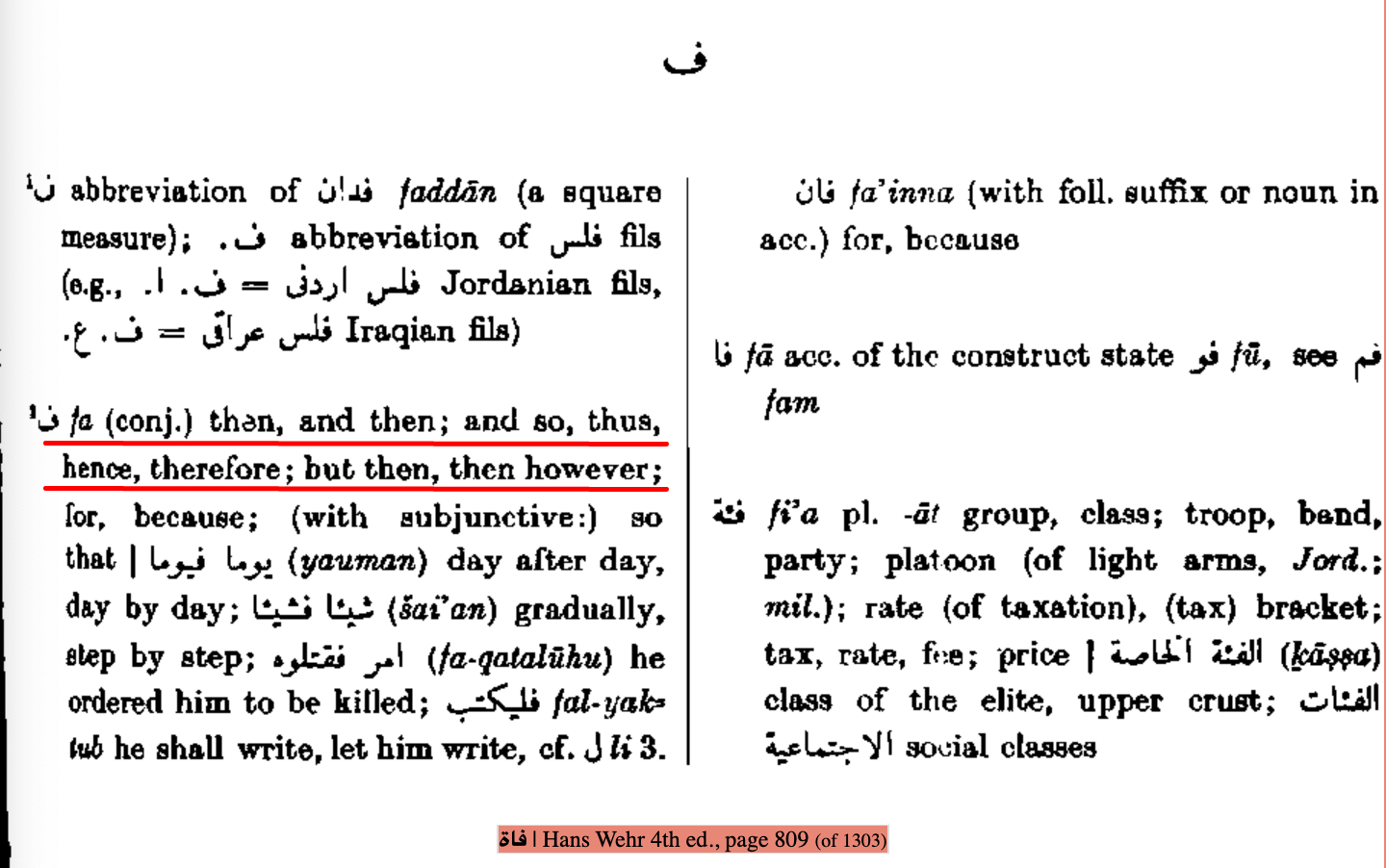
Some claim that the prefix “fa” ( فَ ) in the word “fa-ansāhu” ( فَأَنسَىٰهُ ) signifies a progression, such that after Joseph’s comment “then” the devil made him forget. However, this is not the only meaning of the prefix “fa” ( فَ ). The prefix can also mean “hence,” “therefore,” or “thus,” and signify a consequence, conjunction, or, like in the case of 12:42, simultaneity. In which case the expression would still apply to Joseph and his comment.
More importantly, the logic of the verse strongly supports the idea that it was Joseph who momentarily forgot God. Joseph was a prophet, and the Quran does not shy away from revealing moments where even prophets are tested or corrected. In this case, Joseph’s request—asking a fellow inmate to appeal on his behalf to “your lord“—represents a subtle but major shift in reliance. At this moment, Joseph is calling for help from another lord besides God; thus, out of a moment’s lapse in vulnerability, he forgot a key foundational aspect of strict monotheism.
[1:5] You alone we worship; You alone we ask for help.
(٥) إِيَّاكَ نَعْبُدُ وَإِيَّاكَ نَسْتَعِينُ
Instead of waiting for God’s decree to unfold, Joseph reached for a worldly solution. The Quran immediately follows this moment with the statement that the devil caused him to forget his Lord, and consequently, he remained in prison. This direct consequence makes sense only if the lapse belonged to Joseph. If the forgetfulness belonged to the prison mate, then the consequence of Joseph’s prolonged imprisonment would appear arbitrary or unfair. But the Quranic narrative consistently shows that divine timing and personal growth are closely intertwined—especially for God’s chosen servants.
Furthermore, the claim that “his lord” refers to the king is also problematic. Nowhere in the Quran is the Egyptian king referred to as someone’s “rabb” (Lord) in the sense used here. Joseph himself later distinguishes between God as “my Lord” and earthly rulers. The phrase “dhikr rabbihi”—the remembrance of his Lord—in Quranic usage almost always refers to God, not to a human master. If the verse were referring to the prison mate forgetting to mention Joseph to the king, the Quran would likely phrase it differently—perhaps saying, “he forgot to mention him to his lord,” but that is not what the verse says. Instead, it says the devil caused “him” to forget “his Lord,” and immediately ties this forgetfulness to Joseph’s continued stay in prison.
The narrative confirms this understanding through Joseph’s transformation. When he is later summoned by the king, Joseph does not leap at the opportunity for release. Instead, he demands that his innocence be publicly reestablished and that the women who falsely accused him be investigated. Why the change? Years earlier, he had been eager to leave, relying on a man to secure his freedom. Now, Joseph recognizes fully that only God determines the moment of his exit and the vindication of his name. His refusal to leave prison immediately reflects a maturity in trust—one that may not have been fully formed at the time of his earlier request.
In conclusion, the view that it was the prison mate who forgot his lord fails to account for the consistent grammar of the verse, the narrative’s internal logic, and the theological message of the passage. It downplays the spiritual significance of Joseph’s brief lapse in reliance on God and turns a profound lesson in divine timing into a simple case of human forgetfulness. The more accurate and meaningful interpretation is that Joseph momentarily placed his hope in man, and the devil seized that moment to make him forget his Lord. As a result, Joseph remained in prison—not as punishment, but as part of a divine process that would elevate him even further. The verse, then, is not about the forgetfulness of a man in the king’s court, but about the refinement of a prophet in the depths of God’s care.
Final Thoughts
From Moses on a sacred journey, to Solomon amidst the splendor of royal horses, to Joseph in the depths of a prison cell, the Quran offers us a powerful lens into one of the devil’s most subtle and dangerous tactics: causing forgetfulness of God.
Whether through distraction, temptation, or even the well-intentioned reliance on others, the devil’s aim remains the same—to break the connection between the servant and the Creator. In each case, the moment of forgetfulness did not stem from outright rebellion or disbelief. Rather, it came in moments of human vulnerability—when the heart was drawn away, even briefly, from the remembrance of the One who guides, protects, and plans all things.
But just as the Quran exposes this tactic, it also shows us the remedy: awareness, repentance, and the continual return to God. Moses retraced his steps. Solomon renounced the distraction. Joseph, humbled through trial, came to see God’s hand in every detail of his journey.
These stories remind us that remembrance (dhikr) is not a passive act—it is spiritual armor. It is the active effort to remain awake in a world filled with distractions, to hold fast to the rope of God when whispers try to loosen our grip.
The devil may be allowed to cause forgetfulness, but he cannot overpower a heart that clings to God. So let us heed the call:
[33:41] O you who believe, you shall remember GOD frequently.
[33:42] You shall glorify Him day and night.يَـٰٓأَيُّهَا ٱلَّذِينَ ءَامَنُوا۟ ٱذْكُرُوا۟ ٱللَّهَ ذِكْرًا كَثِيرًا
وَسَبِّحُوهُ بُكْرَةً وَأَصِيلًا
For in remembrance, there is clarity. In remembrance, there is protection. And in remembrance, there is victory.

 Quran Talk Blog