When making judgments in religious matters, we must recognize the immense weight of our decisions. The consequences are not just temporary or worldly but eternal. A wrong judgment, if it leads us away from the truth, can result in losing our place in the Hereafter. Given that the ultimate consequence is Hell, it is not enough to approach religious matters casually or with conjecture. Instead, our approach must be rooted in the highest level of caution and certainty.
This principle is well understood in the world of investing. Professional investors avoid situations where a single mistake can lead to total financial ruin. They follow a core rule: never take a position where if you lose, you can never recover. This is why they avoid high-risk positions like naked short selling, where the downside is unlimited. The same principle applies to religious belief—if our judgment is based on unreliable information and turns out to be wrong, the loss is not just temporary but eternal. Should we ever risk making decisions about our faith with anything less than complete certainty?
The Investment Principle: Never Risk Total Loss
A successful investor always ensures that their data is accurate before making financial moves. If the information they rely on is flawed, they could face irreversible consequences. If such caution is necessary for something as temporary as wealth, how much more caution should we have when the stakes involve eternal success or failure?
The Quran warns against following speculation in religious matters.
[17:36] You shall not accept any information, unless you verify it for yourself. I have given you the hearing, the eyesight, and the brain, and you are responsible for using them.
وَلَا تَقْفُ مَا لَيْسَ لَكَ بِهِۦ عِلْمٌ إِنَّ ٱلسَّمْعَ وَٱلْبَصَرَ وَٱلْفُؤَادَ كُلُّ أُو۟لَـٰٓئِكَ كَانَ عَنْهُ مَسْـُٔولًا
Below is a more literal translation of the verse
“And do not pursue that of which you have no knowledge. Indeed, the hearing, the sight, and the heart—all those with it are responsible.”
This verse emphasizes that relying on uncertain information is dangerous, and we will be held accountable for our beliefs and judgments. Just as no rational investor will bet the farm on rumors or unreliable sources, no rational believer should stake their eternal fate on anything less than absolute truth.
The Quran: The Only Reliable Benchmark for Truth
If we must make religious rulings or form beliefs, we need a perfectly reliable source of truth. The Quran is the only revelation that we can verify, in its entirety, as the direct and unchanged word of God. It is the only book that has been preserved without alteration, with God Himself guaranteeing its protection:
[15:9] Absolutely, we have revealed the reminder, and, absolutely, we will preserve it.
إِنَّا نَحْنُ نَزَّلْنَا ٱلذِّكْرَ وَإِنَّا لَهُۥ لَحَـٰفِظُونَ
No other religious texts exist in their original form without human alterations, interpretations, or contradictions. If a belief or practice contradicts or cannot be traced back to the Quran, then it carries uncertainty and risk. The Quran further warns against following anything besides what has been revealed:
[6:114] Shall I seek other than GOD as a source of law, when He has revealed to you this book fully detailed? Those who received the scripture recognize that it has been revealed from your Lord, truthfully. You shall not harbor any doubt.
[6:115] The word of your Lord is complete, in truth and justice. Nothing shall abrogate His words. He is the Hearer, the Omniscient.أَفَغَيْرَ ٱللَّهِ أَبْتَغِى حَكَمًا وَهُوَ ٱلَّذِىٓ أَنزَلَ إِلَيْكُمُ ٱلْكِتَـٰبَ مُفَصَّلًا وَٱلَّذِينَ ءَاتَيْنَـٰهُمُ ٱلْكِتَـٰبَ يَعْلَمُونَ أَنَّهُۥ مُنَزَّلٌ مِّن رَّبِّكَ بِٱلْحَقِّ فَلَا تَكُونَنَّ مِنَ ٱلْمُمْتَرِينَ
وَتَمَّتْ كَلِمَتُ رَبِّكَ صِدْقًا وَعَدْلًا لَّا مُبَدِّلَ لِكَلِمَـٰتِهِۦ وَهُوَ ٱلسَّمِيعُ ٱلْعَلِيمُ
This verse confirms that no external source can hold the same authority as the Quran. Any ruling that does not align with it is speculation. Making religious judgments based on lesser sources is equivalent to making financial decisions based on unverified information—it is reckless and irresponsible.
The Quran equates anyone who does not judge according to God’s revelations to disbelievers, unjust, and wicked.
[5:44] …those who do not judge according to God’s revelations, are the disbelievers.
[5:45] …those who do not judge according to God’s revelations are the unjust.
[5:47] …those who do not judge according to God’s revelations are the wicked.
The Quran also confirms that the purpose of the scripture is to judge among the people.
[2:213] …He sent down with them the scripture, truthfully, to judge among the people in their disputes.
[4:105] We sent down to you the scripture, truthfully, to judge among the people in accordance with what God has shown you. you shall not side with the betrayers.
The Danger of Speculation and Conjecture in Religion
Anything outside the Quran contains human interpretation, conjecture, and possible errors. The Quran makes it clear that speculation has no place in matters of religion:
[10:36] Most of them follow nothing but conjecture, and conjecture is no substitute for the truth. GOD is fully aware of everything they do.
وَمَا يَتَّبِعُ أَكْثَرُهُمْ إِلَّا ظَنًّا إِنَّ ٱلظَّنَّ لَا يُغْنِى مِنَ ٱلْحَقِّ شَيْـًٔا إِنَّ ٱللَّهَ عَلِيمٌۢ بِمَا يَفْعَلُونَ
Using unreliable sources to define morality or religious truth corrupts the foundation of faith. If we cannot verify something with certainty, then basing our religious beliefs on it is dangerous. Just as no rational investor stakes their entire fortune on an uncertain gamble, no rational believer should base their eternal future on anything but absolute truth.
Faith Requires Calibration
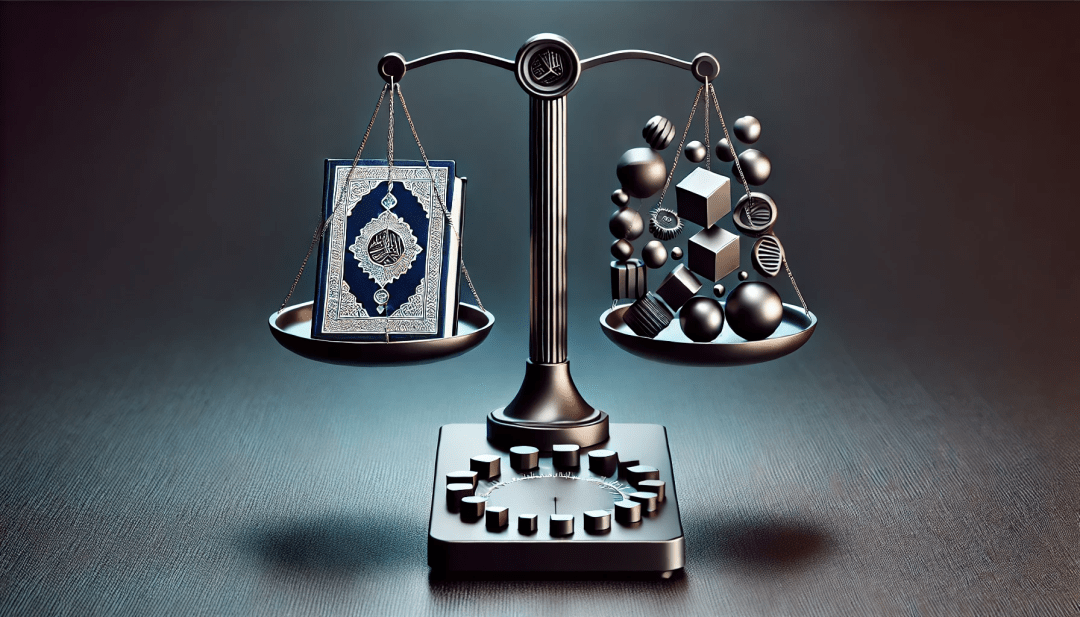
Our faith is like a precision scale that must be recalibrated regularly to ensure accuracy. Just as a scale must be tested against a known weight to maintain precision, our beliefs and actions must be tested against the Quran to remain aligned with the truth.
Imagine being offered two weights to calibrate a scale:
- One is 100% accurate and verified.
- The other might be correct, but might not—its accuracy is uncertain.
No sensible person would choose the uncertain weight when a perfect standard is available. Yet, many people calibrate their religious beliefs using traditions (Hadith and Sunnah), opinions, or other texts of unknown reliability instead of the Quran. God warns against such blind following:
[6:116] If you obey the majority of people on earth, they will divert you from the path of GOD. They follow only conjecture; they only guess.
وَإِن تُطِعْ أَكْثَرَ مَن فِى ٱلْأَرْضِ يُضِلُّوكَ عَن سَبِيلِ ٱللَّهِ إِن يَتَّبِعُونَ إِلَّا ٱلظَّنَّ وَإِنْ هُمْ إِلَّا يَخْرُصُونَ
In matters of faith, the Quran is the perfectly known weight, while anything else is an uncertain measure. Just as a scientist must use verifiable data, a believer must use verifiable revelation—which is found only in the Quran.
Conclusion: Faith Requires Certainty, Not Speculation
The eternal consequences of religious judgment demand the highest standard of certainty. Since the Quran is the only scripture preserved in its entirety as the unaltered word of God, it alone meets this standard. Any belief or ruling that contradicts or bypasses the Quran is an unnecessary and dangerous gamble with eternal stakes.
God emphasizes that the Quran provides every kind of example necessary for our religious guidance and salvation without ambiguity:
[39:27] We have cited for the people every kind of example in this Quran, that they may take heed.
[39:28] An Arabic Quran, without any ambiguity, that they may be righteous.وَلَقَدْ ضَرَبْنَا لِلنَّاسِ فِى هَـٰذَا ٱلْقُرْءَانِ مِن كُلِّ مَثَلٍ لَّعَلَّهُمْ يَتَذَكَّرُونَ
قُرْءَانًا عَرَبِيًّا غَيْرَ ذِى عِوَجٍ لَّعَلَّهُمْ يَتَّقُونَ
Furthermore, God presents a striking metaphor to illustrate the difference between relying on an inconsistent source and relying on a singular, consistent truth. He contrasts the confusion of one who deals with multiple disputing partners—symbolizing those who rely on the conjecture of Hadith—against the clarity of one who adheres to a single, reliable source—the Quran:
[39:29] GOD cites the example of a man who deals with disputing partners (Hadith), compared to a man who deals with only one consistent source (Quran). Are they the same? Praise be to GOD; most of them do not know.
ضَرَبَ ٱللَّهُ مَثَلًا رَّجُلًا فِيهِ شُرَكَآءُ مُتَشَـٰكِسُونَ وَرَجُلًا سَلَمًا لِّرَجُلٍ هَلْ يَسْتَوِيَانِ مَثَلًا ٱلْحَمْدُ لِلَّهِ بَلْ أَكْثَرُهُمْ لَا يَعْلَمُونَ
A fundamental criterion for determining whether a revelation is truly from God is that it must be free from contradiction. The Quran itself sets this standard:
[4:82] Why do they not study the Quran carefully? If it were from other than GOD, they would have found in it numerous contradictions.
أَفَلَا يَتَدَبَّرُونَ ٱلْقُرْءَانَ وَلَوْ كَانَ مِنْ عِندِ غَيْرِ ٱللَّهِ لَوَجَدُوا۟ فِيهِ ٱخْتِلَـٰفًا كَثِيرًا
However, Hadith literature is riddled with contradictions—not only within its own narrations but, more importantly, in its inconsistencies with the Quran. To rely on a source that contains contradictions is to introduce uncertainty into one’s faith, an approach that carries unacceptable risk when the stakes are eternal.
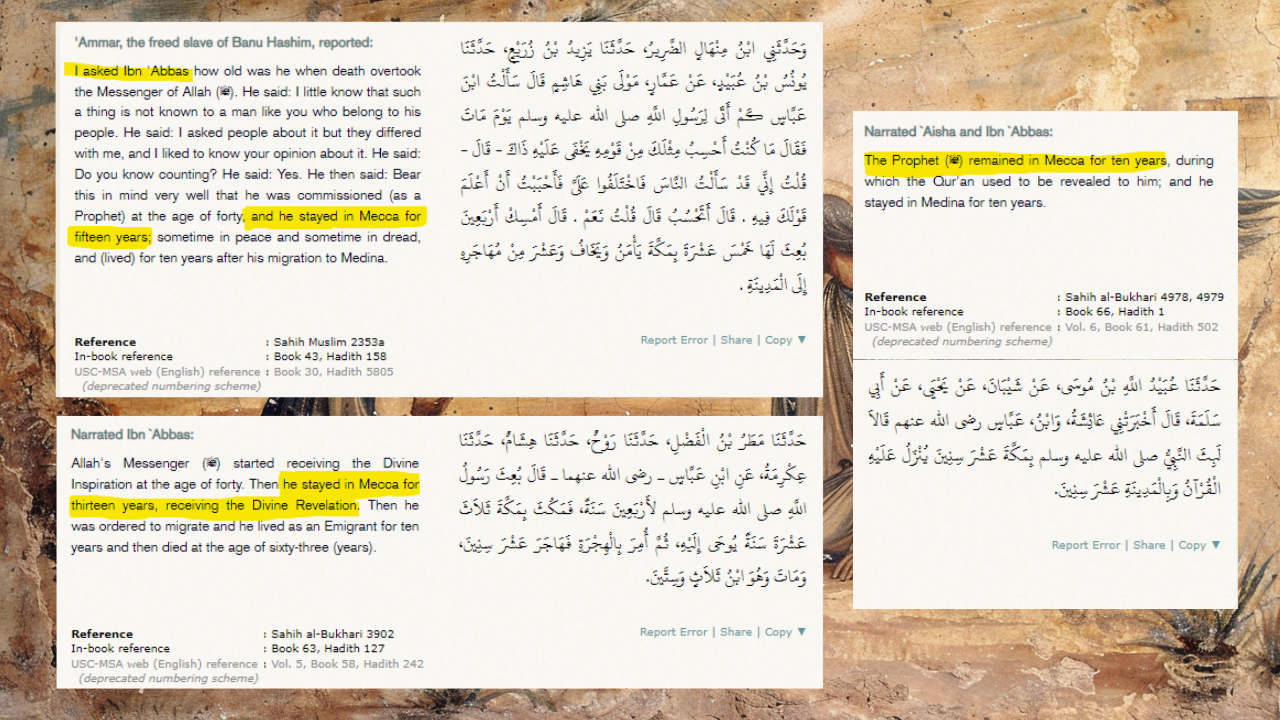
Even the simplest facts in the Hadith are inconsistent. For example, how old was the prophet when he died? Reports from just Bukhari and Muslim state that he was 60, 63, and 65. Some of these conflicting ages are also attributed to the same individual. Or how many years did he live in Mecca after receiving the revelation? Other contradictions are regarding which was the first or last revelations of the Quran. How many wives did the prophet have? What battles did the prophet fight in, and in what order? If the Hadith that are deemed “authentic (sahih)” fail on these most basic facts, how reliable should they be considered for all the multitude of other topics they cover.
Just as no rational person would calibrate a scale using an unreliable weight, no believer should calibrate their faith using anything less than the Quran. Faith is not a gamble—it is a trust to be safeguarded. To ensure that our beliefs remain aligned with divine truth, we must reject speculation and conjecture, holding firmly to the Quran as our sole, infallible guide.
God reminds us of this truth, highlighting humanity’s tendency to argue and complicate what has already been made clear.
[18:54] We have cited in this Quran every kind of example, but the human being is the most argumentative creature.
وَلَقَدْ صَرَّفْنَا فِى هَـٰذَا ٱلْقُرْءَانِ لِلنَّاسِ مِن كُلِّ مَثَلٍ وَكَانَ ٱلْإِنسَـٰنُ أَكْثَرَ شَىْءٍ جَدَلًا
By anchoring ourselves to the Quran alone, we secure clarity in our path, purity in our faith, and certainty in our judgment—free from the risks and confusion that come with unreliable sources.
Related Articles:

 Quran Talk Blog