The Quran repeatedly declares that those who rule by anything other than God’s revelation are disbelievers (5:44), unjust (5:45), and wicked (5:47) and that He sent the scripture to judge among the people (2:213 & 4:105). This presented a fundamental problem for proto-Sunni scholars, whose religious rulings and theology relied heavily on the utilization of Hadith.
[5:44] …those who do not judge according to God’s revelations, are the disbelievers.
[5:45] …those who do not judge according to God’s revelations are the unjust.
[5:47] …those who do not judge according to God’s revelations are the wicked.
[2:213] …He sent down with them the scripture, truthfully, to judge among the people in their disputes.
[4:105] We sent down to you the scripture, truthfully, to judge among the people in accordance with what God has shown you. you shall not side with the betrayers.
To sidestep this judicial obstacle, early Sunni scholars constructed a false doctrine claiming that Hadith itself was divine revelation (wahi) and, therefore, equal to the Quran. The first to formally advance this argument was Muhammad ibn Idris al-Shafi‘i (d. 820 CE), founder of the Shafi’i school of jurisprudence. Shafi’i vehemently argued that the Quranic term “Hikma” (wisdom) actually was a reference to Hadith. For Sunnis, this lie gave Hadith a formal status as a source of law, effectively pairing it with the Quran as divinely inspired guidance.
In the book Hadith As Scripture: Discussions on the Authority of Prophetic Traditions in Islam, by Aisha Y. Musa, on page 41, it states:
Up to this point, al-Shafi’i has relied primarily on interpretation of Qur’anic verses to convince his adversary of the obligation to accept the authority of the Hadith. The interpretation of hikma as Sunna is central to al-Shafi’i’s argument. In examining Qur’an commentaries that predate or are contemporary with al-Shafi’i in his work in the Risala, where he presents the same line of argument, Lowry finds that with the exception of Abd al-Razzaq’s [d. 827 CE / 211 AH] commentary on 33:34, no one interprets the word hikma as sunna. My own investigation of early Qur’an commentaries reveals much the same thing. However, the commentary of Hud ibn Mumakkam does address the question of hikma and sunna. Hud ibn Mumakkam was a Kharijite commentator who lived during the middle or late third/ninth century. Commenting on verses such as 62:2, which mention “the Book and the Wisdom,” he says: “Some of them say the Book is the Qur’an and the Wisdom is the Sunna.” The wording that ibn Mumakkam uses suggests that there was disagreement about the interpretation of hikma as sunna in the generations following al-Shafi’i. This, together with the paucity of earlier evidence for that idea, suggests that it was not a common interpretation before al-Shafi’i’s careful and forceful articulation.
Ironically, even the Hadith itself contradicts the claim that it is divine inspiration (wahi). In the following Hadith in Sahih Bukhari, Ali is asked whether the prophet left any divine inspiration (wahi) beside the Quran, and his answer is a resounding “No.”
Narrated Abu Juhaifa: I asked Ali, “Do you have the knowledge of any Divine Inspiration besides what is in Allah’s Book?”Ali replied, “No, by Him Who splits the grain of corn and creates the soul. I don’t think we have such knowledge, but we have the ability of understanding which Allah may endow a person with, so that he may understand the Qur’an, and we have what is written in this paper as well.” I asked, “What is written in this paper?” He replied, “(The regulations of) blood-money, the freeing of captives, and the judgment that no Muslim should be killed for killing an infidel.”
حَدَّثَنَا أَحْمَدُ بْنُ يُونُسَ، حَدَّثَنَا زُهَيْرٌ، حَدَّثَنَا مُطَرِّفٌ، أَنَّ عَامِرًا، حَدَّثَهُمْ عَنْ أَبِي جُحَيْفَةَ ـ رضى الله عنه ـ قَالَ قُلْتُ لِعَلِيٍّ ـ رضى الله عنه هَلْ عِنْدَكُمْ شَىْءٌ مِنَ الْوَحْىِ إِلاَّ مَا فِي كِتَابِ اللَّهِ قَالَ وَالَّذِي فَلَقَ الْحَبَّةَ وَبَرَأَ النَّسَمَةَ مَا أَعْلَمُهُ إِلاَّ فَهْمًا يُعْطِيهِ اللَّهُ رَجُلاً فِي الْقُرْآنِ، وَمَا فِي هَذِهِ الصَّحِيفَةِ. قُلْتُ وَمَا فِي الصَّحِيفَةِ قَالَ الْعَقْلُ وَفَكَاكُ الأَسِيرِ، وَأَنْ لاَ يُقْتَلَ مُسْلِمٌ بِكَافِرٍ.
Sahih al-Bukhari 3047
https://sunnah.com/bukhari:3047
Consequence of Attributing False Revelations to God
But Sunnis have run into a much bigger problem with their proclamation that the Hadith is divine revelation (wahi). Let’s assume that the Hadith are wahi. By Sunni scholars’ own admission, Hadith science does not warrant epistemological certainty. Instead, it is only probabilistic knowledge ( ظَّن, zann), or to put it more bluntly, conjecture.
That said, here is the first part of the dilemma. The Quran states that if someone claims they have divine revelation from God when it is not from God, that person has just committed one of the worst crimes by attributing a lie to God (6:21, 6:144, 6:150, 7:37, 10:17, 11:18, 18:15, 29:68, 39:32, 61:7). Additionally this equates to shirk (6:121, 9:31) which is an unforgivable offense that leads to eternal Hell (4:48, 4:116) unless the individual repents and reforms before their death (3:89, 25:70).
[6:93] Who is more evil than one who fabricates lies and attributes them to GOD, or says, “I have received divine inspiration,” when no such inspiration was given to him, or says, “I can write the same as GOD’s revelations”? If only you could see the transgressors at the time of death! The angels extend their hands to them, saying, “Let go of your souls. Today, you have incurred a shameful retribution for saying about GOD other than the truth, and for being too arrogant to accept His revelations.
وَمَنْ أَظْلَمُ مِمَّنِ ٱفْتَرَىٰ عَلَى ٱللَّهِ كَذِبًا أَوْ قَالَ أُوحِىَ إِلَىَّ وَلَمْ يُوحَ إِلَيْهِ شَىْءٌ وَمَن قَالَ سَأُنزِلُ مِثْلَ مَآ أَنزَلَ ٱللَّهُ وَلَوْ تَرَىٰٓ إِذِ ٱلظَّـٰلِمُونَ فِى غَمَرَٰتِ ٱلْمَوْتِ وَٱلْمَلَـٰٓئِكَةُ بَاسِطُوٓا۟ أَيْدِيهِمْ أَخْرِجُوٓا۟ أَنفُسَكُمُ ٱلْيَوْمَ تُجْزَوْنَ عَذَابَ ٱلْهُونِ بِمَا كُنتُمْ تَقُولُونَ عَلَى ٱللَّهِ غَيْرَ ٱلْحَقِّ وَكُنتُمْ عَنْ ءَايَـٰتِهِۦ تَسْتَكْبِرُونَ
[18:15] “Here are our people setting up gods beside Him. If only they could provide any proof to support their stand! Who is more evil than the one who fabricates lies and attributes them to GOD?
هَـٰٓؤُلَآءِ قَوْمُنَا ٱتَّخَذُوا۟ مِن دُونِهِۦٓ ءَالِهَةً لَّوْلَا يَأْتُونَ عَلَيْهِم بِسُلْطَـٰنٍۭ بَيِّنٍ فَمَنْ أَظْلَمُ مِمَّنِ ٱفْتَرَىٰ عَلَى ٱللَّهِ كَذِبًا
Therefore, upholders of Hadith beside the Quran under their paradigm must hope they never accidentally claim a false Hadith as divine revelation. Because even if they misattributed a single one when it was not, they could be damning themselves for eternal Hell.
Consequence of Rejecting God’s Revelations
If we proceed with this thought experiment and continue to assume that the Hadith were wahi, we see not only do Sunnis have to make sure that they only selected the correct Hadith as authentic, but they also need to make sure they don’t accidentally reject any authentic Hadith. For example, assume there is an “authentic” Hadith, yet the Hadith compiler rejects it as inauthentic. In this hypothetical, that person just rejected a revelation from God, and the punishment for those who reject God’s revelations, even if it is a single one, is also Hell (2:39, 5:10, 5:86, 6:27, 7:36, 57:19, 64:10).
[7:36] As for those who reject our revelations, and are too arrogant to uphold them, they have incurred Hell, wherein they abide forever.
وَٱلَّذِينَ كَذَّبُوا۟ بِـَٔايَـٰتِنَا وَٱسْتَكْبَرُوا۟ عَنْهَآ أُو۟لَـٰٓئِكَ أَصْحَـٰبُ ٱلنَّارِ هُمْ فِيهَا خَـٰلِدُونَ
Therefore, upholders of Hadith beside the Quran, under their paradigm, must hope they never accidentally reject an authentic Hadith as divine revelation. Because even if they rejected a single one thinking it was false when it was not, they could be damning themselves for eternal Hell.
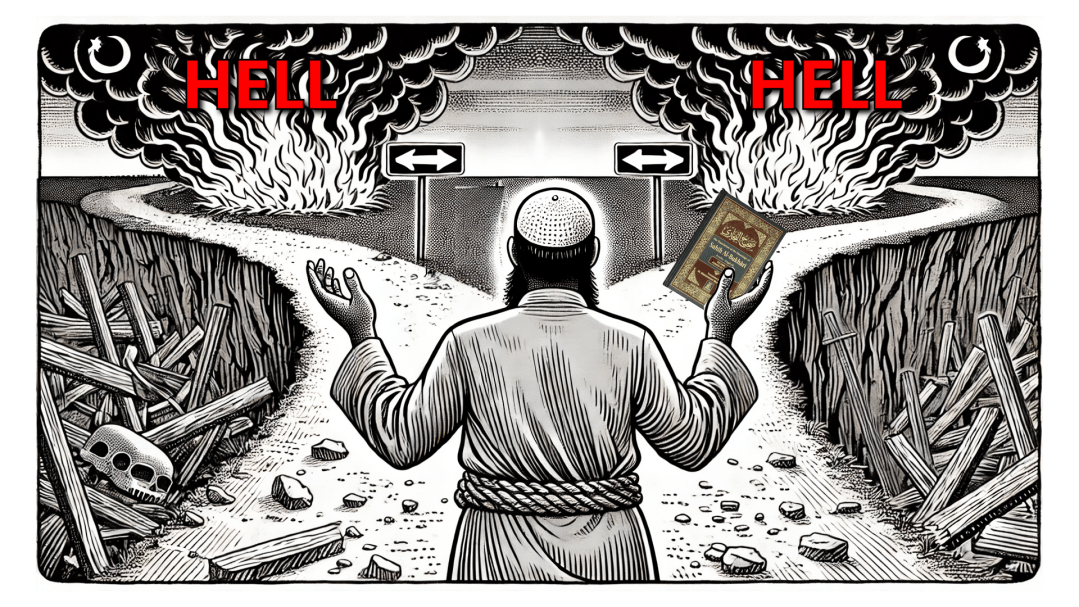
So the conundrum that Sunnis got themselves into, if they claim that the Hadith is divine revelation, is that they have to hope that they achieved 100% certainty that every Hadith they labeled as authentic actually is authentic, and every Hadith they rejected as inauthentic actually was inauthentic. If they made even a single mistake on a Hadith and they claimed that it was divine revelation and it was not, they just condemned themselves to Hell. Alternatively, if they rejected a single Hadith that was authentic when it was not, then they have just rejected God’s revelations, and their destiny again will be Hell. So either way calling the Hadith divine revelation is a guaranteed path to Hell.
[6:21] Who is more evil than one who lies about GOD, or rejects His revelations? The transgressors never succeed.
وَمَنْ أَظْلَمُ مِمَّنِ ٱفْتَرَىٰ عَلَى ٱللَّهِ كَذِبًا أَوْ كَذَّبَ بِـَٔايَـٰتِهِۦٓ إِنَّهُۥ لَا يُفْلِحُ ٱلظَّـٰلِمُونَ
Ironically, since Hadith themselves are conjecture, there is a 0% chance that they would be able to achieve this with absolute certainty. Consider that the most famous hadith compilers considered ~99% of the Hadith they came across as inauthentic. What is the likliness their determination was 100% correct? Additionally, scholars themselves often dispute the authenticity of Hadith. Even Bukhari and Muslim disputed which narrators were reliable and which Hadith were authentic. Moreover, revered books like Sunnan Ibn Majah have been found to consist of as much as one-fourth of fabricated Hadith. So the likelihood that any Sunni ever got this 100% right is 0%, and thus, by this thought experiment alone, all Sunnis have condemned themselves to Hell by their own standard.


Such a system could not possibly be God’s system. God did not make our religion depend on a game of chance in which the salvation of the masses is dependent on scholars sifting through millions of Hadith passed down through a game of telephone in order to detect the truth from falsehood with 100% accuracy. The scholars themselves never even claim or think that is possible; therefore, they have already participated in an outcome that they are guaranteed to lose the second they claimed that Hadith was divine revelation.
This shows without a doubt that the path that the Sunnis have taken is fundamentally wrong. God’s religion is not based on conjecture. The Quran actually warns against such things. Instead, Quran promotes a religion based on certainty, and the only certainty we have in our religious laws comes only from the Quran.
[2:2] This is the scripture which there is no doubt; a beacon for the righteous;
(٢) ذَٰلِكَ ٱلْكِتَـٰبُ لَا رَيْبَ فِيهِ هُدًى لِّلْمُتَّقِينَ
[69:51] It is the absolute truth (certainty).
(٥١) وَإِنَّهُۥ لَحَقُّ ٱلْيَقِينِ
[56:95] Indeed, this is the absolute truth (certainty).
(٩٥) إِنَّ هَـٰذَا لَهُوَ حَقُّ ٱلْيَقِينِ
The Quran informs us that God permitted the enemies of every prophet to fabricate Hadith to lead people astray. It tells us that the Quran is our only source of religious law and that the majority follow nothing but conjecture, just like the Sunnis have opted to do.
[6:112] We have permitted the enemies of every prophet—human and jinn devils—to inspire in each other fancy words, in order to deceive. Had your Lord willed, they would not have done it. You shall disregard them and their fabrications.
[6:113] This is to let the minds of those who do not believe in the Hereafter listen to such fabrications, and accept them, and thus expose their real convictions.
وَكَذَٰلِكَ جَعَلْنَا لِكُلِّ نَبِىٍّ عَدُوًّا شَيَـٰطِينَ ٱلْإِنسِ وَٱلْجِنِّ يُوحِى بَعْضُهُمْ إِلَىٰ بَعْضٍ زُخْرُفَ ٱلْقَوْلِ غُرُورًا وَلَوْ شَآءَ رَبُّكَ مَا فَعَلُوهُ فَذَرْهُمْ وَمَا يَفْتَرُونَ
وَلِتَصْغَىٰٓ إِلَيْهِ أَفْـِٔدَةُ ٱلَّذِينَ لَا يُؤْمِنُونَ بِٱلْـَٔاخِرَةِ وَلِيَرْضَوْهُ وَلِيَقْتَرِفُوا۟ مَا هُم مُّقْتَرِفُونَ
[6:114] Shall I seek other than GOD as a source of law, when He has revealed to you this book fully detailed? Those who received the scripture recognize that it has been revealed from your Lord, truthfully. You shall not harbor any doubt.
[6:115] The word of your Lord is complete, in truth and justice. Nothing shall abrogate His words. He is the Hearer, the Omniscient.
أَفَغَيْرَ ٱللَّهِ أَبْتَغِى حَكَمًا وَهُوَ ٱلَّذِىٓ أَنزَلَ إِلَيْكُمُ ٱلْكِتَـٰبَ مُفَصَّلًا وَٱلَّذِينَ ءَاتَيْنَـٰهُمُ ٱلْكِتَـٰبَ يَعْلَمُونَ أَنَّهُۥ مُنَزَّلٌ مِّن رَّبِّكَ بِٱلْحَقِّ فَلَا تَكُونَنَّ مِنَ ٱلْمُمْتَرِينَ
وَتَمَّتْ كَلِمَتُ رَبِّكَ صِدْقًا وَعَدْلًا لَّا مُبَدِّلَ لِكَلِمَـٰتِهِۦ وَهُوَ ٱلسَّمِيعُ ٱلْعَلِيمُ
[6:116] If you obey the majority of people on earth, they will divert you from the path of GOD. They follow only conjecture (zann); they only guess.
وَإِن تُطِعْ أَكْثَرَ مَن فِى ٱلْأَرْضِ يُضِلُّوكَ عَن سَبِيلِ ٱللَّهِ إِن يَتَّبِعُونَ إِلَّا ٱلظَّنَّ وَإِنْ هُمْ إِلَّا يَخْرُصُونَ
The undeniable reality is this: The Sunni reliance on Hadith is based on conjecture, not certainty. It is a system designed for failure because it forces its followers into a bind where they will inevitably be guilty of either fabrication or rejection of revelation—both leading to Hell. There is no way this is God’s system for salvation. If Hadith is divine revelation, then Sunnis must prove with 100% certainty that every single Hadith they vetted was rated correctly. However, since this is an impossible task, their entire doctrine collapses.
This proves that it doesn’t matter how credible they claim their chain of narrators are. Sunnis are propagating a system based on conjecture that guarantees Hell for its adherents and goes against the system (sunnah) of God (48:23) and His testimony found in the Quran.
[6:19] Say, “Whose testimony is the greatest?” Say, “GOD’s. He is the witness between me and you that this Quran has been inspired to me, to preach it to you and whomever it reaches. Indeed, you bear witness that there are other gods beside GOD.” Say, “I do not testify as you do; there is only one god, and I disown your idolatry.”
قُلْ أَىُّ شَىْءٍ أَكْبَرُ شَهَـٰدَةً قُلِ ٱللَّهُ شَهِيدٌۢ بَيْنِى وَبَيْنَكُمْ وَأُوحِىَ إِلَىَّ هَـٰذَا ٱلْقُرْءَانُ لِأُنذِرَكُم بِهِۦ وَمَنۢ بَلَغَ أَئِنَّكُمْ لَتَشْهَدُونَ أَنَّ مَعَ ٱللَّهِ ءَالِهَةً أُخْرَىٰ قُل لَّآ أَشْهَدُ قُلْ إِنَّمَا هُوَ إِلَـٰهٌ وَٰحِدٌ وَإِنَّنِى بَرِىٓءٌ مِّمَّا تُشْرِكُونَ
Therefore, those who truly want a chance at salvation need to base their religious laws on certainty and not conjecture. Anything less is a man-made deviation. This is why the Quran alone is the only source of divine law, fully detailed and requiring no additions. Any claim to revelation based on human speculation and conjecture—is not just theologically flawed but goes against God’s system.

Related Articles:

 Quran Talk Blog
Not only must hadith-as-revelation followers decide which hadith are authentic and which are not – they also have to argue and believe that they have captured ALL the prophet’s words that they claim to be revelation, and that none of his words were lost in the sands of time in the 220+ years before compilation.
Their argument goes something like this : “The Qur’an says the prophet’s words were ‘wahi’ and so everything he said was revelation”.
But then, if they are asked, “So are the hadith in the six compilations literally EVERYTHING the prophet ever said?”… their answer is “Obviously not – the words that were revelation were those related to the deen, and not his ‘everyday’ comments to his wives, or whatever”.
So, then the question immediately becomes, “Well how do you distinguish between what is for the deen and what are everyday comments?”…and their responses are always extremely vague – because no such distinction is detectable from reading the corpus of hadith or elsewhere.
And even if we were able to come up with some sort of arbitrary distinction – between ‘deen words’ and ‘everyday words’ – it still leaves the claim that the hadith compliers were supposedly not only able to decipher which hadith were authentic and which were not – they must ALSO claim that they have somehow captured EVERYTHING that the prophet said in relation to the deen .
Because to say otherwise – to say that obviously after 220+ years we have no way of knowing if we managed to capture everything that was said about the deen – is tantamount to saying that PARTS OF GOD’S REVELATION WERE LOST in transmission, and that therefore the revelation and the deen are INCOMPLETE.
It would be like saying “Yes, the Qur’an was compiled …but some suras and verses were lost …and we have no way of knowing which verses or how many, etc”, (which, ironically, many hadith do falsely claim about the Qur’an).
Their claims and their fragile methodology make zero sense, but more importantly, one should be able to tell simply from the bulk of hadith text that this is not revelation.
For, just as Allah says the Qur’an is a proof unto itself, so too are the hadith a proof unto themselves – of their man made origins. And God knows best.
LikeLiked by 1 person