

Ibn Kathir (c. 1300–1373 CE) was a prominent scholar of Sunni Islam, renowned for his expertise in tafsir (Qur’anic exegesis), tarikh (history), and fiqh (jurisprudence). He authored one of the most widely used and influential commentaries on the Quran among Sunni Muslims, which remains a cornerstone in Sunni understanding of the Quran.
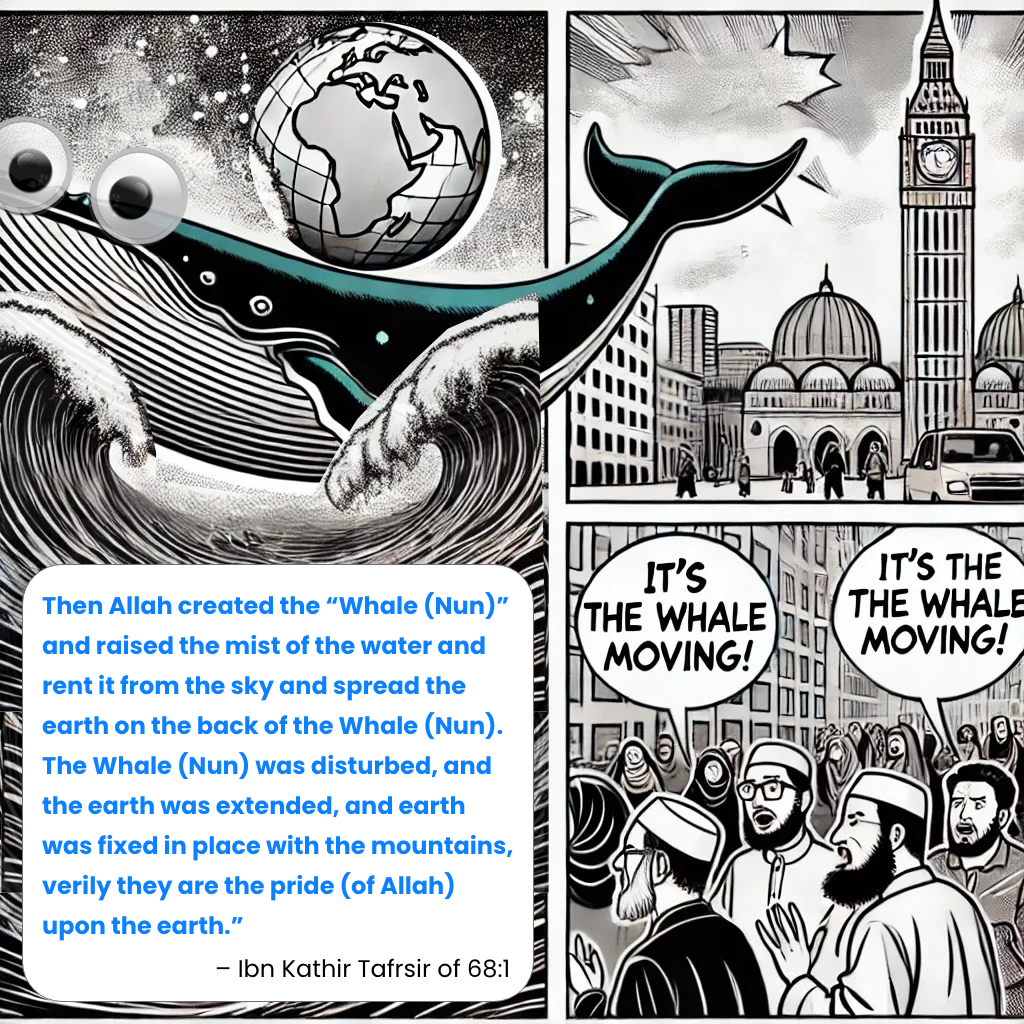
However, much of his exegesis relies on hadiths, which are mostly false narrations that are attributed to Muhammad and his companions. His commentary also includes absurd claims, such as the idea that the Earth rests on a giant whale, which makes a mockery of God’s religion and scripture. Consequently, his work, due to the wide promotion by the Sunni Ulema, had led multitudes astray either by repelling them from the truth when they encountered such nonsense or by duping them into believing such falsehood and thus attributing lies to God. Yet, one of his lies that is even more absurd than his claim regarding the whale is his claim that Paul, the anti-Christ, was a messenger of God.
Just like Ibn Kathir, Paul of Tarsus is another highly dubious figure. But while Ibn Kathir led the Muslim masses away from the truth, Paul has done something similar to countless Christians through his teachings. Paul’s doctrines have become the cornerstone of modern-day Christianity, and his teachings diverged significantly from the original message of Jesus, effectively redefining the path to salvation. Whereas Jesus emphasized salvation through sincere adherence to the law and his teachings, Paul shifted the focus to faith alone—specifically, belief in Jesus’ death for the sins of humanity and his resurrection three days later, as outlined in 1 Corinthians 15. This radical departure effectively hijacked the religion taught by Jesus and redirected it toward a theology centered on Paul’s interpretation of Jesus’s death, profoundly distorting Christian belief for generations.
17 “(Jesus said) Do not think that I have come to abolish the Law or the Prophets; I have not come to abolish them but to fulfill them. 18 For truly I tell you, until heaven and earth disappear, not the smallest letter, not the least stroke of a pen, will by any means disappear from the Law until everything is accomplished. 19 Therefore anyone who sets aside one of the least of these commands and teaches others accordingly will be called least in the kingdom of heaven, but whoever practices and teaches these commands will be called great in the kingdom of heaven. 20 For I tell you that unless your righteousness surpasses that of the Pharisees and the teachers of the law, you will certainly not enter the kingdom of heaven. (Matthew 5)
Ibn Kathir & Paul
Sura 36 of the Quran discusses three messengers sent to a community that was eventually annihilated after they rejected the messenger’s warnings. The Quran does not indicate who these messengers were or which community the messengers were sent to, so naturally, the Tafsirs, like Ibn Kathir, simply made up conjecture as to who they presumed these messengers were and which community they were sent to. For background, the verses in question are below.
[36:13] Cite for them the example of people in a community that received the messengers.
[36:14] When we sent to them two (messengers), they disbelieved them. We then supported them by a third. They said, “We are (God’s) messengers to you.”
[36:15] They said, “You are no more than human beings like us. The Most Gracious did not send down anything. You are liars.”
[36:16] They said, “Our Lord knows that we have been sent to you.
[36:17] “Our sole mission is to deliver the message.”
Ibn Kathir, in his commentary on these verses, claims in one of the Hadith he uses to explain this verse that Paul was one of the three messengers mentioned in Surah 36. Below is Ibn Kathir’s commentary on these verses:
Ibn Kathir: 36:13-17
The Story of the Dwellers of the Town and Their Messengers, a Lesson that Those Who belied Their Messengers were Destroyed:
Allah says, `O Muhammad, tell your people who disbelieve in you,’
مَّثَلاً أَصْحَـبَ القَرْيَةِ إِذْ جَآءَهَا الْمُرْسَلُونَ
(a similitude; the Dwellers of the Town, when there came Messengers to them. – Q:36:13)
In the reports that he transmitted from Ibn
Abbas,Kab Al-Ahbar, and Wahb bin Munabbih — Ibn Ishaq reported that it was the city of Antioch, in which there was a king called Antiochus the son of Antiochus, who used to worship idols. Allah sent to him three Messengers, whose names were Sadiq, Saduq, and Shalum, and he disbelieved in them. It was also narrated from Buraydah bin Al-Husayb, `Ikrimah, Qatadah, and Az-Zuhri that it was Antioch. Some of the Imams were not sure that it was Antioch, as we shall see below after telling the rest of the story, if Allah wills.إِذْ أَرْسَلْنَآ إِلَيْهِمُ ٱثْنَيْنِ فَكَذَّبُوهُمَا
(When We sent to them two Messengers, they denied them both; – Q36:14)means, they hastened to disbelieve in them.
فَعَزَّزْنَا بِثَالِثٍ
(So We reinforced them with a third, – Q36:14 con’t)means, We supported and strengthened them with a third Messenger.’ Ibn Jurayj narrated from Wahb bin Sulayman, from Shuayb Al-Jaba’i, “The names of the first two Messengers were Sham`un and Yuhanna, and the name of the third was Bulus, and the city was Antioch (Antakiyah).”
فَقَالُوٓا۟
(and they said – Q36:14 con’t)means, to the people of that city,
إِنَّآ إِلَيْكُمْ مُّرْسَلُونَ
(Verily, we have been sent to you as Messengers. – Q36:14 con’t)meaning, `from your Lord Who created you and Who commands you to worship Him Alone with no partners or associates.’ This was the view of Abu Al-`Aliyah. Qatadah bin Di`amah claimed that they were messengers of the Messiah, peace be upon him, sent to the people of Antioch.
قَالُواْ مَآ أَنتُمْ إِلاَّ بَشَرٌ مِّثْلُنَا
(They said: “You are only human beings like ourselves…” – Q36:15)means, `so how could you receive revelation when you are human beings and we are human beings, so why do we not receive revelation like you If you are Messengers, you should be angels.’ This is like what many of the nations said who disbelieved, as Allah has told us in the Ayah:
ذَلِكَ بِأَنَّهُ كَانَت تَّأْتِيهِمْ رُسُلُهُم بِالْبَيِّنَـتِ فَقَالُواْ أَبَشَرٌ يَهْدُونَنَا
(That was because there came to them their Messengers with clear proofs, but they said: “Shall mere men guide us” – Q64: 6)meaning that they were amazed by that and they denied it. And Allah says:
قَالُواْ إِنْ أَنتُمْ إِلاَّ بَشَرٌ مِّثْلُنَا تُرِيدُونَ أَن تَصُدُّونَا عَمَّا كَانَ يَعْبُدُ ءَابَآؤُنَا فَأْتُونَا بِسُلْطَـنٍ مُّبِينٍ
(They said: “You are no more than human beings like us! You wish to turn us away from what our fathers used to worship. Then bring us a clear authority.” – Q14:10).And Allah tells us that they said:
وَلَئِنْ أَطَعْتُمْ بَشَراً مِّثْلَكُمْ إِنَّكُمْ إِذاً لَّخَـسِرُونَ
(“If you were to obey a human being like yourselves, then verily, you indeed would be losers.” – Q23:34).And Allah says:
وَمَا مَنَعَ النَّاسَ أَن يُؤْمِنُواْ إِذْ جَآءَهُمُ الْهُدَى إِلاَّ أَن قَالُواْ أَبَعَثَ اللَّهُ بَشَرًا رَّسُولاً
(And nothing prevented men from believing when the guidance came to them, except that they said: “Has Allah sent a man as (His) Messenger” – Q17:94).These people said:
قَالُواْ مَآ أَنتُمْ إِلاَّ بَشَرٌ مِّثْلُنَا وَمَآ أَنَزلَ الرَّحْمَـنُ مِن شَىْءٍ إِنْ أَنتُمْ إِلاَّ تَكْذِبُونَ – قَالُواْ رَبُّنَا يَعْلَمُ إِنَّآ إِلَيْكُمْ لَمُرْسَلُونَ
(You are only human beings like ourselves, and the Most Gracious has revealed nothing. You are only telling lies.” The Messengers said: “Our Lord knows that we have been sent as Messengers to you.” – Q36:15)This means that the three Messengers answered them saying: “Allah knows that we are His Messengers to you. If we were lying, He would have taken the utmost vengeance against us, but He will cause us to prevail and will make us victorious against you, and you will come to know whose will be the happy end in the Hereafter.” This is like the Ayah:
قُلْ كَفَى بِاللَّهِ بَيْنِى وَبَيْنَكُمْ شَهِيداً يَعْلَمُ مَا فِى السَّمَـوَتِ وَالاٌّرْضِ وَالَّذِينَ ءامَنُواْ بِالْبَـطِلِ وَكَفَرُواْ بِاللَّهِ أُوْلَـئِكَ هُمُ الْخَـسِرُونَ
(Say: “Sufficient is Allah for a witness between me and you. He knows what is in the heavens and on earth.” And those who believe in falsehood, and disbelieve in Allah, it is they who are the losers. – 29:52)وَمَا عَلَيْنَآ إِلاَّ الْبَلَـغُ الْمُبِينُ
(And our duty is only to convey plainly. – Q36:17)means, `all we have to do is to convey to you the Message with which we have been sent; if you obey, then happiness will be yours in this world and the Hereafter, and if you do not respond, you will soon know the consequences of that.’ And Allah knows best.
Summary of Accounts
From this Tafsir, we see contradicting accounts regarding who these three messengers supposedly were, what community they were sent to, and what period this was ascribed to.
Account #1
The first account states:
In the reports that he transmitted from Ibn
Abbas,Kab Al-Ahbar, and Wahb bin Munabbih — Ibn Ishaq reported that it was the city of Antioch, in which there was a king called Antiochus the son of Antiochus, who used to worship idols. Allah sent to him three Messengers, whose names were Sadiq, Saduq, and Shalum, and he disbelieved in them.
This account claims that the King was Antiochus III, and the three messengers were: Sadiq, Saduq, and Shalum. In this account there is no mention of Paul, but also we see that Antiochus III was a Greek Hellenistic king and the 6th ruler of the Seleucid Empire, reigning from 223 to 187 BCE. He ruled over the region of Syria and large parts of the rest of western Asia towards the end of the 3rd century BCE.
Based on this account there is no mention of Paul and it is attributing the event to a time hundreds of years before Jesus. It is also worth mentioning that this narration comes from Kab al-Ahbar, who was a supposed Jewish Rabbi with questionable rapport even among Sunni sources.
Additionally, this account specifies that some attested to this narration while others disputed whether the town was Antioch or not.
It was also narrated from Buraydah bin Al-Husayb, `Ikrimah, Qatadah, and Az-Zuhri that it was Antioch. Some of the Imams were not sure that it was Antioch, as we shall see below after telling the rest of the story, if Allah wills.
Account #2
The second account states:
Ibn Jurayj narrated from Wahb bin Sulayman, from Shuayb Al-Jaba’i, “The names of the first two Messengers were Sham`un and Yuhanna, and the name of the third was Bulus, and the city was Antioch (Antakiyah).”
This account gives three different names than the first account: Sham`un, Yuhanna, and Bulus. These names in English would correspond with the names Simon, John, and Paul. Yet, this account does not provide any details regarding the time period. So, it is possible to argue that this is a different Simon, John, and Paul. However, this idea crumbles when we see the third account regarding the identities of these three.
Account #3
The third account states:
Qatadah bin Di`amah claimed that they were messengers of the Messiah, peace be upon him, sent to the people of Antioch.
This account does not give the names of the three messengers but dates the event to the apostles of Jesus. It is claimed to be narrated by a person that Sunnis consider trustworthy, as both Bukhari and Muslim narrated from him.
Conclusion
Therefore, we have three accounts, yet one account is irreconcilable with the other two. So, what are we to make of this?
The basic conclusion is twofold. Firstly, this analysis shows that the Tafsir of Ibn Kathir and the rest of the traditionalist tafsirs are a terrible source of exegesis of the Quran. They are full of contradictory narratives, conjectures, and guesswork, the very thing that the Quran tells us to avoid (6:116). The Quran also tells us that the Quran itself is the best tafsir (25:33), and anything necessary for our understanding is already in the scripture (6:114-115).
[25:33] Whatever argument they come up with, we provide you with the truth, and a best tafsir.
[6:114] Shall I seek other than GOD as a source of law, when He has revealed to you this book fully detailed? Those who received the scripture recognize that it has been revealed from your Lord, truthfully. You shall not harbor any doubt.
[6:115] The word of your Lord is complete, in truth and justice. Nothing shall abrogate His words. He is the Hearer, the Omniscient.
[6:116] If you obey the majority of people on earth, they will divert you from the path of GOD. They follow only conjecture; they only guess.
If a matter is not explicitly stated, like the names of these three messengers or the community being addressed, it is not necessary for the lesson (18:22, 5:101, 44:4, 16:89).
[16:89] The day will come when we will raise from every community a witness from among them, and bring you as the witness of these people. We have revealed to you this book to provide explanations for everything, and guidance, and mercy, and good news for the submitters.
The second conclusion is that Sunnis will be hard-pressed how they will attempt to reconcile Ibn Kathir inferring that Paul was one of the messengers.
To recap, his tafsir gives three accounts, yet only the first account is at odds with the other two. The first account puts the date of this event in the 3rd century BCE and does not use the name Paul for any of the messengers. So, based on this account, it does not support that Paul was one of the messengers referenced in Sura 36. However, this Hadith is narrated by Kab al-Ahbr, a known fabricator and propagator of false narrations predominantly related to Israʼiliyyat. So, this Hadith right off the bat would be considered dubious by even Sunni standards.
This leaves the other two Haidth, which appear to corroborate each other. One of these explicitly names the three messengers as Simon, John, and Paul. These names also correspond with the names of known figures associated with Jesus. This becomes even more damning when it is tied with the last narration, which states that these were the apostles (messengers) sent by Jesus.
Based on this, Ibn Kathir once again has shown that following his Tafsir will lead a person to Hell. Consider the level of sin he is continuing to accrue for propagating such a blatant falsehood: insinuating that Paul was a legitimate messenger of God rather than the messenger of Satan, which he actually was. This viewpoint is confirmed by both Jesus in the Gospels and the Quran.
[Quran 6:93] Who is more evil than one who fabricates lies and attributes them to GOD, or says, “I have received divine inspiration,” when no such inspiration was given to him, or says, “I can write the same as GOD’s revelations”? If only you could see the transgressors at the time of death! The angels extend their hands to them, saying, “Let go of your souls. Today, you have incurred a shameful retribution for saying about GOD other than the truth, and for being too arrogant to accept His revelations.
5 And Jesus began to say to them, “Take heed that no one leads you astray. 6 Many will come in my name, saying, ‘I am he!’ and they will lead many astray… 21 And then if any one says to you, ‘Look, here is the Christ!’ or ‘Look, there he is!’ do not believe it. 22 False Christs and false prophets will arise and show signs and wonders, to lead astray, if possible, the elect. 23 But take heed; I have told you all things beforehand. – Mark 13
It is worth mentioning that Paul, throughout his writings, equated himself to Christ, just like Jesus warned.
15 But when he who had set me apart before I was born, and had called me through his grace, 16 was pleased to reveal his Son in me, in order that I might preach him among the Gentiles, I did not confer with flesh and blood, 17 nor did I go up to Jerusalem to those who were apostles before me, but I went away into Arabia; and again I returned to Damascus. Galatians 1
19 For I through the law died to the law, that I might live to God. 20 I have been crucified with Christ; it is no longer I who live, but Christ who lives in me; and the life I now live in the flesh I live by faith in the Son of God, who loved me and gave himself for me. 21 I do not nullify the grace of God; for if justification were through the law, then Christ died to no purpose. Galatians 2
12 Brethren, I beseech you, become as I am, for I also have become as you are. You did me no wrong; 13 you know it was because of a bodily ailment that I preached the gospel to you at first; 14 and though my condition was a trial to you, you did not scorn or despise me, but received me as an angel of God, as Christ Jesus. Galatias 4
Think of the depravity of the Islamic leadership and scholars (ulema) who know the falsehood in their Tafsirs yet still promote this garbage to their masses, advocating not to read the Quran for themselves but to take the understanding from individuals like Ibn Kathir. These people are leading themselves and the masses that follow them straight to Hell by continuing to pollute God’s religion with their falsehood.
[28:41] We made them imams who led their people to Hell. Furthermore, on the Day of Resurrection, they will have no help.
Despite these obvious, flagrant lies, the Sunnis absolutely refuse to denounce their Satanic traditions (Hadith) and thus remain steadfastly committed to their fabrications and continue to promote these false doctrines that are condemned by the Quran.
[4:60] Have you noted those who claim that they believe in what was revealed to you, and in what was revealed before you, then uphold the unjust laws of their idols? They were commanded to reject such laws. Indeed, it is the devil’s wish to lead them far astray.
They are committing the same errors that occurred in the communities before them. Like the community mentioned in Sura 36, they are heedless to the warnings, and if they don’t correct their ways, they are doomed to suffer the same fate.
[43:23] Invariably, when we sent a warner to any community, the leaders of that community would say, “We found our parents following certain practices, and we will continue in their footsteps.”
[43:24] (The messenger) would say, “What if I brought to you better guidance than what you inherited from your parents?” They would say, “We are disbelievers in the message you brought.”
[43:25] Consequently, we requited them. Note the consequences for the rejectors.
Related Articles:

 Quran Talk Blog
One thought on “Paul Rasulullah According to Ibn Kathir”