
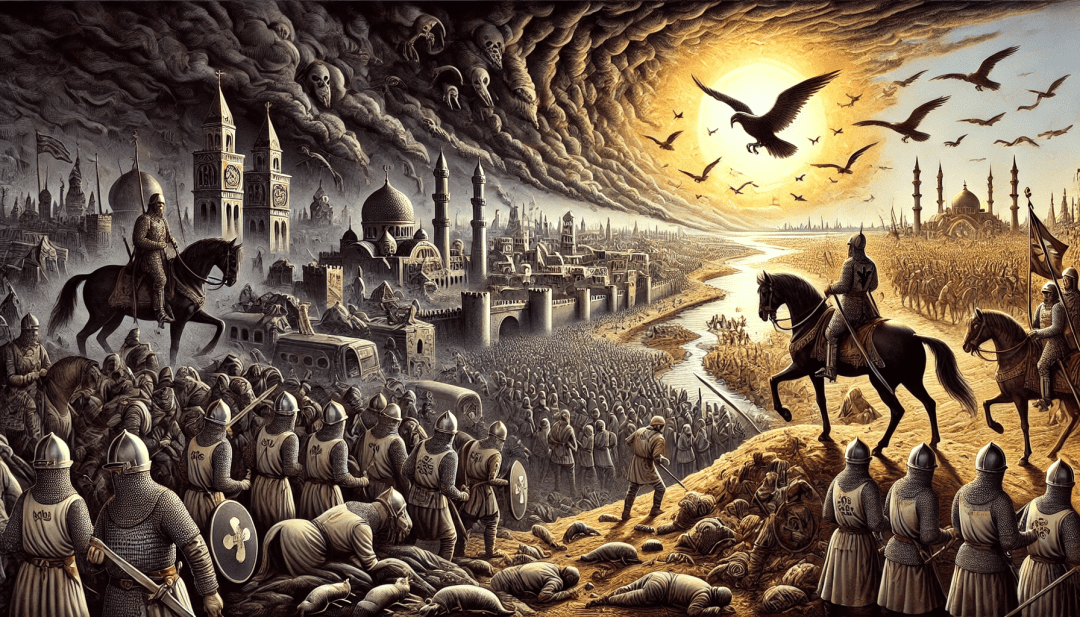
Life often feels like a collection of disconnected moments, where the purpose of our experiences remains hidden in the fog of the present. Yet, throughout history and scripture, we see the unmistakable fingerprints of a God who weaves together seemingly unrelated events into a masterful design, often only revealed long after the fact. What may feel like a detour, a loss, or even a disaster is often a carefully placed piece in a larger puzzle—one that aligns for a future purpose beyond our comprehension. It’s a reminder that while we may only see the threads of today, God holds the tapestry of eternity.
The mid-sixth century was a period of significant upheaval for the Mediterranean world and the Near East. A seemingly unrelated series of natural and political disasters created a cascade of effects that reshaped the global order. Among the most catastrophic of these was a massive volcanic eruption in 536 or 537 CE, which blotted out the sun and triggered a massive climate change that led to widespread famine and weakened the Roman (Byzantine) and Sassanian empires.
This environmental stress created conditions ripe for the outbreak of the deadly Plague of Justinian (541–549), a pandemic that decimated populations across the known world. While both the Byzantines and the Sassanians struggled to recover from these disasters, they were left vulnerable, creating an environment that allowed for the rapid rise and expansion of Islam in the 7th century. This article explores how this chain of events unfolded, connecting the dots between natural disasters, plague, and the rise of a new power in the Arabian Peninsula.
Emperor Justinian
Emperor Justinian I, who reigned from 527 to 565 CE, was a staunch advocate for Christian orthodoxy, particularly the doctrine of the Trinity. In 529 CE, Justinian commissioned the codification of Roman law in the Corpus Juris Civilis (Body of Civil Law), which became a foundational text for European legal systems.
Circa 530 CE, he imposed new Church-codified ordinances forbidding “Jewish language” in the empire’s worship services. In particular, the core Jewish prayer and statement of faith known as the Shema was “totally banned.” Shema, the Hebrew for “hear” or “listen,” describes what is regarded as the quintessential creed of Judaism:
4 Hear, O Israel: The Lord our God, the Lord is one. 5 Love the Lord your God with all your heart and with all your soul and with all your strength. (Deuteronomy 6)
Additionally, he implemented several legal measures to suppress heretical beliefs and practices. Notably, in his Novella 45, Justinian decreed that individuals who denied the Trinity or held heretical views were to be excluded from the Christian community and faced severe penalties, including confiscation of property and exile. In practice, some heretical groups, such as the Montanists, faced capital punishment under Justinian’s rule.
The Volcanic Eruption of 536/537
In 536 or 537 CE, a massive volcanic eruption sent clouds of ash and aerosols into the atmosphere, blocking sunlight and leading to what some historians have called the “Year without Summer.” Contemporary accounts, such as those of the Byzantine historian Procopius, describe a world plunged into darkness, with the sun appearing dim and the air thick with ash. Modern geological studies confirm that this eruption led to a significant drop in global temperatures, with summer frosts and failed harvests across Europe and the Mediterranean. The resulting famine compounded the devastation as crops failed and food supplies dwindled. While this eruption had worldwide consequences, its immediate impact was most acutely felt in the empires of Byzantium and Sassanid Persia, whose already strained resources were further tested. The environmental shock from the eruption laid the groundwork for societal unrest and set the stage for a larger catastrophe to come.
The Plague of Justinian (541–549)
The environmental and societal stress created by the volcanic eruption and resulting famine contributed to the perfect conditions for spreading disease. The pandemic that would come to be known as the Plague of Justinian began in 541, just a few years after the eruption that blotted out the sun, was triggered by the bacterium Yersinia pestis, the same bacterium that would later cause the Black Death in the 14th century. This bacterium primarily infects fleas, which are parasitic insects that feed on the blood of small animals, particularly rodents like rats. The process of the pandemic’s spread involves a complex and deadly chain reaction, starting with these fleas and ending in human devastation.
Yersinia pestis typically infects fleas (not ticks in this particular plague context), particularly the species of fleas that live on rodents like black rats (Rattus rattus). When a flea bites an infected rat, the bacterium enters the flea’s digestive system. Once infected, the bacterium begins to multiply rapidly within the flea, blocking its gut. This blockage creates a problem for the flea: when it tries to feed, the blood can’t pass through its digestive system, so the flea ends up regurgitating the infected blood back into the bite wound of its host.
Because the flea can’t properly feed, it becomes more aggressive in its search for a blood meal, biting repeatedly and regurgitating Yersinia pestis with each bite. Infected fleas would often bite multiple hosts in a short time frame, making them highly efficient vectors of the plague. Once the infected rat population began to die off (as rats themselves were susceptible to the plague), the fleas would seek out new hosts—this included humans.
Rats, particularly black rats, were common stowaways on trade ships in the ancient world. These ships, which carried goods such as grain, textiles, and other commodities, also inadvertently transported rat populations from one port to another. As trade networks in the Mediterranean world were extensive and active during this period, rats easily spread across vast distances.
In the context of the 6th-century Byzantine Empire, Alexandria, Egypt, served as a major hub for trade and grain storage, and it was one of the key ports through which goods—and rats—traveled. Grain ships that sailed between Egypt, Constantinople, and other parts of the empire were prime vehicles for spreading the plague. The rats on board these ships carried infected fleas, which could easily transfer from rat to human in crowded, unsanitary port cities.
Once rats infested a ship or port, they quickly spread the infected fleas to nearby human populations. This is how the plague, which likely started in central Africa or India, made its way through Alexandria and into the heart of the Byzantine Empire, eventually reaching the capital city of Constantinople in 541 CE. From there, the plague spread along trade routes to other parts of the Mediterranean, the Near East, and even into the Sassanian Empire, devastating populations wherever it went.
As infected rats died off, fleas would jump to new hosts—often humans living in close proximity to the rat populations. Poor sanitation in cities meant that rats and fleas could easily come into contact with human dwellings. Fleas would bite humans, regurgitating the bacterium into their bloodstream, leading to the onset of the plague in human populations. The symptoms of plague, including fever, chills, and swollen lymph nodes (or buboes), would appear rapidly, and without effective medical treatment, the mortality rate was extremely high.
This process of rat-flea-human transmission allowed the plague to spread quickly and efficiently across the Byzantine and Sassanian Empires, causing massive death tolls and contributing to the weakening of both civilizations. As trade continued, the rats and fleas on board ships carried the plague to new areas, ensuring its persistent spread and the eventual pandemic.
The devastation was immense, with some estimates suggesting that up to half the population in affected areas perished. Constantinople, the heart of the Byzantine Empire, was hit particularly hard, losing tens of thousands of people within a matter of months. The plague ravaged the economy, crippling agricultural production and trade, and overwhelmed the administrative and military capacities of both the Byzantines and the Sassanians. The political and social chaos that followed reflected the extent of the population loss, with weakened leadership and local elites struggling to maintain order amidst the devastation.
How Cooler Temperatures Aided in Spreading the Plague
The cooling of global temperatures following the volcanic eruption of 536–537 CE played a crucial role in creating conditions favorable for the development and spread of the Yersinia pestis bacterium, which caused the Plague of Justinian. This dramatic climate shift, brought on by volcanic ash and aerosols that blocked sunlight, led to colder-than-usual conditions, especially in Europe and the Mediterranean. These changes had several effects that indirectly contributed to the spread of the plague, and it is likely that without the cooling triggered by the volcanic smoke, the pandemic would not have developed as it did.
The volcanic eruption of 536 resulted in a “volcanic winter,” with global temperatures dropping by as much as 1.5–2.5°C. This cooling caused widespread crop failures, famine, and societal disruptions. But it also affected the ecosystems of rodents, particularly black rats, and the fleas that carried Yersinia pestis. Normally, warm and humid conditions might have inhibited the spread of the bacterium and decreased flea activity, but the colder, wetter climate following the eruption allowed Yersinia pestis to thrive.
One key way cold temperatures influenced the spread of the plague was by driving fleas and rats closer to human settlements. As food sources in the wild diminished due to crop failures and famine, rat populations sought refuge in human habitats, where food stores such as grain would have been more readily available. This increased contact between humans and rats, heightening the chances of flea bites and the transmission of the bacterium.
Another critical factor is the biology of Yersinia pestis and the fleas that spread it. Fleas are sensitive to environmental conditions, and cooler temperatures can increase their lifespan and alter their feeding behavior. In warmer conditions, fleas might die off more quickly or find it harder to transmit the disease, but colder weather allows them to survive longer. The cold also slows the metabolism of the bacterium inside the flea, giving it more time to multiply in the flea’s gut. As mentioned earlier, Yersinia pestis can block the flea’s digestive system, causing the flea to regurgitate the bacterium into the bloodstream of its next host. In colder conditions, fleas infected with Yersinia pestis are more likely to persist and spread the disease over a wider range of hosts, both rats and humans.
This is especially important because Yersinia pestis thrives in lower temperatures between 4°C and 20°C. The cooling climate created ideal conditions for the bacterium to survive and be transmitted from fleas to rodents and ultimately to humans. Without the cooling effect caused by the volcanic ash and smoke, it is possible that the natural balance would have limited the bacterium’s development and the flea’s ability to carry and spread the disease so effectively.
The cold weather had a broader societal impact as well. The drop in temperature caused harvest failures, which led to food shortages and famine across much of Europe and the Mediterranean. This created weakened and malnourished populations, who were far more susceptible to disease. Malnutrition compromises the immune system, making it easier for the plague to take hold once it arrives. Large-scale movements of people in search of food and resources would also have contributed to the rapid spread of the disease.
The eruption also disrupted trade and caused social unrest, but crucially, it did not stop the movement of goods entirely. As a result, rats continued to stow away on ships, spreading fleas and the bacterium across the Mediterranean and into the Byzantine and Sassanian Empires. The cooling of the climate likely contributed to an uptick in such outbreaks, as both empires were struggling to deal with the aftermath of famine, internal political instability, and strained resources.
So the colder climate increased the survival rates of fleas carrying the bacterium and drove rat populations closer to human settlements. Simultaneously, weakened human populations—due to famine and malnutrition—became easy targets for the plague. The combination of these environmental and biological factors, triggered by the cooling caused by volcanic ash, played a critical role in the pandemic that followed. Without the temperature drop, the outbreak of the Plague of Justinian might have been less severe or even avoided altogether.
Cyclical Nature of the Plague: Recurring Waves
The Plague did not simply disappear after its initial outbreak in 541 CE. Instead, it persisted for nearly 150 years, recurring in waves approximately every 10 to 20 years. These recurring outbreaks were likely influenced by a combination of environmental, biological, and societal factors, including the nature of the disease, the movement of populations, and the cyclical vulnerability of human communities. One key factor was the generational turnover that saw children and young adults who had never been exposed to the plague becoming vulnerable to the disease.
After the initial pandemic devastated populations, the plague did not vanish entirely. The bacterium Yersinia pestis was able to remain active in certain rodent populations, which acted as a reservoir for the disease. These reservoirs existed primarily in rural or wild areas where rodents, particularly black rats, carried infected fleas. Over time, as human populations rebounded and trade networks were re-established, the disease found new opportunities to spread.
The waves of plague that followed typically occurred every 20 years or so, partly due to the renewal of susceptible human populations. After each major outbreak, many of the survivors had developed some degree of immunity to the bacterium, either through previous exposure or the survival of mild cases. However, this immunity was not passed down genetically. As new generations were born, these children and young adults had no natural immunity to the plague. This created cycles where, after a couple of decades, a new group of people with no prior exposure would become susceptible to the disease, allowing the bacterium to spread rapidly once again.
Loss of Immunity and New Vulnerable Populations
Each time a new wave of the plague hit, it affected a population that was mostly free from natural resistance. The individuals who had survived the previous outbreak had either died off or aged out, and their children had not been exposed to the disease. Since immunity to Yersinia pestis is not hereditary, these new generations were as vulnerable as the population had been during the first wave of the pandemic.
Moreover, the relative success of rebuilding cities, populations, and trade networks after each plague wave meant that there were denser urban centers and new economic activity—ideal conditions for the spread of disease. Trade routes brought people into contact with infected rat populations or the fleas that carried the bacterium. The constant movement of goods and people ensured that once the plague returned to a major city or trade hub, it could quickly spread through human populations that had no previous exposure.
Environmental and Social Factors
In addition to the biological dynamics of plague recurrence, environmental and societal factors also played a significant role in the plague’s persistence over 150 years. The plague would often flare up when climate conditions were favorable for flea and rat populations, such as during periods of cooler and wetter weather. These conditions would increase the likelihood of plague outbreaks by enhancing the survival and spread of flea populations.
Additionally, the ongoing political instability, wars, and economic disruptions in the Byzantine and Sassanian Empires during this period also contributed to the plague’s persistence. Large-scale military campaigns and the movement of armies facilitated the spread of the disease, as did refugee movements and disruptions in agricultural production. Weakened infrastructures and repeated famines left populations vulnerable to infectious diseases, including the plague.
Consequences for the Roman-Byzantine and Sassanian Empires
The twin blows of the volcanic eruption and the plague left both the Roman-Byzantine and Sassanian empires significantly weakened. In Byzantium, Emperor Justinian’s grand plans for reconquest and revitalization of the empire were derailed. The empire’s coffers were drained, the military was overstretched, and internal dissent began to rise. While Justinian had been on the verge of reunifying the Western and Eastern Roman Empires, the plague severely hampered his efforts.
Likewise, the Sassanian Empire experienced a similar strain. Internal rebellions and economic collapse sapped the strength of an empire already engaged in constant conflict with its Byzantine rival. The ongoing wars between the Byzantines and Sassanians continued to drain resources, creating a long-term stalemate that neither empire could afford. Both empires emerged from this period significantly weakened and overextended, leaving large parts of their territories vulnerable and their military capacities diminished.
Arabs & The Justinian Plague
By the early 600s, both the Byzantine and Sassanian empires were shadows of their former selves, weakened by decades of war, famine, and plague. With populations depleted and economies in shambles, neither empire had the resources or the manpower to maintain their extensive borders or adequately defend against new threats.
Meanwhile, The Arab population in the Hejaz region of the Arabian Peninsula was largely spared from the devastating impact of the Plague of Justinian during its initial onset in the mid-6th century. This region, home to important cities like Mecca and Medina, remained relatively unaffected by the waves of plague that ravaged the Byzantine and Sassanian Empires. Several factors, including the harsh desert climate and the relative remoteness of the Hejaz, helped protect this population from the spread of the plague.
Inhospitable Climate for Rats and Fleas
One of the primary reasons the plague did not reach the Hejaz in its early stages was the region’s extreme desert environment, which proved hostile to the primary carriers of the plague: rats and fleas. The hot, dry conditions of the Arabian desert made it nearly impossible for these animals to thrive. Rats require water and food sources, both of which were scarce in the arid and barren landscapes of the Hejaz. Without sufficient sustenance and shelter, rat populations remained small and largely absent from these areas.
In addition, fleas, which require a relatively stable and humid environment to reproduce and survive, could not live in such an arid climate. The desert’s extreme temperatures and low humidity levels created an inhospitable environment for fleas, preventing them from proliferating and spreading the bacterium as they did in other, more temperate regions. This lack of an effective vector for the plague meant that the bacterium could not easily make its way into the human population of the Hejaz.
Geographic Isolation and Remoteness
Another key factor that protected the Hejaz from the initial waves of plague was its relative isolation and remoteness from the major trade routes and urban centers that were heavily impacted by the pandemic. While the Hejaz was a center for pilgrimage and trade within Arabia, it was geographically isolated from the key centers of commerce, like Constantinople, Alexandria, and the Persian cities, where the plague spread most rapidly due to dense populations and constant movement of people and goods.
At the time, Arabia, particularly the Hejaz region, was considered a remote backwater in comparison to the Byzantine and Sassanian Empires. It was far removed from the bustling urban centers of the Mediterranean and Mesopotamia, where the plague spread along established trade routes, particularly via ships that carried infected rats and fleas. While Arabian merchants certainly engaged in trade, the flow of goods and people in and out of the Hejaz was not as intense as in the plague-stricken regions to the north. This geographic isolation shielded the population from the direct impact of the pandemic, allowing them to avoid exposure to the disease during its initial waves.
Limited Urbanization and Population Density
The areas of Mecca and Medina were not highly urbanized or densely populated like the major cities of the Byzantine and Sassanian Empires. The spread of the plague was particularly devastating in densely populated urban centers, where people lived in close quarters with poor sanitation, creating ideal conditions for rats and fleas to thrive and transmit the bacterium to humans. In contrast, the largely nomadic or semi-nomadic lifestyle of many Arab tribes in the Hejaz, combined with lower population density and smaller urban centers, made it difficult for the plague to take hold even if it had managed to reach the area.
Without the intense urbanization that characterized the plague-stricken cities of the Mediterranean and the Near East, the opportunities for the plague to spread were much more limited. The relatively decentralized and dispersed population of the Arabian Peninsula further minimized the risk of widespread infection.
Because of these reasons, the Arab population in the Hejaz was spared from the initial waves of the Plague of Justinian due to a combination of environmental, geographic, and social factors. The harsh desert climate of the region prevented rats and fleas from thriving, cutting off the primary means of transmitting the disease. Additionally, the remoteness of the Hejaz from the major centers of trade and commerce, along with its limited urbanization and population density, kept the population largely insulated from the pandemic that devastated the Byzantine and Sassanian Empires. This relative immunity to the plague left the Arabian Peninsula less weakened by the crisis and allowed it to emerge as a significant power in the following century, as the Islamic state rose and expanded rapidly across the weakened empires to the north.
This made the conditions ideal for the spread of Islam. So, after the death of Muhammad in 632 CE, his successors quickly mobilized the nascent Islamic community, initiating a series of military campaigns aimed at both Byzantine and Sassanian territories. The initial Islamic conquests were rapid and decisive, as the weakened defenses of both empires could not withstand the new threat. Within a few decades, much of the Byzantine and Sassanian lands had fallen to the Islamic caliphates, marking a profound shift in the geopolitical landscape of the region.
Conclusion
The volcanic eruption of 536/537 CE set in motion a series of events that fundamentally altered the course of history. The resulting climate change and famine weakened the great empires of Byzantium and Persia, leaving them susceptible to the Plague of Justinian, which wiped out vast segments of their populations. The political, economic, and military exhaustion of these empires left them vulnerable to external threats.
Interestingly, despite being impacted by the loss of harvests, the volcanic eruption had less of an impact on the Hejaz, who did not have to suffer the consequences of the plague. So when Islam emerged in the 7th century, it found two once-great empires on the verge of collapse. The rapid expansion of Islam into the weakened territories of Byzantium and the Sassanid Empire is a testament to how God can orchestrate events via natural and man-made disasters that can reshape the world. The rise of Islam is one of history’s most significant events, and its swift conquest of the ancient empires was, in part, made possible by the devastation wrought by the volcanic eruption and the plague a century earlier. This interconnected series of events reminds us how perfectly orchestrated everything is and that everything is under God’s control.
[30:9] Have they not roamed the earth and noted the consequences for those who preceded them? They used to be more powerful, more prosperous, and more productive on earth. Their messengers went to them with clear signs. Consequently, GOD was not the One who wronged them, they are the ones who wronged their own souls.
أَوَلَمْ يَسِيرُوا۟ فِى ٱلْأَرْضِ فَيَنظُرُوا۟ كَيْفَ كَانَ عَـٰقِبَةُ ٱلَّذِينَ مِن قَبْلِهِمْ كَانُوٓا۟ أَشَدَّ مِنْهُمْ قُوَّةً وَأَثَارُوا۟ ٱلْأَرْضَ وَعَمَرُوهَآ أَكْثَرَ مِمَّا عَمَرُوهَا وَجَآءَتْهُمْ رُسُلُهُم بِٱلْبَيِّنَـٰتِ فَمَا كَانَ ٱللَّهُ لِيَظْلِمَهُمْ وَلَـٰكِن كَانُوٓا۟ أَنفُسَهُمْ يَظْلِمُونَ

 Quran Talk Blog