
Many are familiar with the well-known narrative of how the Prophet Muhammad is believed to have received his initial revelation, encapsulated in Sura 96:1-5. This story centers on the Angel Gabriel urging the Prophet to read, which he reportedly could not fulfill. Traditional interpretations of this account postulate that the prophet could not complete this request because he was illiterate, yet as we have seen in previous articles, the idea that the prophet was illiterate was a fabrication to make his receiving of the Quran appear much more miraculous.
Today, the most well-known account of this narration comes from Bukhari:
Narrated ‘Aisha (the mother of the faithful believers): The commencement of the Divine Inspiration to Allah’s Messenger (ﷺ) was in the form of good dreams which came true like bright daylight, and then the love of seclusion was bestowed upon him. He used to go in seclusion in the cave of Hira, where he used to worship (Allah alone) continuously for many days before his desire to see his family. He used to take with him the journey food for the stay and then come back to (his wife) Khadija to take his food likewise again till suddenly the Truth descended upon him while he was in the cave of Hira. The angel came to him and asked him to read. The Prophet (ﷺ) replied, “I do not know how to read.” The Prophet (ﷺ) added, “The angel caught me (forcefully) and pressed me so hard that I could not bear it any more. He then released me and again asked me to read and I replied, ‘I do not know how to read.’ Thereupon he caught me again and pressed me a second time till I could not bear it any more. He then released me and again asked me to read but again I replied, ‘I do not know how to read (or what shall I read)?’ Thereupon he caught me for the third time and pressed me, and then released me and said, ‘Read in the name of your Lord, who has created (all that exists), created man from a clot. Read! And your Lord is the Most Generous.” (96.1, 96.2, 96.3) Then Allah’s Messenger (ﷺ) returned with the Inspiration and with his heart beating severely. Then he went to Khadija bint Khuwailid and said, “Cover me! Cover me!” They covered him till his fear was over, and after that, he told her everything that had happened and said, “I fear that something may happen to me.” Khadija replied, “Never! By Allah, Allah will never disgrace you. You keep good relations with your kith and kin, help the poor and the destitute, serve your guests generously, and assist the deserving calamity-afflicted ones.” Khadija then accompanied him to her cousin Waraqa bin Naufal bin Asad bin ‘Abdul ‘Uzza, who, during the pre-Islamic Period became a Christian and used to write the writing with Hebrew letters. He would write from the Gospel in Hebrew as much as Allah wished him to write. He was an old man and had lost his eyesight. Khadija said to Waraqa, “Listen to the story of your nephew, O my cousin!” Waraqa asked, “O my nephew! What have you seen?” Allah’s Messenger (ﷺ) described whatever he had seen. Waraqa said, “This is the same one who keeps the secrets (angel Gabriel) whom Allah had sent to Moses. I wish I were young and could live up to the time when your people would turn you out.” Allah’s Messenger (ﷺ) asked, “Will they drive me out?” Waraqa replied in the affirmative and said, “Anyone (man) who came with something similar to what you have brought was treated with hostility; and if I should remain alive till the day when you will be turned out then I would support you strongly.” But after a few days, Waraqa died, and the Divine Inspiration was also paused for a while.
حَدَّثَنَا يَحْيَى بْنُ بُكَيْرٍ، قَالَ حَدَّثَنَا اللَّيْثُ، عَنْ عُقَيْلٍ، عَنِ ابْنِ شِهَابٍ، عَنْ عُرْوَةَ بْنِ الزُّبَيْرِ، عَنْ عَائِشَةَ أُمِّ الْمُؤْمِنِينَ، أَنَّهَا قَالَتْ أَوَّلُ مَا بُدِئَ بِهِ رَسُولُ اللَّهِ صلى الله عليه وسلم مِنَ الْوَحْىِ الرُّؤْيَا الصَّالِحَةُ فِي النَّوْمِ، فَكَانَ لاَ يَرَى رُؤْيَا إِلاَّ جَاءَتْ مِثْلَ فَلَقِ الصُّبْحِ، ثُمَّ حُبِّبَ إِلَيْهِ الْخَلاَءُ، وَكَانَ يَخْلُو بِغَارِ حِرَاءٍ فَيَتَحَنَّثُ فِيهِ ـ وَهُوَ التَّعَبُّدُ ـ اللَّيَالِيَ ذَوَاتِ الْعَدَدِ قَبْلَ أَنْ يَنْزِعَ إِلَى أَهْلِهِ، وَيَتَزَوَّدُ لِذَلِكَ، ثُمَّ يَرْجِعُ إِلَى خَدِيجَةَ، فَيَتَزَوَّدُ لِمِثْلِهَا، حَتَّى جَاءَهُ الْحَقُّ وَهُوَ فِي غَارِ حِرَاءٍ، فَجَاءَهُ الْمَلَكُ فَقَالَ اقْرَأْ. قَالَ ” مَا أَنَا بِقَارِئٍ ”. قَالَ ” فَأَخَذَنِي فَغَطَّنِي حَتَّى بَلَغَ مِنِّي الْجَهْدَ، ثُمَّ أَرْسَلَنِي فَقَالَ اقْرَأْ. قُلْتُ مَا أَنَا بِقَارِئٍ. فَأَخَذَنِي فَغَطَّنِي الثَّانِيَةَ حَتَّى بَلَغَ مِنِّي الْجَهْدَ، ثُمَّ أَرْسَلَنِي فَقَالَ اقْرَأْ. فَقُلْتُ مَا أَنَا بِقَارِئٍ. فَأَخَذَنِي فَغَطَّنِي الثَّالِثَةَ، ثُمَّ أَرْسَلَنِي فَقَالَ {اقْرَأْ بِاسْمِ رَبِّكَ الَّذِي خَلَقَ * خَلَقَ الإِنْسَانَ مِنْ عَلَقٍ * اقْرَأْ وَرَبُّكَ الأَكْرَمُ} ”. فَرَجَعَ بِهَا رَسُولُ اللَّهِ صلى الله عليه وسلم يَرْجُفُ فُؤَادُهُ، فَدَخَلَ عَلَى خَدِيجَةَ بِنْتِ خُوَيْلِدٍ رضى الله عنها فَقَالَ ” زَمِّلُونِي زَمِّلُونِي ”. فَزَمَّلُوهُ حَتَّى ذَهَبَ عَنْهُ الرَّوْعُ، فَقَالَ لِخَدِيجَةَ وَأَخْبَرَهَا الْخَبَرَ ” لَقَدْ خَشِيتُ عَلَى نَفْسِي ”. فَقَالَتْ خَدِيجَةُ كَلاَّ وَاللَّهِ مَا يُخْزِيكَ اللَّهُ أَبَدًا، إِنَّكَ لَتَصِلُ الرَّحِمَ، وَتَحْمِلُ الْكَلَّ، وَتَكْسِبُ الْمَعْدُومَ، وَتَقْرِي الضَّيْفَ، وَتُعِينُ عَلَى نَوَائِبِ الْحَقِّ. فَانْطَلَقَتْ بِهِ خَدِيجَةُ حَتَّى أَتَتْ بِهِ وَرَقَةَ بْنَ نَوْفَلِ بْنِ أَسَدِ بْنِ عَبْدِ الْعُزَّى ابْنَ عَمِّ خَدِيجَةَ ـ وَكَانَ امْرَأً تَنَصَّرَ فِي الْجَاهِلِيَّةِ، وَكَانَ يَكْتُبُ الْكِتَابَ الْعِبْرَانِيَّ، فَيَكْتُبُ مِنَ الإِنْجِيلِ بِالْعِبْرَانِيَّةِ مَا شَاءَ اللَّهُ أَنْ يَكْتُبَ، وَكَانَ شَيْخًا كَبِيرًا قَدْ عَمِيَ ـ فَقَالَتْ لَهُ خَدِيجَةُ يَا ابْنَ عَمِّ اسْمَعْ مِنَ ابْنِ أَخِيكَ. فَقَالَ لَهُ وَرَقَةُ يَا ابْنَ أَخِي مَاذَا تَرَى فَأَخْبَرَهُ رَسُولُ اللَّهِ صلى الله عليه وسلم خَبَرَ مَا رَأَى. فَقَالَ لَهُ وَرَقَةُ هَذَا النَّامُوسُ الَّذِي نَزَّلَ اللَّهُ عَلَى مُوسَى صلى الله عليه وسلم يَا لَيْتَنِي فِيهَا جَذَعًا، لَيْتَنِي أَكُونُ حَيًّا إِذْ يُخْرِجُكَ قَوْمُكَ. فَقَالَ رَسُولُ اللَّهِ صلى الله عليه وسلم ” أَوَمُخْرِجِيَّ هُمْ ”. قَالَ نَعَمْ، لَمْ يَأْتِ رَجُلٌ قَطُّ بِمِثْلِ مَا جِئْتَ بِهِ إِلاَّ عُودِيَ، وَإِنْ يُدْرِكْنِي يَوْمُكَ أَنْصُرْكَ نَصْرًا مُؤَزَّرًا. ثُمَّ لَمْ يَنْشَبْ وَرَقَةُ أَنْ تُوُفِّيَ وَفَتَرَ الْوَحْىُ.
Sahih al-Bukhari 3
https://sunnah.com/bukhari:3
In the above narration, when the prophet is commanded to “read” (iqra’ / اقْرَأ ), he responds with the statement that literally translates to “I am not a reader/reciter” ( ma ana biqāri’ / مَا أَنَا بِقَارِئٍ ). This is a peculiar and particularly clumsy statement to say rather than simply saying, “I am illiterate,” if the reason he could not read was because he was incapable of reading. This statement may also imply that he was just not skilled in reciting and not necessarily that he was incapable of reading.
One of the most famous biographers of the prophet was Ibn Ishaq (704–767CE / 85-150AH). He lived ~100 years before Bukhari (810–870CE / 194–256AH). His monumental work, The Life of the Prophet (Sīrat Rasūl Allāh / سيرة رسول الل ), was transmitted by his student Ibn Hisham (d. 833CE / 218AH).
In this book, Ibn Ishaq narrates the same story regarding the prophet’s supposed receiving of the first revelation, except there are a couple major differences. It is worth noting that Tabari also cites this narration from Ibn Ishaq.

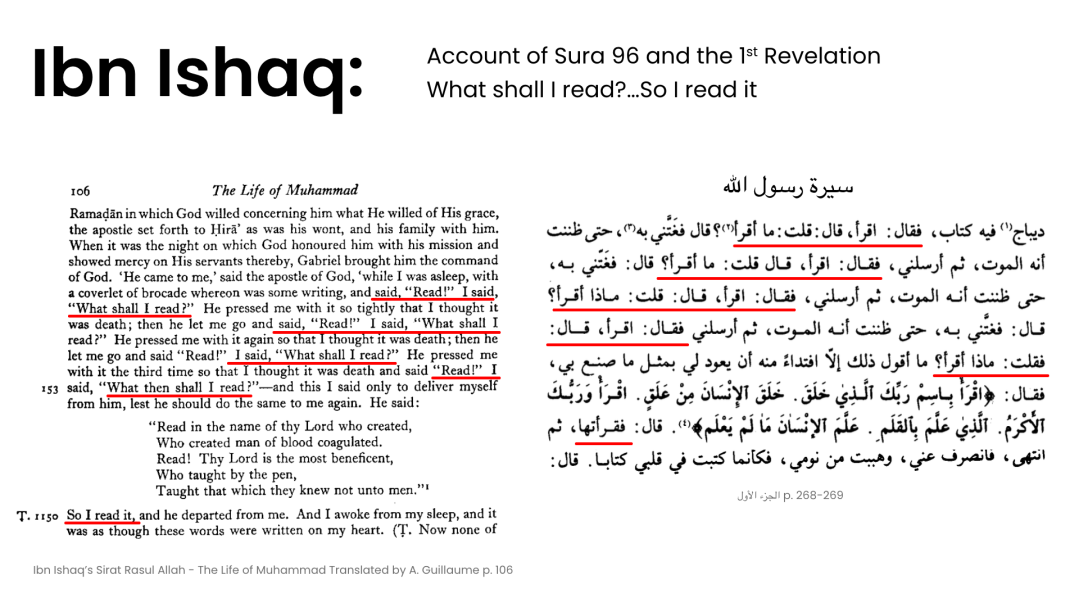
Here is the Arabic for reference:

In his account, Gabriel comes to the prophet with a book, and the prophet does not claim that “he is not a reader,” instead he says, “What shall I read?” (ma aqra / ما أقرأ ). Some may claim that the translation provided is mistranslated and it should be translated as, “I cannot read,” except the narration also uses the response “mādhā aqra’u” ( مَاذا أقْرَأ ), which, unlike the first statement is unambiguous and can only be understood as, “What then shall I read?” Additionally, the narration ends with the prophet complying with the command and reading after the verses were presented to him, with the statement, “So I read it” (faqara’tuhā / فقْرَأتُها ), which completely contradicts the narrative that the reason he said he was unable to was because he was illiterate.
Additionally, it is strange that in this comprehensive history of the life of the prophet, Ibn Ishaq never mentions once that the prophet was illiterate! Not only that, but three times he explicitly states that the prophet wrote. Once regarding the Constitution of Medina (p. 231), another time regarding a letter he gave one of the companions in preparation for the Battle of Badr (p. 286), and the third time regarding a letter the prophet wrote to the kings of Himyar (p. 643).
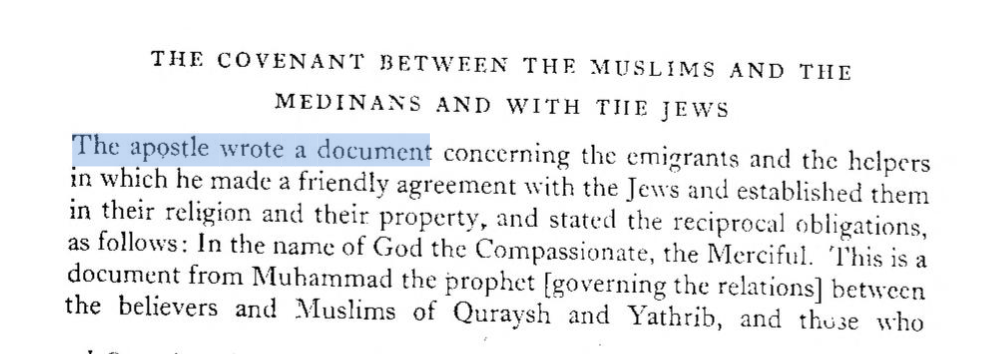



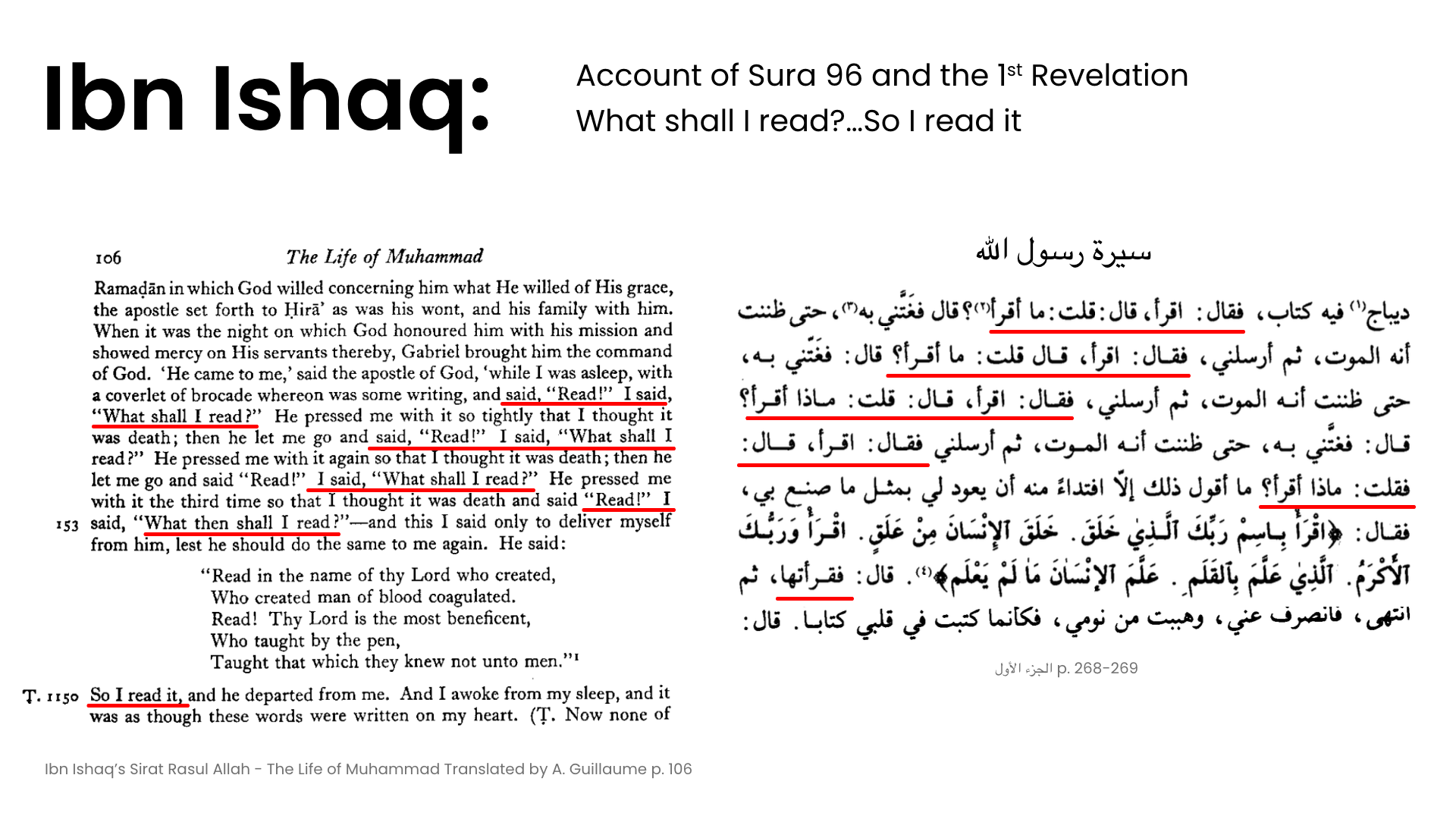
Here is the transcription and translation of the narration according to Ibn Ishaq:
Ibn Ishaq said: Wahb bin Kaysan narrated to me, saying: Ubaid said: The Messenger of God (ﷺ) used to retreat to Hira every year for a month. He would feed anyone who came to him from the needy. When the Messenger of God completed his time in the cave, he would return to the Ka’ba to circumambulate it seven times, or as much as God willed, and then he would go back to his house.
When the month in which God willed to honor him with His message came— in that same year, during the month of Ramadan— the Messenger of God went out to Hira, as was his custom. His family was with him until the night in which God willed to honor him with His message and have mercy on His servants through him.
Gabriel came to him, by the command of God Almighty.
The Messenger of God said: “Gabriel came to me while I was sleeping, with a coverlet of brocade with a book on it, and he said: ‘Read.’ I said: ‘What shall I read?‘ Then he pressed me with it until I thought it was death. Then he released me and said: ‘Read.’ I said: ‘What shall I read?’ He pressed me with it again until I thought it was death, then released me and said: ‘Read.’ I said: ‘What then shall I read?‘ He pressed me with it yet again until I thought it was death. Then he released me and said: ‘Read.’ I said: ‘What then shall I read?’ I only said this to save myself from him returning to do to me what he had done. Then he said:
“Read in the name of your Lord who created.
Created man from a clot.
Read! And your Lord is the Most Generous,
Who taught by the pen,
Taught man what he did not know.”He (the messenger) said: ‘So I read it.‘ Then he ceased, left me, and I awoke from my sleep. It was as though these words were written on my heart.”
قال ابن إسحاق: حدثني وهب بن كيسان قال: قال عبيد: فكان رسول الله ﷺ يُجاور ذلك الشهر من كل سنة، يطعم من جاءه من المساكين. فإذا قضى رسول الله ﷺ جواره من شهره ذلك، كان أول ما يبدأ به – إذا انصرف من جواره – الكعبة، قبل أن يدخل بيته، فيطوف بها سبعًا، أو ما شاء الله من ذلك، ثم يرجع إلى بيته.
حتى إذا كان الشهر الذي أراد الله تعالى به فيه ما أراد من كرامته، من السنة التي بعثه الله تعالى فيها، وذلك الشهر، شهر رمضان، خرج رسول الله ﷺ إلى حراء، كما كان يخرج لجواره ومعه أهله، حتى إذا كانت الليلة التي أكرمه الله فيها برسالته ورحم العباد بها، جاءه جبريل عليه السلام – بأمر الله تعالى.
قال رسول الله ﷺ : فجاءني جبريل، وأنا نائم بِنَمَطٍ من ديباج فيه كتاب، فقال: اقرأ، قال: ما أقرأ؟ قال فغطّني به، حتى ظننت أنّه الموت، ثم أرسلني، فقال: اقرأ، قلت: ما أقرأ؟ قال فغطّني به، حتى ظننت أنّه الموت، ثم أرسلني، فقال: اقرأ، قلت: ماذا أقرأ؟ قال: فغطّني به، حتى ظننت أنّه الموت، ثم أرسلني، فقال: اقرأ، قلت: ماذا أقرأ؟ ما أقول ذلك إلّا افتداء منه أن يعود لي بمثل ما صنع بي، فقال:
اقْرَأْ بِاسْمِ رَبِّكَ الَّذِي خَلَقَ. خَلَقَ الإِنْسَانَ مِنْ عَلَقٍ. اقْرَأْ وَرَبُّكَ الأَكْرَمُ. الَّذِي عَلَّمَ بِالْقَلَمِ. عَلَّمَ الإِنْسَانَ مَا لَمْ يَعْلَمْ.
قال: فقرأتها، ثم انتهى، فانصرف عنّي، وهِبتُ من نومي، فكأنّما كتبت في قلبي كتابا. قال:


This narration makes much more sense. Thank you for posting this.
LikeLike