
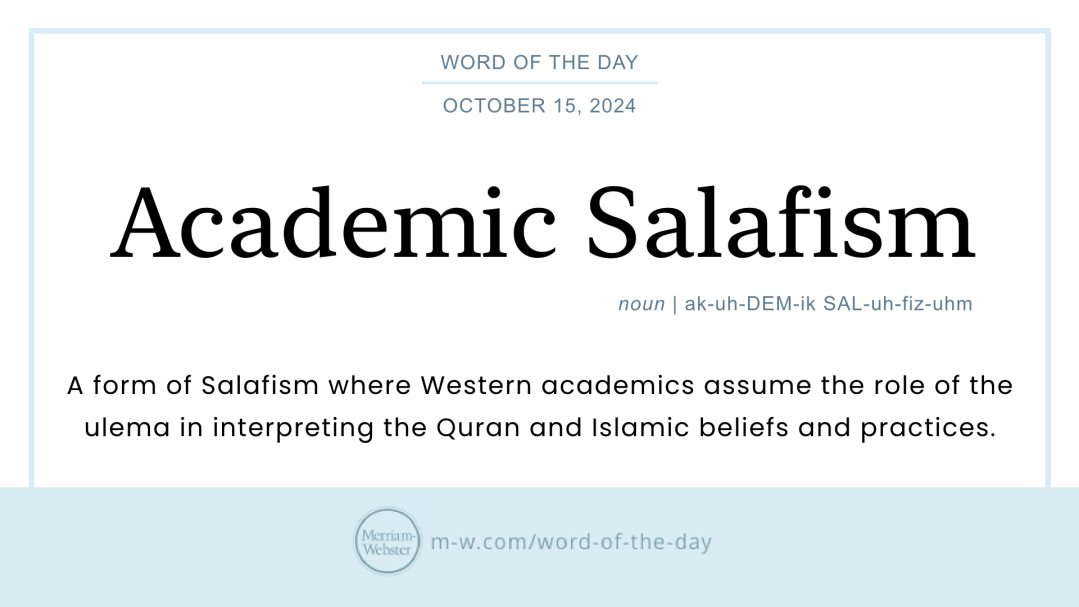
Salafism is a movement within Sunni Islam that advocates for a return to what it views as the pure, original practices of Islam as observed by the salaf—the first three generations of Muslims: the Prophet Muhammad and his companions (sahabah), their followers (tabi’un), and the followers of those followers (atba’ at-tabi’in). Rooted in the belief that these early generations best exemplify Islamic teachings, Salafism holds that the Quran and the religion itself should be understood through the lens of these foundational generations.
The other day on Twitter, a person retaliated against a post I made regarding an individual who discovered Muslim writings about the prophet and, more specifically, his sandal and beard hair as a relic of veneration.
Below is their attack on my post.
So naturally, I responded with verses from the Quran to show that the Quran condemns such actions. The Quran states that religion should be devoted exclusively to God alone (39:3, 6:162), the places of worship should be for God alone (72:18, 9:107, 40:12, 39:45), and any form of setting up relics as an intermediary between God and us is no different than the calf the Children of Israel made or the statues that Abraham destroyed.
Rather than refuting my claims, the interlocutor dismissed my arguments by using ad hominem attacks and the genetic fallacy. When another user pressed her for a response, she only appealed to Western scholarship and made the following comment:
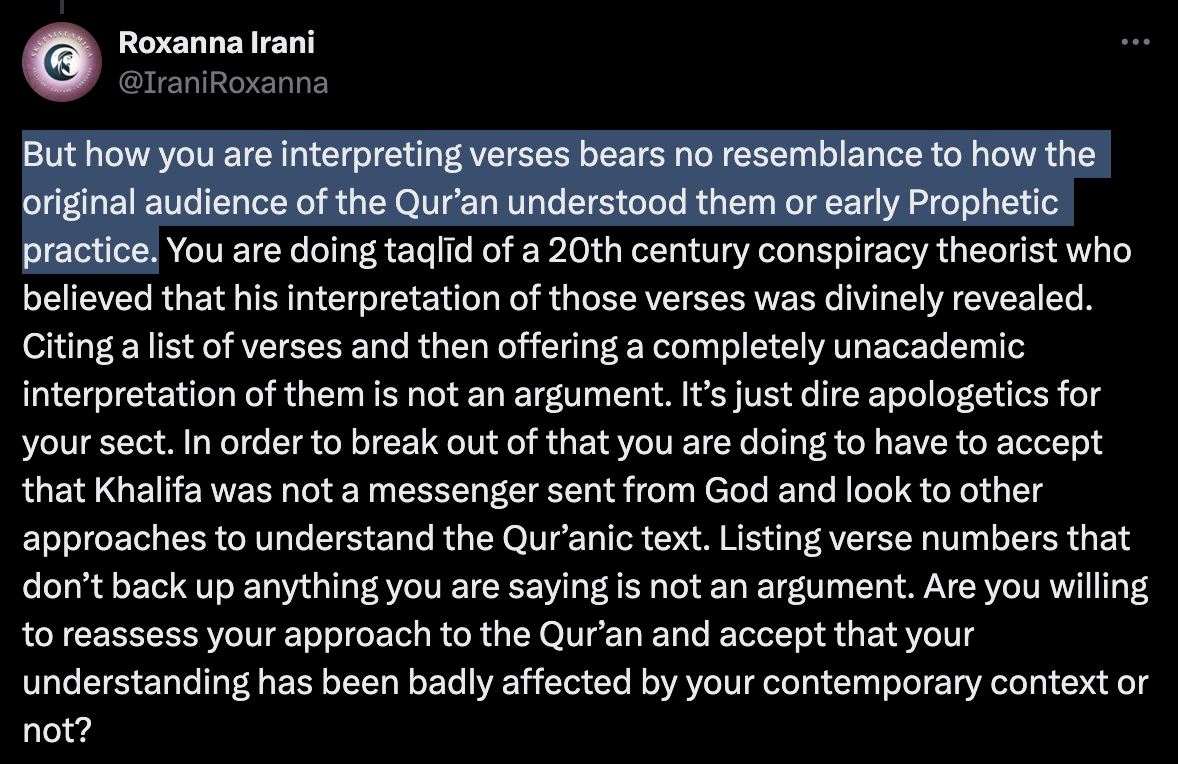
According to this individual, to understand the meaning of the Quran, one needs to understand what the verses specifically meant to the people at the time of the prophet. Therefore, trying to understand these verses as they stand today is futile. This is no different than Salafism, except she wants to utilize Western academic scholars rather than traditional Sunni Ulema.
This reveals a fundamental misunderstanding of the Quran on her part. The Quran is not a text confined to a single time or place, nor is it limited to the environment in which it was revealed. Rather, it is a divine revelation—the ultimate truth—meant to hold as true today as it did 1,400 years ago. If understanding the Quran required an in-depth knowledge of Arab customs and ideologies, it would imply that the book is incomplete. However, this is not what the Quran itself proclaims.
[6:114] Shall I seek other than GOD as a source of law, when He has revealed to you this book fully detailed? Those who received the scripture recognize that it has been revealed from your Lord, truthfully. You shall not harbor any doubt.
[6:115] The word of your Lord is complete, in truth and justice. Nothing shall abrogate His words. He is the Hearer, the Omniscient.
أَفَغَيْرَ ٱللَّهِ أَبْتَغِى حَكَمًا وَهُوَ ٱلَّذِىٓ أَنزَلَ إِلَيْكُمُ ٱلْكِتَـٰبَ مُفَصَّلًا وَٱلَّذِينَ ءَاتَيْنَـٰهُمُ ٱلْكِتَـٰبَ يَعْلَمُونَ أَنَّهُۥ مُنَزَّلٌ مِّن رَّبِّكَ بِٱلْحَقِّ فَلَا تَكُونَنَّ مِنَ ٱلْمُمْتَرِينَ
وَتَمَّتْ كَلِمَتُ رَبِّكَ صِدْقًا وَعَدْلًا لَّا مُبَدِّلَ لِكَلِمَـٰتِهِۦ وَهُوَ ٱلسَّمِيعُ ٱلْعَلِيمُ
While the prophet was exclusively sent to the Arabs, his message was for the whole world.
[68:52] It is in fact a message to the world.
وَمَا هُوَ إِلَّا ذِكْرٌ لِّلْعَـٰلَمِينَ
Limiting the understanding of the Quran to how Bedouin Arabs perceived it at the time of its revelation reflects a fundamental misunderstanding of its message. The most effective way to grasp the Quran’s meaning is by examining its verses directly. To understand concepts such as shirk (association), idol worship, or what constitutes setting up intermediaries between human beings and God, one should look at how these topics are addressed within the text itself, rather than assuming that epigraphical or archaeological surveys are required to uncover these answers.
Additionally, the Quran contains insights beyond the knowledge of the Prophet and his contemporaries but was intended to be appreciated by future generations. These include theological concepts unfamiliar to the early Arabs and scientific facts that would only be understood and appreciated centuries later, not to mention the Quran’s numerical structure and the encryption algorithm that authenticates the entire text. Learning about 7th-century gains a person nothing regarding these matters.
The message of the Quran is as true today as it was 1,400 years ago. While times change, human nature does not (2:118). The Quran presents truths that remain relevant across time, place, and culture, illustrating that human character traits and challenges are constant. God is revealing His sunnah for us to learn from—a lesson that resonated with those who first received the Quran and continues to apply to people today and in the future. This is why the Quran often excludes many details that would take away from its universal message in its narrative, instead focusing on timeless principles that endure.
[48:23] Such is GOD’s system (sunnah) throughout history, and you will find that GOD’s system (sunnah) is unchangeable.
سُنَّةَ ٱللَّهِ ٱلَّتِى قَدْ خَلَتْ مِن قَبْلُ وَلَن تَجِدَ لِسُنَّةِ ٱللَّهِ تَبْدِيلًا
[35:43] They resorted to arrogance on earth, and evil scheming, and the evil schemes only backfire on those who scheme them. Should they then expect anything but the fate of those who did the same things in the past? You will find that GOD’s system (sunnah) is never changeable; you will find that GOD’s system (sunnah) is immutable.
ٱسْتِكْبَارًا فِى ٱلْأَرْضِ وَمَكْرَ ٱلسَّيِّئِ وَلَا يَحِيقُ ٱلْمَكْرُ ٱلسَّيِّئُ إِلَّا بِأَهْلِهِۦ فَهَلْ يَنظُرُونَ إِلَّا سُنَّتَ ٱلْأَوَّلِينَ فَلَن تَجِدَ لِسُنَّتِ ٱللَّهِ تَبْدِيلًا وَلَن تَجِدَ لِسُنَّتِ ٱللَّهِ تَحْوِيلًا
In this regard, she is correct that we operate within different paradigms. From my perspective, the Quran is complete and fully detailed, intended for all of humanity, regardless of time or culture. It is a multidimensional text, eternally true, applicable to both the Arabs at the time of its revelation and people today as well as in the future who are far removed from 7th-century Arabia. According to her paradigm, however, the Quran can only be understood through the lens of 7th-century Hejazi Arabs detailed through the interpretation of Western academics—a perspective that equates to Academic Salafism.

 Quran Talk Blog