
I recently had an exchange with a brother on our Discord Server who was hostile to the idea that we are to follow the Quran alone. So I asked him what he would need to see to make him renounce Hadith and embrace the Quran alone. After some back and forth, he asked me to prove the following four claims.
- Prove that Imams Bukhari & Muslim were not revered during their life and that Bukhari died as an outcast.
- Prove that during the Ummayad dynasty, individuals mass-fabricated ahadith.
- Prove that Umar hit Abu Hurairah for spreading hadith about the Prophet and that Umar jailed people for spreading Hadith during his reign as caliph.
- Prove that Sunni Islam is an innovation, and the earliest Muslims practiced the religion without the Sunnah/Hadith.
#1 How Was Bukhari Perceived During His Life?
Toward the end of his life, Bukhari had many enemies in his hometown of Bukhara who were unfavorable to him and his understandings. When he was 60, he was severely beaten by his people for his understanding of certain issues, and he had to leave Bukhara. So, he fled to a small town called Khartank to live in exile. He died shortly after in isolation with only a few family members, twelve days before his 62nd birthday, on 1 Shawwal 256 AH. From the history of his death, it is clear that the masses revered neither he nor his work during his life. Below is a video documentary about the life of Bukhari highlighting the above points.
Further evidence that Bukhari was not revered till much later in his life is that the earliest complete manuscript of his work comes from the 12th century. This is a version narrated by Abu Dharr al-Heravi (d. 1043CE) and is kept at the Süleymaniye Library in Istanbul and is dated to 1155CE / 550 AH.
Even the oldest partial manuscript of this work is dated 407 AH (1017 CE) and only contains books 65 through 69, with book 65 being incomplete. This manuscript is kept at the National Library of Bulgaria and can be viewed online at World Digital Library‘s official website.
If Bukhari was as revered as he is today, we would expect many more manuscripts from his work dating from earlier periods, but since these do not exist, it infers that they were not the primary source for the Muslim masses.
These findings also correspond with the historical timeline by which the Sahih compilation of Bukhari and Muslim, the Sahihayn, became canonized. As stated in the book “Canonization of al-Bukhari and Muslim” by Jonathan Brown, it says that these works did not become commonly accepted by all Sunni madhabs till the fifth-century hijra and eleventh-century CE. Below are excerpts from the book.
“For over two centuries after al-Bukhari’s and Muslim’s deaths, the study and collection of hadiths continued unabated. Al-Bukhari’s and Muslim’s remarkable contribution came with their decision to compile books devoted only to hadiths they considered authentic (sahih). This act broke stridently with the practices of the transmission-based school and thus met with significant disapproval in the immediate wake of the authors’ careers.
“In the fourth/tenth century, however, the initial controversy surrounding the Sahihayn and their authors dissipated as a relatively small and focused network of scholars from the moderate Shafi’i tradition began appreciating the books’ utility. These scholars found the Sahihayn ideal vehicles for articulating their relationship to the Prophet’s normative legacy as well as standards against which to measure the strength of their own hadith collections. Employing the Sahihayn for these purposes required intimate familiarity with the two books and thus spurred an intensive study of the works and their authors’ methodologies. Simultaneously, between the end of the third/ninth and the middle of the fifth/eleventh century, the broader Muslim community began imagining a new level of authority for Prophetic traditions.” p. 6
“This ability of al-Bukhari’s and Muslim’s collections to serve as an acknowledged convention for discussing the Prophet’s authenticated legacy would serve three important needs in the Sunni scholarly culture of the fifth/eleventh century. As the division between different schools of theology and law became more defined, scholars from the competing Shafi’i, Hanbali and MaÎiki schools quickly began employing the Sahihayn as a measure of authenticity in debates and polemics. By the early eighth/fourteenth century, even the hadith-wary Hanafi school could not avoid adopting this convention. With the increased division of labor between jurists and Hadith scholars in the mid-fifth/eleventh century, the Sahihayn also became an indispensable authoritative reference for jurists who lacked expertise in Hadith evaluation. Finally, al-Bukhari’s and Muslim’s works served as standards of excellence that shaped the science of Hadith criticism as scholars from the fifth/eleventh to the seventh/thirteenth century sought to systematize the study of the Prophet’s word.” p. 7
“Although occasional criticism of the Sahihayn continued even after their canonization at the dawn of the fifth/eleventh century, advocates of institutional Sunnism found it essential to protect the two works and the important roles they played. Beginning at the turn of the fourth/tenth century and climaxing in the mid-seventh/thirteenth, a set of predominately Shafi’i scholars created a canonical culture around the Sahihayn that recast the two books’ pre-canonical pasts as well as those of their authors according to the exigent contours of the canon.” p. 7
#2 Mass Fabrication of Hadith
The following excerpt is from Chapter 7, entitled “Hadith Forgery,” from the book “A Textbook of Hadith Studies,” by Mohammad Hashim Kamali. It summarizes that historically, it is understood that mass forgeries of Hadith took place during the Umayyad dynasty.
“Extensive forgery in hadith was commonly known and acknowledged to have occurred in the early decades of the advent of Islam. It is believed to have begun following the turmoil over the murder of the third caliph, ‘Uthman, which dealt a heavy blow to the unity of the umma. This momentous event is held responsible for the emergence of serious political differences and partisan groups such as Shi’a, Kharijites and Mu’tazila, as well as the onset of forgery in hadith. Hadith forgery was to a large extent an epiphenomenon of these developments and the conflicts they precipitated eventually led to the collapse of the early caliphate barely forty years after its inception….
“Hadith forgery has not been confined to isolated cases but took rather a wide dimension barely before the end of the first generation of Muslims in Madina. A part of this phenomenon has been associated with the expansion of territorial domains of the Islamic state and the ever-increasing number of new immigrants of Persians, Romans, Egyptians, Syrians and others were easy to prey to misguided influences against hadith.”
“The historical origins of forgery in hadith are somewhat uncertain. While some observers have given the caliphate of ‘Uthman as a starting point, others have dated it a little later, at around the year 40 hijra, when political differences between the fourth caliph, ‘Ali, and the governor of al-Sham, Mu’awiya, led to military confrontation and division of the Muslims into various factions. According to a third view, forgery in hadith started even earlier, that is, during the caliphate of Abu Bakr when he waged war of apostasy (ridda) against the refuses of zakah. But the year 40 is considered the more likely starting point for the development of serious and persistent differences in the community. Muslims were thus divided and hostility between them acquired a religious dimension when they began to use the Qur’an and Sunna in support of their claims. When the misguided elements among them failed to find any authority in the sources for their views, they either imposed a distorted interpretation on the source materials, or embarked on outright fabrication.”
“Forgery in hadith is believed to have begun in the context of personality cults (fad’il al-ashkhas) which aimed to credit or discredit leading political figures with exaggerated claims. An example of this is the following statement attributed to the Prophet: “Whoever wishes to behold Adam for his knowledge, Noah for his piety, Abraham for his gentleness, Moses for his commanding presence and Jesus for his devotion to worship – let him behold ‘Ali.
“Political differences between ‘Ali and Abu Bakr, ‘Ali and Mu’awiya, and ‘Ali and ‘A’isha, between ‘Abd Allah b. Zubayr and ‘Abd al-Malik b. Marwan, and generally between the Umayyads and ‘Abbasids were among the causes of hadith forgery. Numerous ahadith have thus been recorded in condemnation of Mu’awiy including, for example, the one in which the Prophet is quoted to have ordered the Muslims “When you see Mu’awiya on my pulpit, kill him.” The fanatical supporters of Mu’awiya and the Umayyad dynasty are, on th other hand, known to have fabricated hadith such as “The trusted ones are three: I, Gabriel and Mu’awiya.”
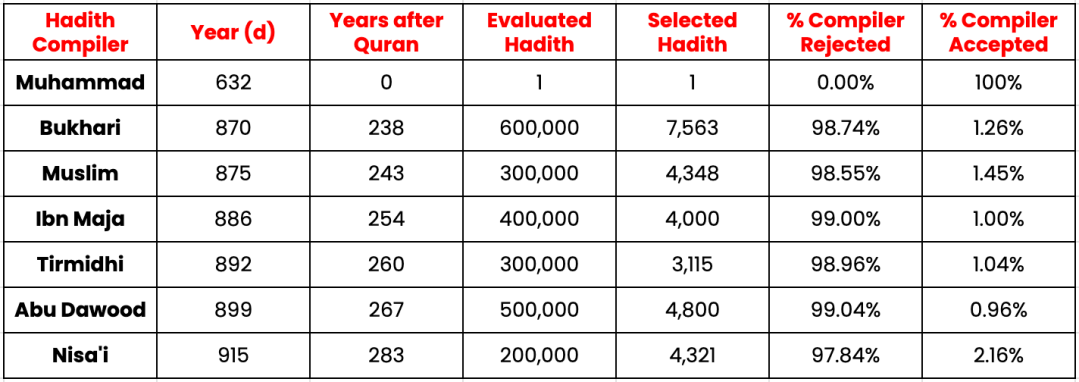
The compilations of Kutub al-Sittah began around the year 850 CE. If we look at the respective compilers, we see that they went through hundreds of thousands of Hadith and determined that ~99% of the hadith they reviewed were either not Sahih, according to Bukhari or Muslim, or failed to even rank as Daif, according to the other compilers.

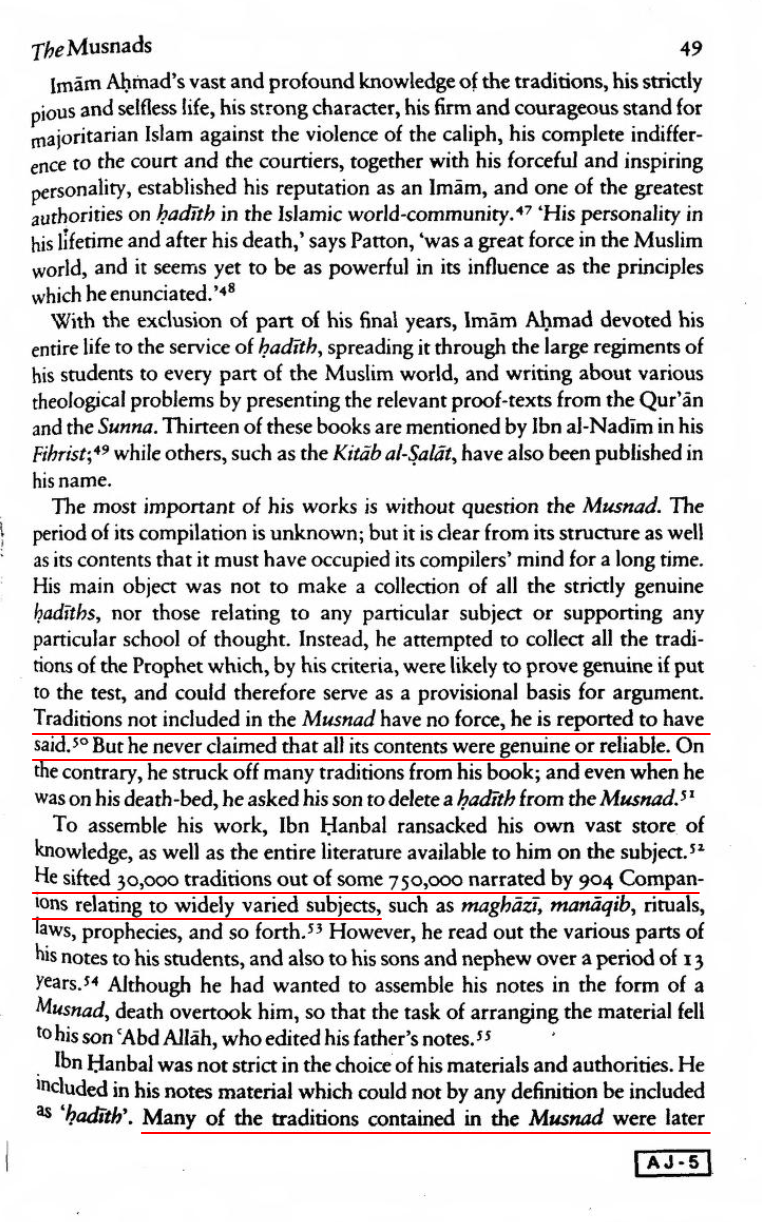
Ibn Hanbal (d. 855 CE) is said to have gone through some 750,000 Hadith and included in his Musnad any Hadith he thought could be remotely truthful, including narrations later proven to be forgeries. He believed anything that was not included in his compilation was a fabrication. This would mean he considered ~720,000 of the Hadith he reviewed fabricated.
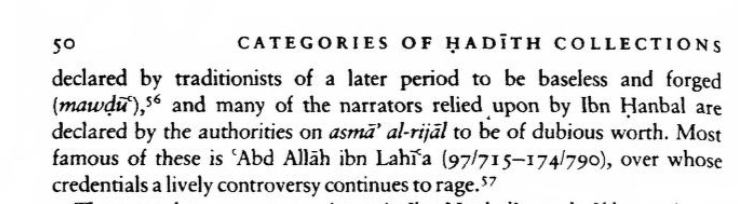
The following excerpts of interest from the book “Hadith Literature, Its Origin, Development & Special Features” by Muhammad Zubayr Siddiqi.
Below, Dr. Shabir Ally discusses the history of Hadith forgery in a series of interviews.
Even today, many fabricated Hadiths are still circulated around as if they were legitimate statements made by the prophet by some of the most famous speakers of Islam. If, with all the access to information we have at our disposal, scholars are still propagating these fabrications, how much more likely was it that the people in the past were passing around fabricated Hadith as authentic.
Umar Hit ABu Hurairah
From reading the Hadith and the history, it is clear that the second Caliph, Umar, was not a fan of Abu Hurairah. In one narration, narrated by Abu Hurairah, he narrates the following event where Umar hit him so hard on the rear end he almost cried regarding a Hadith he was spreading.
It is reported on the authority of Abu Huraira: We were sitting around the Messenger of Allah (may peace and blessings be upon him). Abu Bakr and Umar were also there among the audience. In the meanwhile the Messenger of Allah got up and left us, He delayed in coming back to us, which caused anxiety that he might be attacked by some enemy when we were not with him; so being alarmed we got up. I was the first to be alarmed. I, therefore, went out to look for the Messenger of Allah (may peace and blessings be upon him) and came to a garden belonging to the Banu an-Najjar, a section of the Ansar went around it looking for a gate but failed to find one. Seeing a rabi’ (i. e. streamlet) flowing into the garden from a well outside, drew myself together, like a fox, and slinked into (the place) where God’s Messenger was. He (the Holy Prophet) said: Is it Abu Huraira? I (Abu Huraira) replied: Yes, Messenger of Allah. He (the Holy Prophet) said: What is the matter with you? I replied: You were amongst us but got up and went away and delayed for a time, so fearing that you might be attacked by some enemy when we were not with you, we became alarmed. I was the first to be alarmed. So when I came to this garden, I drew myself together as a fox does, and these people are following me. He addressed me as Abu Huraira and gave me his sandals and said: Take away these sandals of mine, and when you meet anyone outside this garden who testifies that there is no god but Allah, being assured of it in his heart, gladden him by announcing that he shall go to Paradise. Now, the first one I met was Umar. He asked: What are these sandals, Abu Huraira? I replied: These are the sandals of the Messenger of Allah with which he has sent me to gladden anyone I meet who testifies that there is no god but Allah, being assured of it in his heart, with the announcement that he would go to Paradise. Thereupon ‘Umar struck me on the breast and I fell on my back. He then said: Go back, Abu Huraira, So I returned to the Messenger of Allah (ﷺ), and was about to break into tears. ‘Umar followed me closely and there he was behind me. The Messenger of Allah (may peace and blessings be on him) said: What is the matter with you, Abu Huraira? I said: I happened to meet ‘Umar and conveyed to him the message with which you sent me. He struck me on my breast which made me fall down upon my back and ordered me to go back. Upon this the Messenger of Allah (ﷺ) said: What prompted you to do this, ‘Umar? He said: Messenger of Allah, my mother and father be sacrificed to thee, did you send Abu Huraira with your sandals to gladden anyone he met and who testified that there is no god but Allah, and being assured of it in his heart, with the tidings that he would go to Paradise? He said: Yes. Umar said: Please do it not, for I am afraid that people will trust in it alone; let them go on doing (good) deeds. The Messenger of Allah (ﷺ) said: Well, let them.
حَدَّثَنِي زُهَيْرُ بْنُ حَرْبٍ، حَدَّثَنَا عُمَرُ بْنُ يُونُسَ الْحَنَفِيُّ، حَدَّثَنَا عِكْرِمَةُ بْنُ عَمَّارٍ، قَالَ حَدَّثَنِي أَبُو كَثِيرٍ، قَالَ حَدَّثَنِي أَبُو هُرَيْرَةَ، قَالَ كُنَّا قُعُودًا حَوْلَ رَسُولِ اللَّهِ صلى الله عليه وسلم مَعَنَا أَبُو بَكْرٍ وَعُمَرُ فِي نَفَرٍ فَقَامَ رَسُولُ اللَّهِ صلى الله عليه وسلم مِنْ بَيْنِ أَظْهُرِنَا فَأَبْطَأَ عَلَيْنَا وَخَشِينَا أَنْ يُقْتَطَعَ دُونَنَا وَفَزِعْنَا فَقُمْنَا فَكُنْتُ أَوَّلَ مَنْ فَزِعَ فَخَرَجْتُ أَبْتَغِي رَسُولَ اللَّهِ صلى الله عليه وسلم حَتَّى أَتَيْتُ حَائِطًا لِلأَنْصَارِ لِبَنِي النَّجَّارِ فَدُرْتُ بِهِ هَلْ أَجِدُ لَهُ بَابًا فَلَمْ أَجِدْ فَإِذَا رَبِيعٌ يَدْخُلُ فِي جَوْفِ حَائِطٍ مِنْ بِئْرٍ خَارِجَةٍ – وَالرَّبِيعُ الْجَدْوَلُ – فَاحْتَفَزْتُ كَمَا يَحْتَفِزُ الثَّعْلَبُ فَدَخَلْتُ عَلَى رَسُولِ اللَّهِ صلى الله عليه وسلم فَقَالَ ” أَبُو هُرَيْرَةَ ” . فَقُلْتُ نَعَمْ يَا رَسُولَ اللَّهِ . قَالَ ” مَا شَأْنُكَ ” . قُلْتُ كُنْتَ بَيْنَ أَظْهُرِنَا فَقُمْتَ فَأَبْطَأْتَ عَلَيْنَا فَخَشِينَا أَنْ تُقْتَطَعَ دُونَنَا فَفَزِعْنَا فَكُنْتُ أَوَّلَ مَنْ فَزِعَ فَأَتَيْتُ هَذَا الْحَائِطَ فَاحْتَفَزْتُ كَمَا يَحْتَفِزُ الثَّعْلَبُ وَهَؤُلاَءِ النَّاسُ وَرَائِي فَقَالَ ” يَا أَبَا هُرَيْرَةَ ” . وَأَعْطَانِي نَعْلَيْهِ قَالَ ” اذْهَبْ بِنَعْلَىَّ هَاتَيْنِ فَمَنْ لَقِيتَ مِنْ وَرَاءِ هَذَا الْحَائِطِ يَشْهَدُ أَنْ لاَ إِلَهَ إِلاَّ اللَّهُ مُسْتَيْقِنًا بِهَا قَلْبُهُ فَبَشِّرْهُ بِالْجَنَّةِ ” فَكَانَ أَوَّلَ مَنْ لَقِيتُ عُمَرُ فَقَالَ مَا هَاتَانِ النَّعْلاَنِ يَا أَبَا هُرَيْرَةَ . فَقُلْتُ هَاتَانِ نَعْلاَ رَسُولِ اللَّهِ صلى الله عليه وسلم بَعَثَنِي بِهِمَا مَنْ لَقِيتُ يَشْهَدُ أَنْ لاَ إِلَهَ إِلاَّ اللَّهُ مُسْتَيْقِنًا بِهَا قَلْبُهُ بَشَّرْتُهُ بِالْجَنَّةِ . فَضَرَبَ عُمَرُ بِيَدِهِ بَيْنَ ثَدْيَىَّ فَخَرَرْتُ لاِسْتِي فَقَالَ ارْجِعْ يَا أَبَا هُرَيْرَةَ فَرَجَعْتُ إِلَى رَسُولِ اللَّهِ صلى الله عليه وسلم فَأَجْهَشْتُ بُكَاءً وَرَكِبَنِي عُمَرُ فَإِذَا هُوَ عَلَى أَثَرِي فَقَالَ لِي رَسُولُ اللَّهِ صلى الله عليه وسلم ” مَا لَكَ يَا أَبَا هُرَيْرَةَ ” . قُلْتُ لَقِيتُ عُمَرَ فَأَخْبَرْتُهُ بِالَّذِي بَعَثْتَنِي بِهِ فَضَرَبَ بَيْنَ ثَدْيَىَّ ضَرْبَةً خَرَرْتُ لاِسْتِي قَالَ ارْجِعْ . فَقَالَ لَهُ رَسُولُ اللَّهِ صلى الله عليه وسلم ” يَا عُمَرُ مَا حَمَلَكَ عَلَى مَا فَعَلْتَ ” . قَالَ يَا رَسُولَ اللَّهِ بِأَبِي أَنْتَ وَأُمِّي أَبَعَثْتَ أَبَا هُرَيْرَةَ بِنَعْلَيْكَ مَنْ لَقِيَ يَشْهَدُ أَنْ لاَ إِلَهَ إِلاَّ اللَّهُ مُسْتَيْقِنًا بِهَا قَلْبُهُ بَشَّرَهُ بِالْجَنَّةِ . قَالَ ” نَعَمْ ” . قَالَ فَلاَ تَفْعَلْ فَإِنِّي أَخْشَى أَنْ يَتَّكِلَ النَّاسُ عَلَيْهَا فَخَلِّهِمْ يَعْمَلُونَ . قَالَ رَسُولُ اللَّهِ صلى الله عليه وسلم ” فَخَلِّهِمْ ” .
Sahih Muslim 31
https://sunnah.com/muslim:31
It is well understood that Umar had a strong position against people spreading Hadith and traditions attributed to the prophet and strongly enjoined the people to follow the Quran alone.
Narrated ‘Ubaidullah bin `Abdullah: Ibn `Abbas said, “When the ailment of the Prophet (ﷺ) became worse, he said, ‘Bring for me (writing) paper and I will write for you a statement after which you will not go astray.’ But `Umar said, ‘The Prophet is seriously ill, and we have got Allah’s Book with us, and that is sufficient for us.’ But the companions of the Prophet (ﷺ) differed about this, and there was a hue and cry. On that, the Prophet (ﷺ) said to them, ‘Go away (and leave me alone). It is not right that you should quarrel in front of me.” Ibn `Abbas came out saying, “It was most unfortunate (a great disaster) that Allah’s Messenger (ﷺ) was prevented from writing that statement for them because of their disagreement and noise.
حَدَّثَنَا يَحْيَى بْنُ سُلَيْمَانَ، قَالَ حَدَّثَنِي ابْنُ وَهْبٍ، قَالَ أَخْبَرَنِي يُونُسُ، عَنِ ابْنِ شِهَابٍ، عَنْ عُبَيْدِ اللَّهِ بْنِ عَبْدِ اللَّهِ، عَنِ ابْنِ عَبَّاسٍ، قَالَ لَمَّا اشْتَدَّ بِالنَّبِيِّ صلى الله عليه وسلم وَجَعُهُ قَالَ ” ائْتُونِي بِكِتَابٍ أَكْتُبُ لَكُمْ كِتَابًا لاَ تَضِلُّوا بَعْدَهُ ”. قَالَ عُمَرُ إِنَّ النَّبِيَّ صلى الله عليه وسلم غَلَبَهُ الْوَجَعُ وَعِنْدَنَا كِتَابُ اللَّهِ حَسْبُنَا فَاخْتَلَفُوا وَكَثُرَ اللَّغَطُ. قَالَ ” قُومُوا عَنِّي، وَلاَ يَنْبَغِي عِنْدِي التَّنَازُعُ ”. فَخَرَجَ ابْنُ عَبَّاسٍ يَقُولُ إِنَّ الرَّزِيَّةَ كُلَّ الرَّزِيَّةِ مَا حَالَ بَيْنَ رَسُولِ اللَّهِ صلى الله عليه وسلم وَبَيْنَ كِتَابِهِ.
Sahih al-Bukhari 114
https://sunnah.com/bukhari:114
Additionally, it is reported that during his reign as Caliph, Umar did not allow the free travel of the prophet’s companions without permission because he did not want them to propagate Hadith. It wasn’t until the reign of Uthman that this ban was lifted, and the companions were allowed to emigrate to some of the newly Muslim-conquered regions.
In Tadhkirat al-huffaz, al-Dhahabi reported from Shu’bah, from Sa’id ibn Ibrahim from his father, that Umar detained Ibn Mas’ud, Abu al-Darda’, and Abu Mas’ud al-Ansari, saying to them: You have narrated hadith abundantly from the Messenger of Allah. It is reported that he had detained them in Medina, but they were set free by Uthman.
We see this also confirmed on page 23 of “Hadith Literature, Its Origin, Development & Special Features” by Muhammad Zubayr Siddiqi.
Ibn Sa’d, and Ibn Asakir reports from Mahmud ibn Labid that he said: I heard Uthman ibn Affan addressing people from over the pulpit: It is unlawful for everyone to narrate any hadith he never heard of during the time of Abu Bakr and that of Umar. Verily that which made me abstain from narrating from the Messenger of Allah was not to be among the most conscious of his Companions, but I heard him declaring: “Whoever ascribing to me something I never said, he shall verily occupy his (destined) abode in Fire.”
Also, we find the following Hadith in The History of al-Tabari, Vol. XIV p. 108, and from the Leiden edition of al-Tabari titled “Annales quos scripsit Abu Djafar Mohammed ibn Djarir at-Tabari” Vol III, p. 188.
According to Abu Kurayb – Abu Bakr b. Ayyash – Abu Hasin: Whenever ‘Umar appointed his governors, he would go out with them to bid them farewell, saying, “I have not appointed you governor over Muhammad’s community with limitless authority. I have made you governor over them only to lead them in prayer, to make decisions among them based on what is right, and to distribute (the spoils) among them justly. I have not given you limitless authority over them.
Do not flog the Arabs and humiliate them; do not keep them long from their families and bring temptation upon them; do not neglect them and cause them deprivation. Be exclusively devoted to the Qur’an, and diminish the annotations of Muhammad, and I am your partner.”
He would also allow vengeance to be taken on his governors. If there was a complaint against a governor, he would bring together the governor and the complainant. If there was a genuine case against (the governor) for which punishment was obligatory, he would punish him.

This again emphasizes Umar’s devotion to people following the Quran alone during his reign after the prophet’s death. This shows that Umar advocated for the Quran alone and against the dissemination of Hadith. Ironically, if someone made this statement today, they would be called a heretic by the Muslim masses.

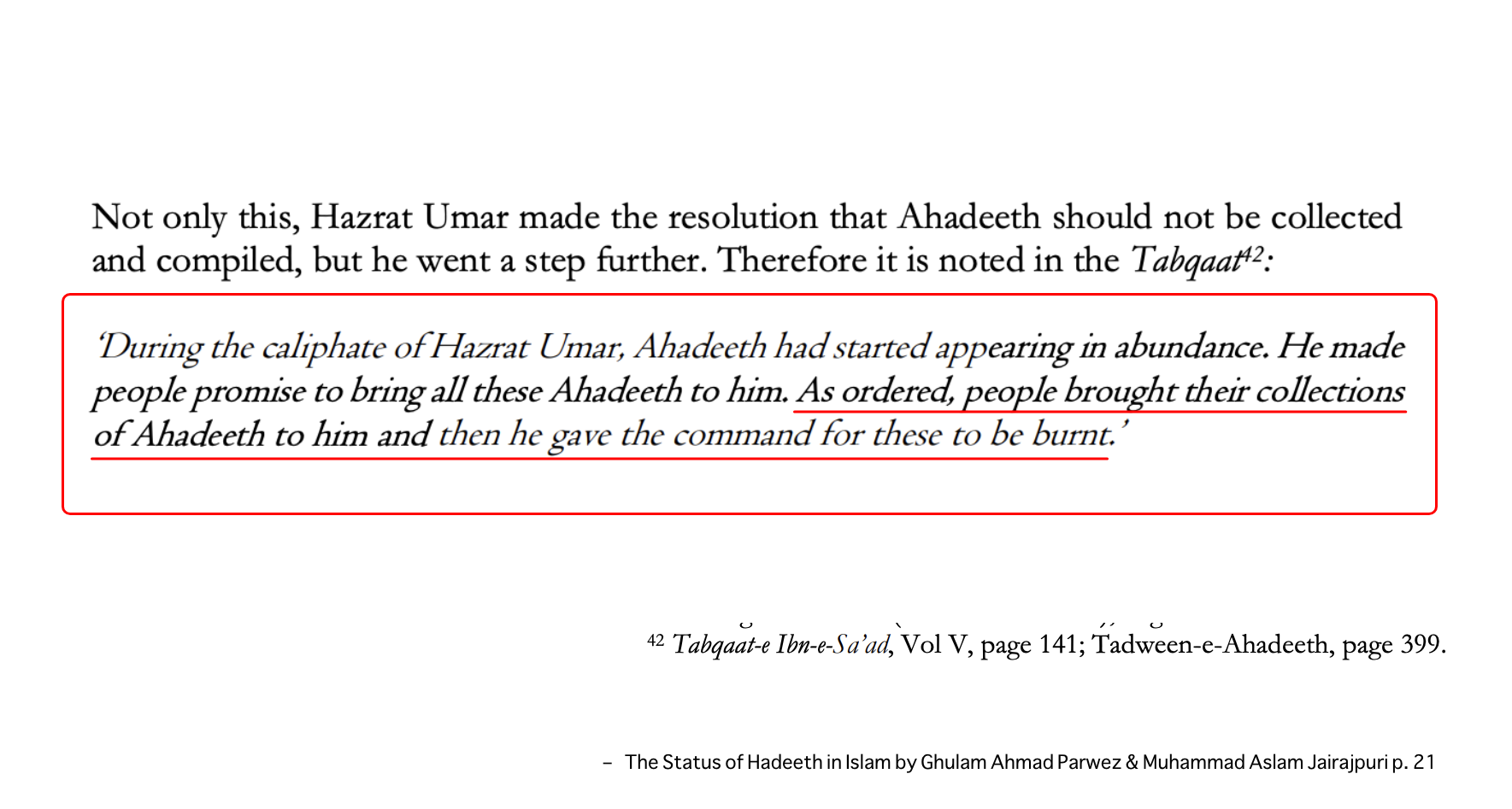
In another narration, we see ‘Umar collected the Hadith of the people and had them burned.
Even ‘Aisha was critical of Abu Hurairah. Here is a Hadith from Sahih Muslim where ‘Aisha remarks Abu Hurairah’s fabricating statements regarding the prophet.
A’isha reported: Don’t you feel surprised at Abu Huraira? He came (one day) and sat beside the nook of my apartment and began to narrate (the hadith of Allah’s Apostle). I was hearing while I was engaged in extolling Allah (reciting Subhan Allah) constantly. He stood up before I finished my repetition of Subhan Allah. If I were to meet him, I would have warned him in stern words that Allah’s Messenger (ﷺ) did not narrate the Hadith as you narrate.
وَحَدَّثَنِي حَرْمَلَةُ بْنُ يَحْيَى التُّجِيبِيُّ، أَخْبَرَنَا ابْنُ وَهْبٍ، أَخْبَرَنِي يُونُسُ، عَنِ ابْنِ، شِهَابٍ أَنَّ عُرْوَةَ بْنَ الزُّبَيْرِ، حَدَّثَهُ أَنَّ عَائِشَةَ قَالَتْ أَلاَ يُعْجِبُكَ أَبُو هُرَيْرَةَ جَاءَ فَجَلَسَ إِلَى جَنْبِ حُجْرَتِي يُحَدِّثُ عَنِ النَّبِيِّ صلى الله عليه وسلم يُسْمِعُنِي ذَلِكَ وَكُنْتُ أُسَبِّحُ فَقَامَ قَبْلَ أَنْ أَقْضِيَ سُبْحَتِي وَلَوْ أَدْرَكْتُهُ لَرَدَدْتُ عَلَيْهِ إِنَّ رَسُولَ اللَّهِ صلى الله عليه وسلم لَمْ يَكُنْ يَسْرُدُ الْحَدِيثَ كَسَرْدِكُمْ .
Sahih Muslim 2493
https://sunnah.com/muslim:2493
Abu Huraira even admitted that the words he was attributing to the prophet were actually his own only when questioned regarding the matter in the following hadith.
Narrated Abu Huraira: “The Prophet (ﷺ) said, ‘The best alms is that which is given when one is rich, and a giving hand is better than a taking one, and you should start first to support your dependents.’ A wife says, ‘You should either provide me with food or divorce me.’ A slave says, ‘Give me food and enjoy my service.” A son says, “Give me food; to whom do you leave me?” The people said, “O Abu Huraira! Did you hear that from Allah’s Messenger (ﷺ) ?” He said, “No, it is from my own self.”
حَدَّثَنَا عُمَرُ بْنُ حَفْصٍ، حَدَّثَنَا أَبِي، حَدَّثَنَا الأَعْمَشُ، حَدَّثَنَا أَبُو صَالِحٍ، قَالَ حَدَّثَنِي أَبُو هُرَيْرَةَ ـ رضى الله عنه ـ قَالَ قَالَ النَّبِيُّ صلى الله عليه وسلم “ أَفْضَلُ الصَّدَقَةِ مَا تَرَكَ غِنًى، وَالْيَدُ الْعُلْيَا خَيْرٌ مِنَ الْيَدِ السُّفْلَى، وَابْدَأْ بِمَنْ تَعُولُ ”. تَقُولُ الْمَرْأَةُ إِمَّا أَنْ تُطْعِمَنِي وَإِمَّا أَنْ تُطَلِّقَنِي. وَيَقُولُ الْعَبْدُ أَطْعِمْنِي وَاسْتَعْمِلْنِي. وَيَقُولُ الاِبْنُ أَطْعِمْنِي، إِلَى مَنْ تَدَعُنِي فَقَالُوا يَا أَبَا هُرَيْرَةَ سَمِعْتَ هَذَا مِنْ رَسُولِ اللَّهِ صلى الله عليه وسلم. قَالَ لاَ هَذَا مِنْ كِيسِ أَبِي هُرَيْرَةَ.
Sahih al-Bukhari 5355
https://sunnah.com/bukhari:5355
#4 Sunni Islam is an innovation
The original caliphs not only made no effort to formally compile and catalog the prophet’s Sunnah but also actively tried to suppress and eliminate Hadith beyond the Quran to be circulated.
Examples were given above regarding how the second caliph, Umar, tried to squelch the spread of Hadith, but we see that Abu Bakr was also against Hadith. In the following narration, we see that Abu Bakr told the people to not attribute sayings to the prophet. This is also confirmed on page 23 of “Hadith Literature, Its Origin, Development & Special Features” by Muhammad Zubayr Siddiqi.
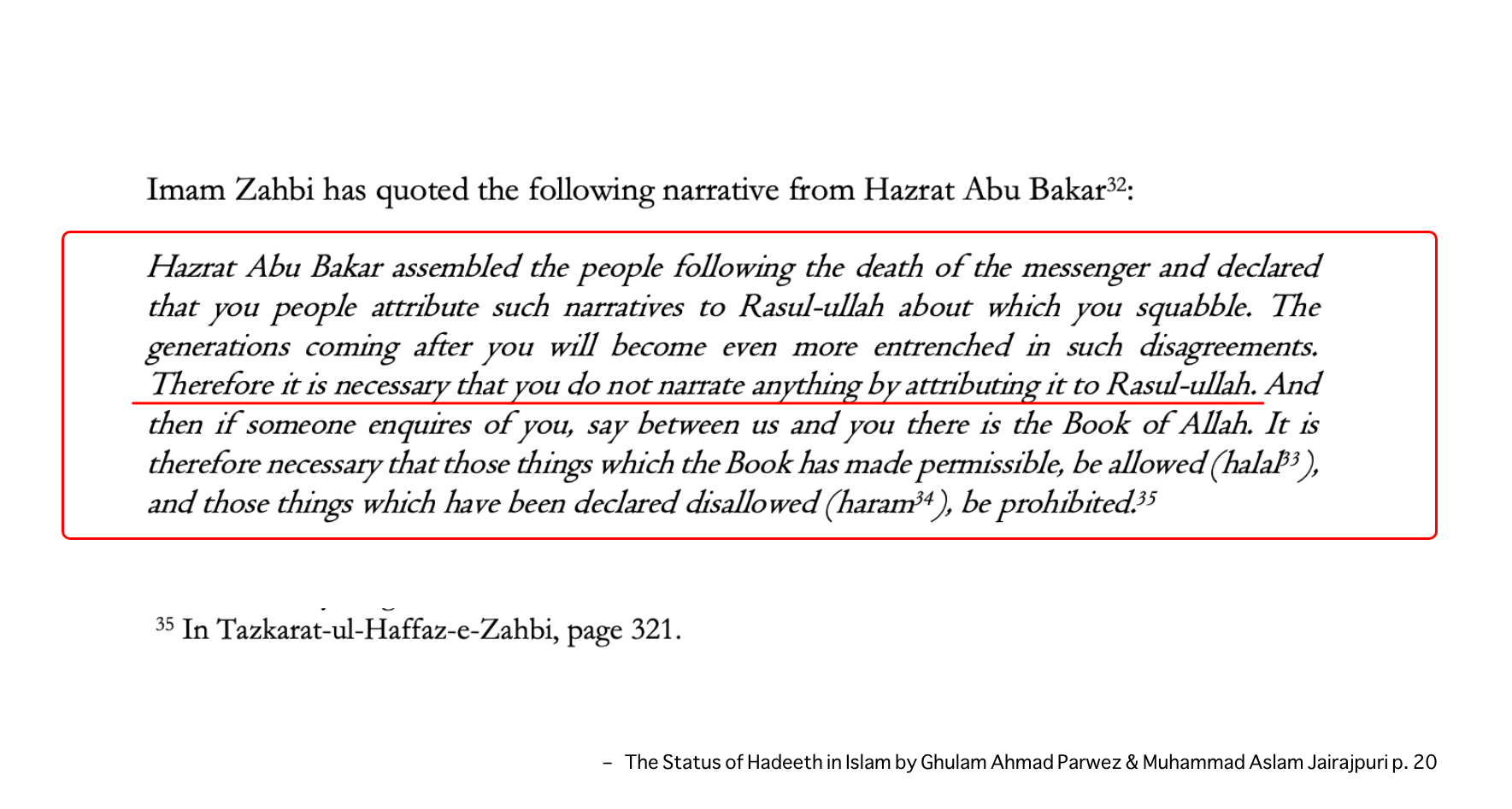
On page p. 24, it states, “Bukhari mentions a hadith related from the ‘book’ of Abd Allah ibn Abi Awfa, while Abu Bakr, the first Caliph, is reported to have collected five hundred hadiths, which he later destroyed because he suspected that it contained some hadiths related by unreliable people.”
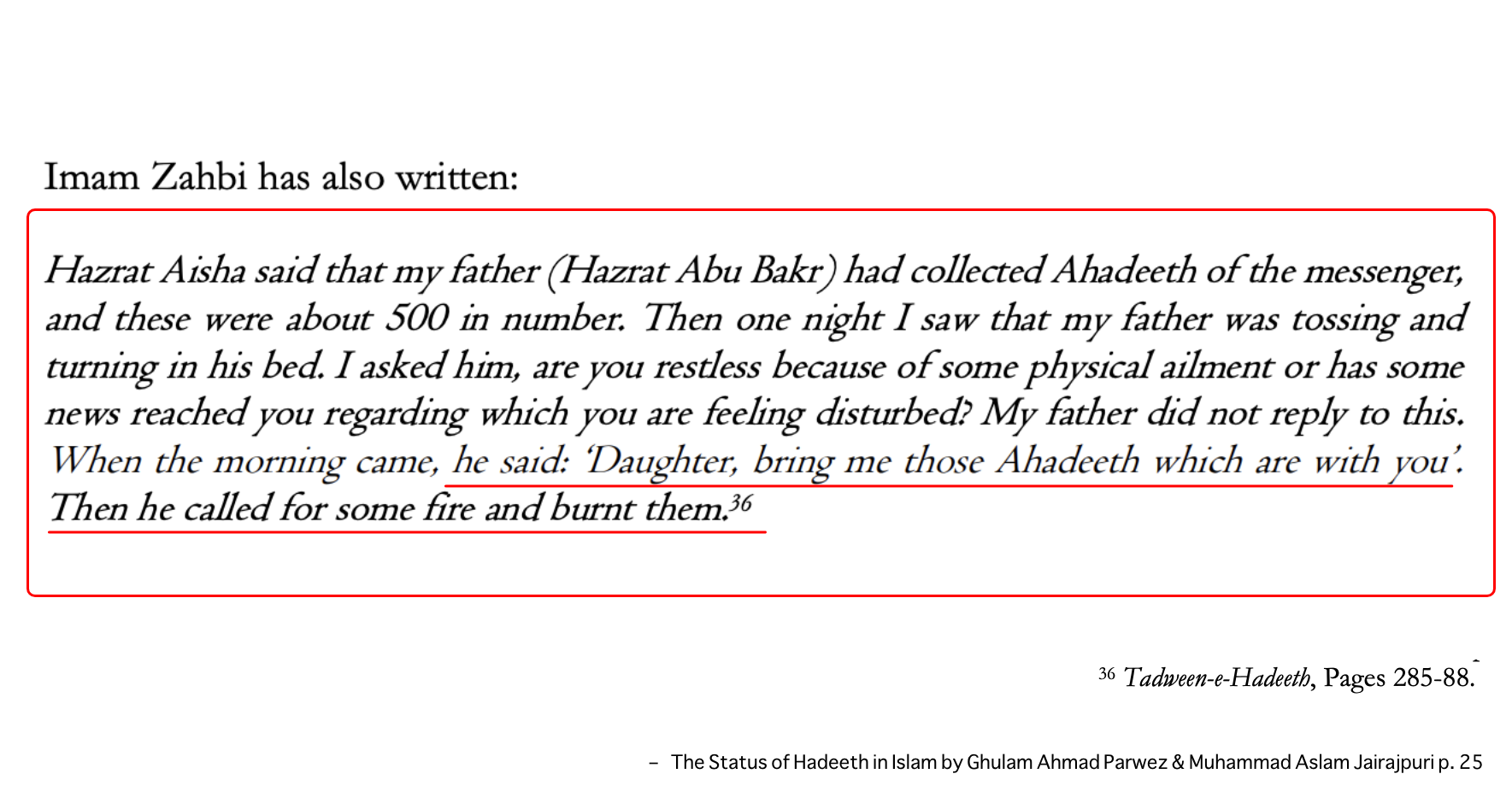
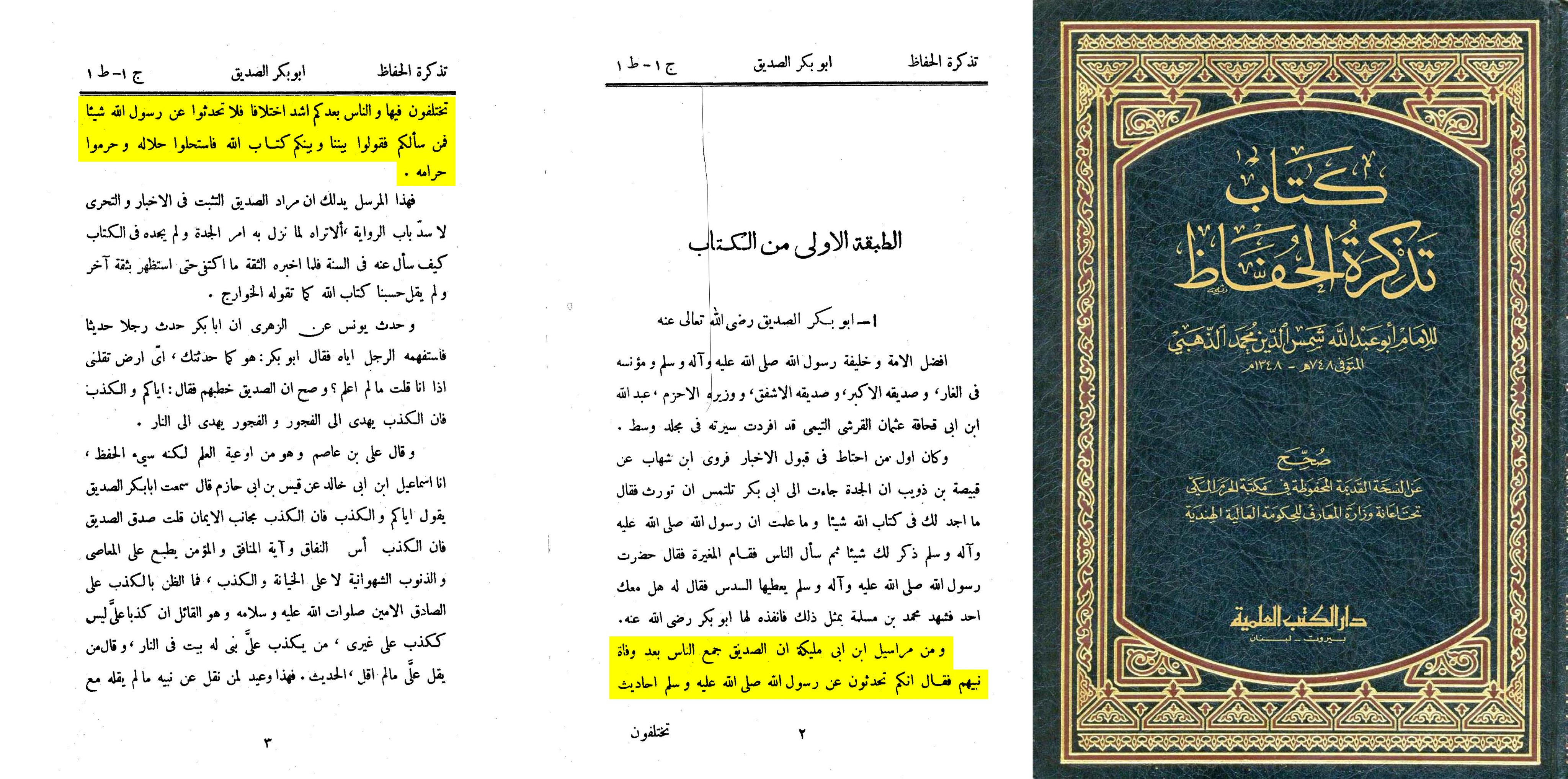
Abū Bakr, after the Prophet’s death, recorded by al-Dhahabī in Tadhkirat al-Ḥuffāẓ (1/9), via a report of Ibn Abī Malīkah, Abū Bakr reportedly said:
“You are narrating ḥadīths from the Messenger of Allah in which you differ. Those after you will differ even more. So do not narrate anything. Say: ‘Between us and you is the Book of Allah. Deem its lawful as ḥalāl and its unlawful as ḥarām.’”
Even most of the companions did not narrate Hadith. For example, according to an observation in al-Qastallani’s Al-Muwahib al-Ladunniyyah, an untold number of persons had already converted to Islam by the time Muhammad died. There were 10,000 by the time of the Conquest of Mecca and 70,000 during the Expedition of Tabuk in 630.
Of the 70,000 Muslims during the life of the prophet, ~99% narrated zero Hadith, while only 123 people, 0.17%, narrated 20+ Hadith. The predominant reason the companions did not narrate hadith was the same as given by Abu Bakr and Umar. They were concerned that if they misstated something about the prophet, they would be securing their spot in Hell.
Narrated `Abdullah bin Az-Zubair: I said to my father, ‘I do not hear from you any narration (Hadith) of Allah s Apostle as I hear (his narration) from so and so?” Az-Zubair replied. l was always with him (the Prophet) and I heard him saying “Whoever tells a lie against me (intentionally) then (surely) let him occupy, his seat in Hellfire.
حَدَّثَنَا أَبُو الْوَلِيدِ، قَالَ حَدَّثَنَا شُعْبَةُ، عَنْ جَامِعِ بْنِ شَدَّادٍ، عَنْ عَامِرِ بْنِ عَبْدِ اللَّهِ بْنِ الزُّبَيْرِ، عَنْ أَبِيهِ، قَالَ قُلْتُ لِلزُّبَيْرِ إِنِّي لاَ أَسْمَعُكَ تُحَدِّثُ عَنْ رَسُولِ اللَّهِ صلى الله عليه وسلم كَمَا يُحَدِّثُ فُلاَنٌ وَفُلاَنٌ. قَالَ أَمَا إِنِّي لَمْ أُفَارِقْهُ وَلَكِنْ سَمِعْتُهُ يَقُولُ “ مَنْ كَذَبَ عَلَىَّ فَلْيَتَبَوَّأْ مَقْعَدَهُ مِنَ النَّارِ ”.
Sahih al-Bukhari 107
https://sunnah.com/bukhari:107
Narrated Anas: The fact which stops me from narrating a great number of Hadiths to you is that the Prophet (ﷺ) said: “Whoever tells a lie against me intentionally, then (surely) let him occupy his seat in Hell-fire.”
حَدَّثَنَا أَبُو مَعْمَرٍ، قَالَ حَدَّثَنَا عَبْدُ الْوَارِثِ، عَنْ عَبْدِ الْعَزِيزِ، قَالَ أَنَسٌ إِنَّهُ لَيَمْنَعُنِي أَنْ أُحَدِّثَكُمْ حَدِيثًا كَثِيرًا أَنَّ النَّبِيَّ صلى الله عليه وسلم قَالَ “ مَنْ تَعَمَّدَ عَلَىَّ كَذِبًا فَلْيَتَبَوَّأْ مَقْعَدَهُ مِنَ النَّارِ ”.
Sahih al-Bukhari 108
https://sunnah.com/bukhari:108
As noted earlier, the proliferation of Hadith began ~40 years after the death of the prophet during the Umayyad dynasty. Hadith sciences were first conceived under Imam Shāfiʿi (d. 820) to combat the abundance of forgeries in circulation. The first Sunni caliph was al-Mutawakkil (r. 847–861 CE). Before him, the predominant ideology was that of the Mutazilites, who were either utterly dismissive of Hadith or, at a minimum, highly skeptical.
This means that for the first 200 years after the death of the prophet, the people had no valid mechanism to determine the authenticity of Hadith and that, for the earliest Muslims, the only source that the people could reliably trust was the Quran alone. This all shows that Sunni Islam is a sect that gained dominance hundreds of years after the prophet’s death and pushed the masses away from the Quran in favor of the conjecture of Sunnah. This shows that Sunni Islam is an innovation never authorized by God.
[77:50] Which Hadith, other than this, do they uphold?
فَبِأَىِّ حَدِيثٍۭ بَعْدَهُۥ يُؤْمِنُونَ
Conclusion
The only book that God gave us to uphold is the Quran alone.
[34:44] We did not give them any other books to study, nor did we send to them before you another warner.
وَمَآ ءَاتَيْنَـٰهُم مِّن كُتُبٍ يَدْرُسُونَهَا وَمَآ أَرْسَلْنَآ إِلَيْهِمْ قَبْلَكَ مِن نَّذِيرٍ
God allowed the prophet’s enemies to fabricate Hadith as a test for the people.
[6:112] We have permitted the enemies of every prophet—human and jinn devils—to inspire in each other fancy words, in order to deceive. Had your Lord willed, they would not have done it. You shall disregard them and their fabrications.
[6:113] This is to let the minds of those who do not believe in the Hereafter listen to such fabrications, and accept them, and thus expose their real convictions.
وَكَذَٰلِكَ جَعَلْنَا لِكُلِّ نَبِيٍّ عَدُوًّا شَيَاطِينَ الْإِنْسِ وَالْجِنِّ يُوحِي بَعْضُهُمْ إِلَىٰ بَعْضٍ زُخْرُفَ الْقَوْلِ غُرُورًا وَلَوْ شَاءَ رَبُّكَ مَا فَعَلُوهُ فَذَرْهُمْ وَمَا يَفْتَرُونَ
وَلِتَصْغَىٰ إِلَيْهِ أَفْئِدَةُ الَّذِينَ لَا يُؤْمِنُونَ بِالْآخِرَةِ وَلِيَرْضَوْهُ وَلِيَقْتَرِفُوا مَا هُمْ مُقْتَرِفُونَ
The true believers rely on the Quran alone as their only source of religious law.
[6:114] Shall I seek other than GOD as a source of law, when He has revealed to you this book fully detailed? Those who received the scripture recognize that it has been revealed from your Lord, truthfully. You shall not harbor any doubt.
[6:115] The word of your Lord is complete, in truth and justice. Nothing shall abrogate His words. He is the Hearer, the Omniscient.
أَفَغَيْرَ اللَّهِ أَبْتَغِي حَكَمًا وَهُوَ الَّذِي أَنْزَلَ إِلَيْكُمُ الْكِتَابَ مُفَصَّلًا وَالَّذِينَ آتَيْنَاهُمُ الْكِتَابَ يَعْلَمُونَ أَنَّهُ مُنَزَّلٌ مِنْ رَبِّكَ بِالْحَقِّ فَلَا تَكُونَنَّ مِنَ الْمُمْتَرِينَ
وَتَمَّتْ كَلِمَتُ رَبِّكَ صِدْقًا وَعَدْلًا لَا مُبَدِّلَ لِكَلِمَاتِهِ وَهُوَ السَّمِيعُ الْعَلِيمُ
The Quran warns against following the majority, which Sunnis call the ijma.
[6:116] If you obey the majority of people on earth, they will divert you from the path of GOD. They follow only conjecture; they only guess.
وَإِنْ تُطِعْ أَكْثَرَ مَنْ فِي الْأَرْضِ يُضِلُّوكَ عَنْ سَبِيلِ اللَّهِ إِنْ يَتَّبِعُونَ إِلَّا الظَّنَّ وَإِنْ هُمْ إِلَّا يَخْرُصُونَ
They choose to follow the traditions of their parents blindly.
[2:170] When they are told, “Follow what GOD has revealed herein,” they say, “We follow only what we found our parents doing.” What if their parents did not understand, and were not guided?
وَإِذَا قِيلَ لَهُمُ ٱتَّبِعُوا۟ مَآ أَنزَلَ ٱللَّهُ قَالُوا۟ بَلْ نَتَّبِعُ مَآ أَلْفَيْنَا عَلَيْهِ ءَابَآءَنَآ أَوَلَوْ كَانَ ءَابَآؤُهُمْ لَا يَعْقِلُونَ شَيْـًٔا وَلَا يَهْتَدُونَ
They fail to learn from the examples in the Quran and opt to follow imams who will lead them to Hell.
[28:41] We made them imams who led their people to Hell. Furthermore, on the Day of Resurrection, they will have no help.
وَجَعَلْنَـٰهُمْ أَئِمَّةً يَدْعُونَ إِلَى ٱلنَّارِ وَيَوْمَ ٱلْقِيَـٰمَةِ لَا يُنصَرُونَ
They choose to follow the conjecture of individuals like Bukhari, Muslim, and others incapable of guiding.
[10:35] Say, “Do any of your partners guide to the truth?” Say, “GOD guides to the truth. Is one who guides to the truth more worthy of being followed, or one who does not guide, and needs guidance for himself? What is wrong with your judgment?”
قُلْ هَلْ مِن شُرَكَآئِكُم مَّن يَهْدِىٓ إِلَى ٱلْحَقِّ قُلِ ٱللَّهُ يَهْدِى لِلْحَقِّ أَفَمَن يَهْدِىٓ إِلَى ٱلْحَقِّ أَحَقُّ أَن يُتَّبَعَ أَمَّن لَّا يَهِدِّىٓ إِلَّآ أَن يُهْدَىٰ فَمَا لَكُمْ كَيْفَ تَحْكُمُونَ
[10:36] Most of them follow nothing but conjecture, and conjecture is no substitute for the truth. GOD is fully aware of everything they do.
وَمَا يَتَّبِعُ أَكْثَرُهُمْ إِلَّا ظَنًّا إِنَّ ٱلظَّنَّ لَا يُغْنِى مِنَ ٱلْحَقِّ شَيْـًٔا إِنَّ ٱللَّهَ عَلِيمٌۢ بِمَا يَفْعَلُونَ
God gives the following warning to those who do not heed and return to the path of the messenger and follow the Quran alone, foretelling their possible future on the Day of Judgement if they do not correct course.
[25:27] The day will come when the transgressor will bite his hands (in anguish) and say, “Alas, I wish I had followed the path with the messenger.
وَيَوْمَ يَعَضُّ ٱلظَّالِمُ عَلَىٰ يَدَيْهِ يَقُولُ يَـٰلَيْتَنِى ٱتَّخَذْتُ مَعَ ٱلرَّسُولِ سَبِيلًا
[25:28] “Alas, woe to me, I wish I did not take that person as a friend.
يَـٰوَيْلَتَىٰ لَيْتَنِى لَمْ أَتَّخِذْ فُلَانًا خَلِيلًا
[25:29] “He has led me away from the message after it came to me. Indeed, the devil lets down his human victims.”
لَّقَدْ أَضَلَّنِى عَنِ ٱلذِّكْرِ بَعْدَ إِذْ جَآءَنِى وَكَانَ ٱلشَّيْطَـٰنُ لِلْإِنسَـٰنِ خَذُولًا
[25:30] The messenger said, “My Lord, my people have deserted this Quran.”
وَقَالَ ٱلرَّسُولُ يَـٰرَبِّ إِنَّ قَوْمِى ٱتَّخَذُوا۟ هَـٰذَا ٱلْقُرْءَانَ مَهْجُورًا

 Quran Talk Blog
3 thoughts on “What do you need to see to renounce Hadith?”