
The Quran informs us that Mary, the mother of Jesus, was the daughter of ‘Imran (Amram).
[3:33] GOD has chosen Adam, Noah, the family of Abraham, and the family of Amram (as messengers) to the people. [3:34] They belong in the same progeny. GOD is Hearer, Omniscient. [3:35] The wife of Amram said, “My Lord, I have dedicated (the baby) in my belly to You, totally, so accept from me. You are Hearer, Omniscient.”
إِنَّ اللَّهَ اصْطَفَىٰ آدَمَ وَنُوحًا وَآلَ إِبْرَاهِيمَ وَآلَ عِمْرَانَ عَلَى الْعَالَمِينَ
ذُرِّيَّةً بَعْضُهَا مِنْ بَعْضٍ وَاللَّهُ سَمِيعٌ عَلِيمٌ
إِذْ قَالَتِ امْرَأَتُ عِمْرَانَ رَبِّ إِنِّي نَذَرْتُ لَكَ مَا فِي بَطْنِي مُحَرَّرًا فَتَقَبَّلْ مِنِّي إِنَّكَ أَنْتَ السَّمِيعُ الْعَلِيمُ
Some critics of the Quran claim that this is inaccurate and an example of the author of the Quran mixing up Mary the mother of Jesus with Miriam the sister of Moses. This is because the Hebrew Bible describes Miriam (מִרְיָם Mir-yām) as the daughter of Amram and Jochebed, and the older sister of Moses and Aaron (Exodus 15:20, Numbers 12:1, and 26:59).
So how do we reconcile this?
The simple answer is that both the father of Moses, Aaron, and Miriam, and the father of Mary, the mother of Jesus, were named Amram. This is not uncommon, as many individuals in the Bible share the same name. For instance, in the New Testament alone, there are six different individuals named Mary: Mary, the mother of Jesus; Mary Magdalene; Mary of Bethany; Mary, the mother of James the younger; Mary, the mother of John Mark; and Mary of Rome. This does not mean that they are the same person, but just that they share the same name.
Another example can be found in the genealogy of Jesus. The New Testament provides two accounts of the genealogy of Jesus, one in the Gospel of Matthew and another in the Gospel of Luke. Matthew starts with Abraham, while Luke begins with Adam. The lists are identical between Abraham and David, but differ radically from that point. Matthew has twenty-seven generations from David to Joseph, whereas Luke has forty-two, with almost no overlap between the names on the two lists. Notably, the two accounts also disagree on who Joseph’s father was: Matthew says he was Jacob, while Luke says he was Heli.

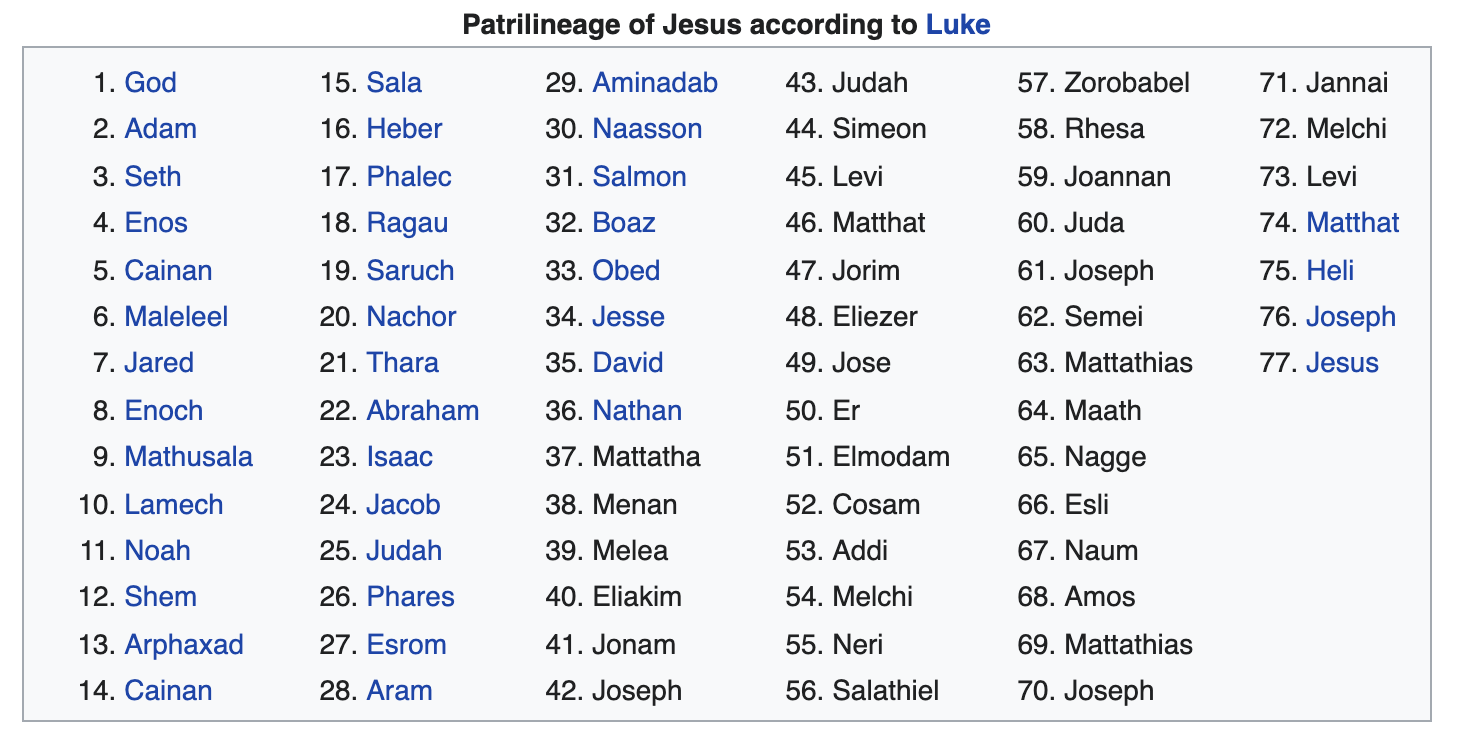
Notice that in these two accounts, we have several names reappear for multiple people, including Joseph, Jacob, and Levi. This again confirms that using the same name for different people is not uncommon in Biblical history.
Interestingly, we see something similar in the Gospel of Matthew, where Jacob is called the father of Joseph, and we know that many centuries before a different Jacob also gave birth to a different Joseph.
Matthew 1:16 …and Jacob the father of Joseph the husband of Mary, of whom Jesus was born, who is called Christ.
The name ‘Imran (Amram) occurs only three times in the Quran. The third occurrence in Sura 66 verse 12 of the Quran uses the expression “وَمَرْيَمَ ابْنَتَ عِمْرَانَ” which can be understood as either “Mary, the daughter of ‘Imran” or “Mary, the descendant of ‘Imran.” As we saw in the previous post, this is a common form used in the Arabic Quran. The question is, which is this in reference to, as both are valid statements. Mary was the descendant of Amram, as Aaron’s father, and also the immediate father of Mary. Therefore, it is safer to translate this verse as “Mary, the Amramite.”
[66:12] Also Mary, the Amramite. She maintained her chastity, then we blew into her from our spirit. She believed in the words of her Lord and His scriptures; she was obedient.
وَمَرْيَمَ ابْنَتَ عِمْرَانَ الَّتِي أَحْصَنَتْ فَرْجَهَا فَنَفَخْنَا فِيهِ مِنْ رُوحِنَا وَصَدَّقَتْ بِكَلِمَاتِ رَبِّهَا وَكُتُبِهِ وَكَانَتْ مِنَ الْقَانِتِينَ
Related Articles:

 Quran Talk Blog
2 thoughts on “Mary The Daughter of Amram”